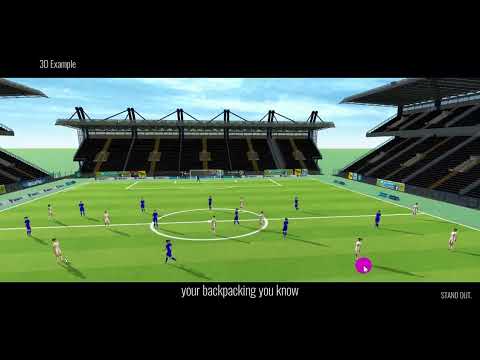
SEPARATION.
The key is simple:
Create separation late, at the exact moment the ball can be played to you.
That’s when defenders hesitate.
That’s when you can turn.
Your first steps of separation are always your biggest space.
After that, if the defender steps, the gap closes fast.
Watch players like Cherki.
They move at the moment the pass is possible — not early, not between touches.
That timing gives them maximum separation when they receive the ball.
If you move too early, you kill your own pocket.
Between touches, the ball is predictable.
Defenders tighten up.
Your space shrinks.
You become easy to mark.
Move when the ball can actually reach you — not before.
Look at Messi.
When he’s static, defenders step.
When he moves too early, defenders follow.
But when he moves as the ball is traveling, defenders hesitate and retreat.
You do the same — you separate late.
The difference is simple:
Messi turns.
You play backwards.
And you don’t need a big pocket to turn.
You only need the defender to hesitate.
A tiny touch is enough to face forward and attack the back line.
Now look at the Germany example.
You create separation well in many moments, but sometimes you don’t move at all.
You stay still on the last line.
And when you’re static, the center‑back sees both you and the ball in the same frame.
You create nothing.
You’re easy to mark.
The pocket never opens.
But when you move at the right moment — when the ball can be played to you — everything changes.
If she hesitates → you turn.
If she steps → your 8 runs into the space she leaves.
Either way, your team wins.
And this is the part you need to understand clearly.
When your center‑back steps and breaks a line on the dribble, the presser is gone.
The goalkeeper is taken out.
Across the field it becomes almost pure 1v1, man‑marked everywhere.
In those moments, movement is everything.
Man‑oriented defending wants comfort.
They want to stay close.
They want to see both you and the ball at the same time.
So even a small shift — one step, one angle change — creates problems.
It forces hesitation.
It opens pockets.
It gives you the advantage.
That’s why you need to move in these situations.
Because movement beats man‑marking.
Every time.