THE CUTBACK.
At higher levels, scoring is not about being closest to goal.
It is about being available.
THE PROBLEM.
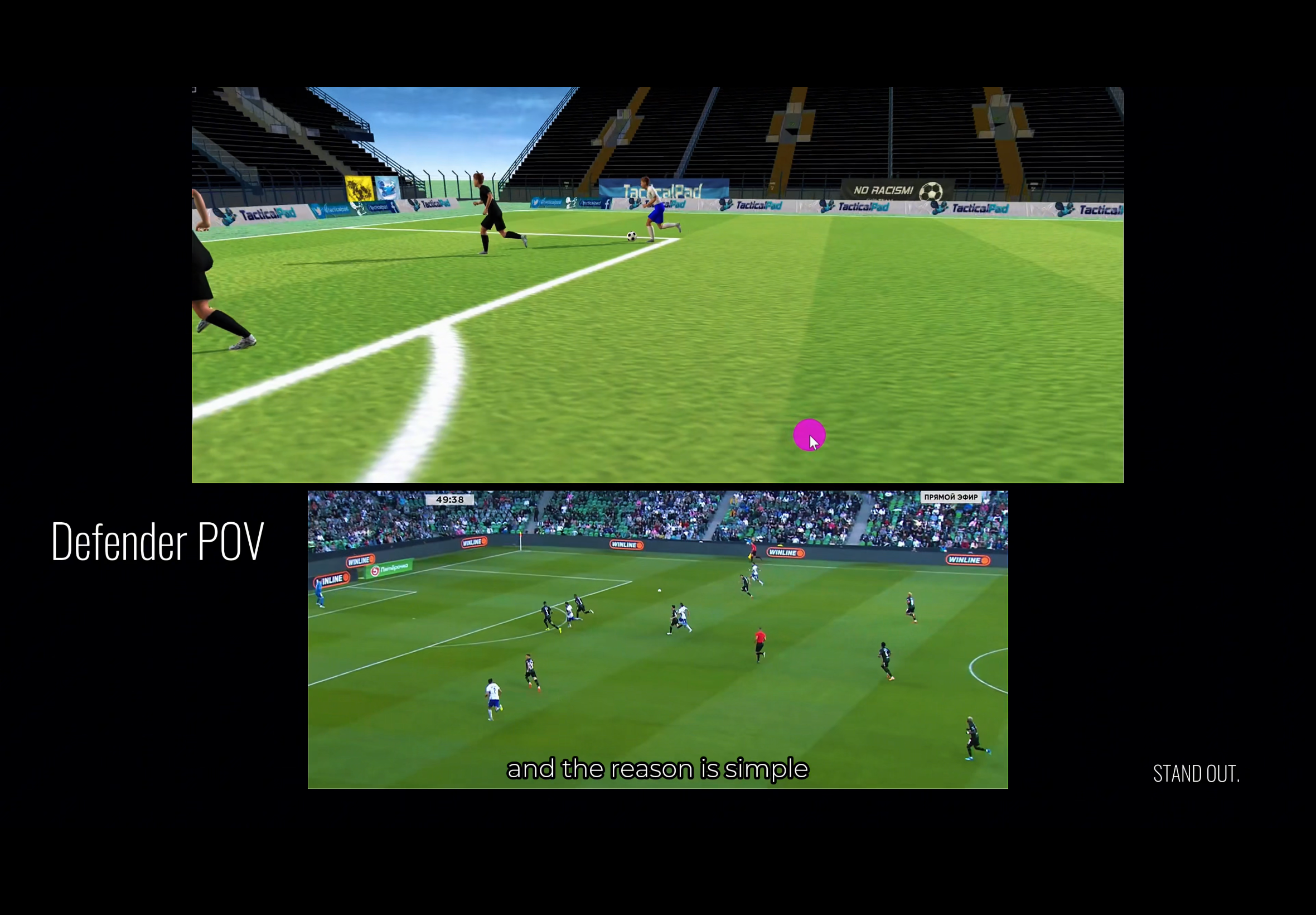
Running into crowded spaces.
No passing lane.
Low probability to receive.
THE OPPORTUNITY.
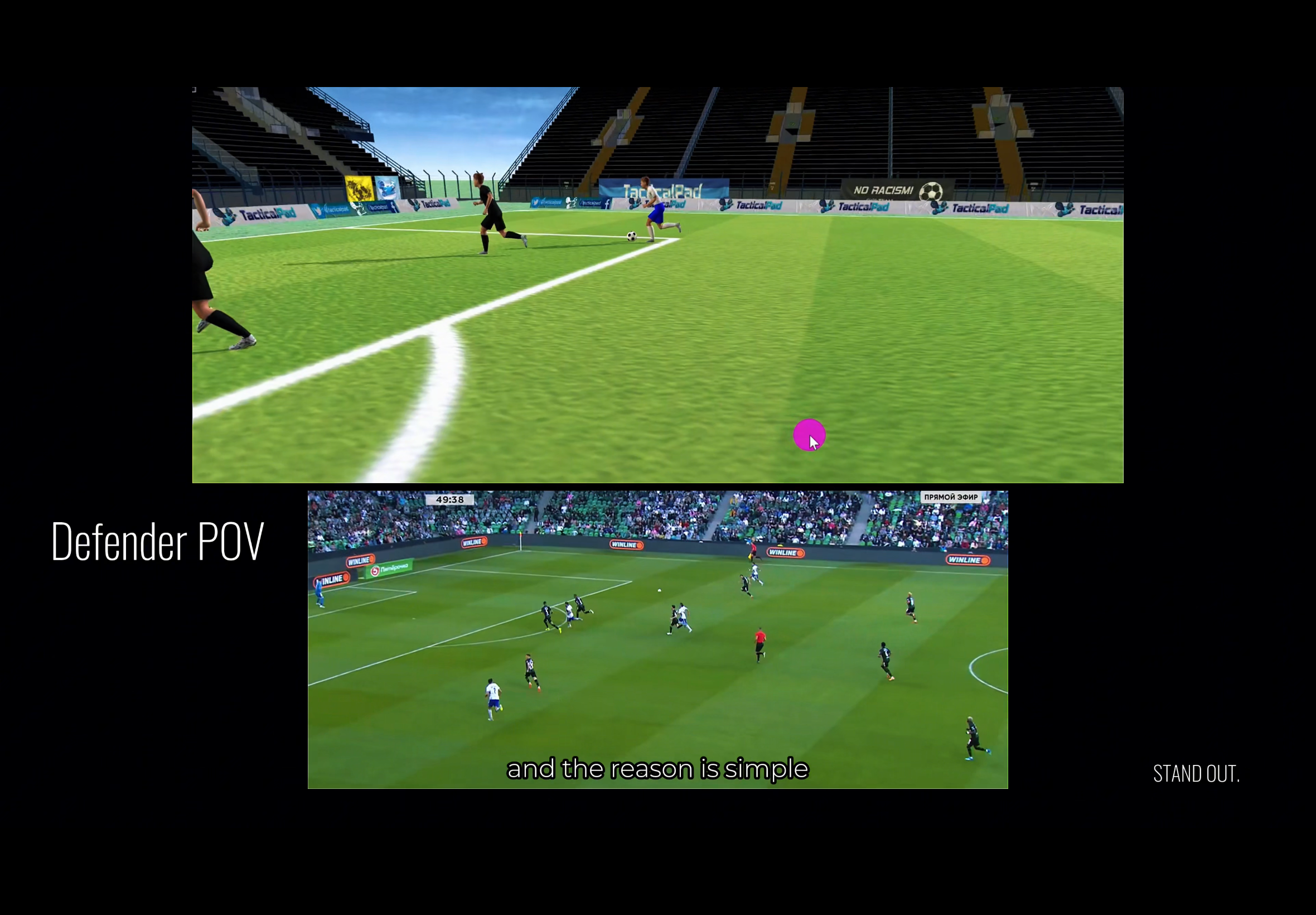
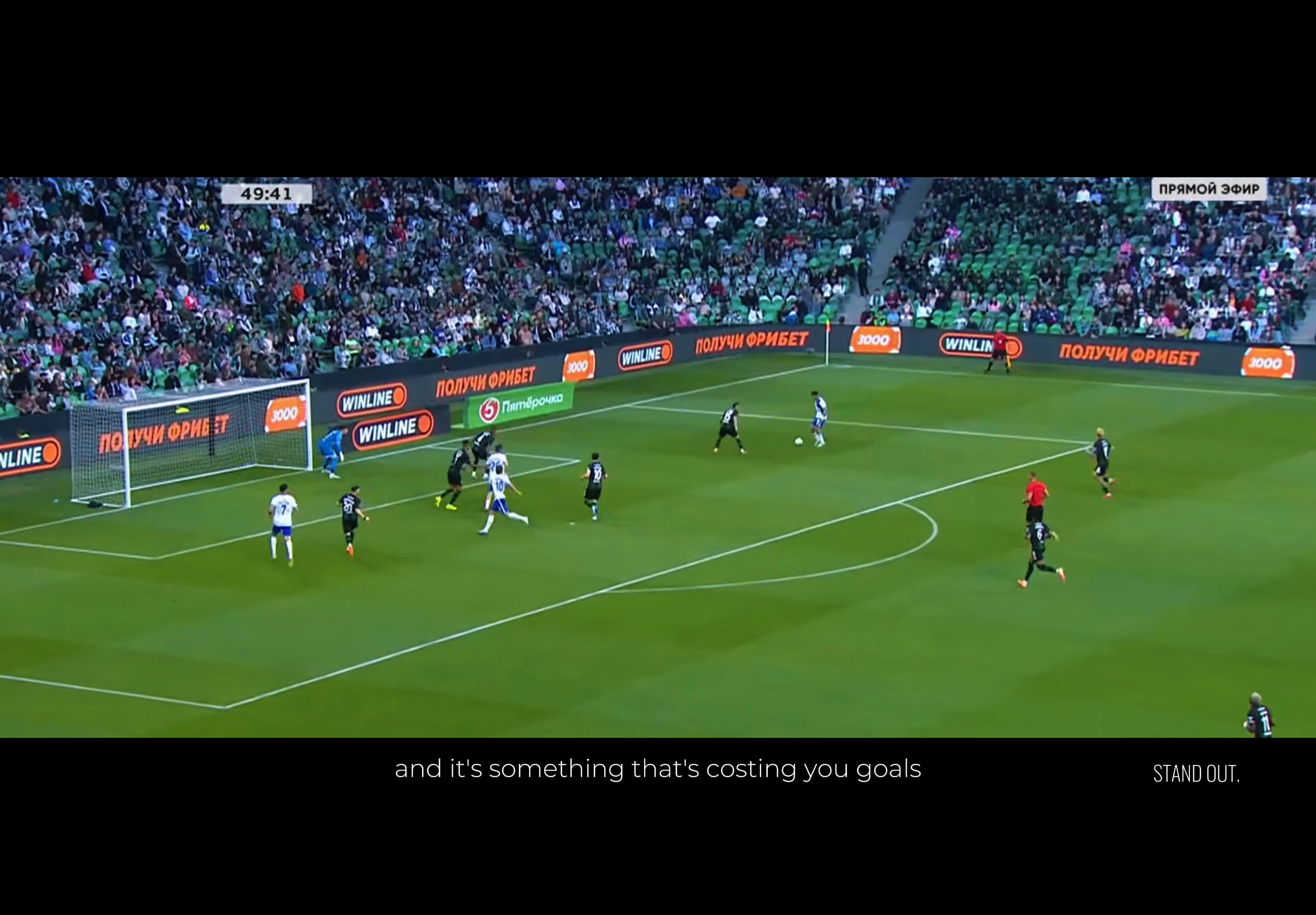
When the ball is wide, defenders become ball-watching.
They cannot track you and the ball at the same time.
They drift toward goal and leave the cutback space open.
THE MOVE.
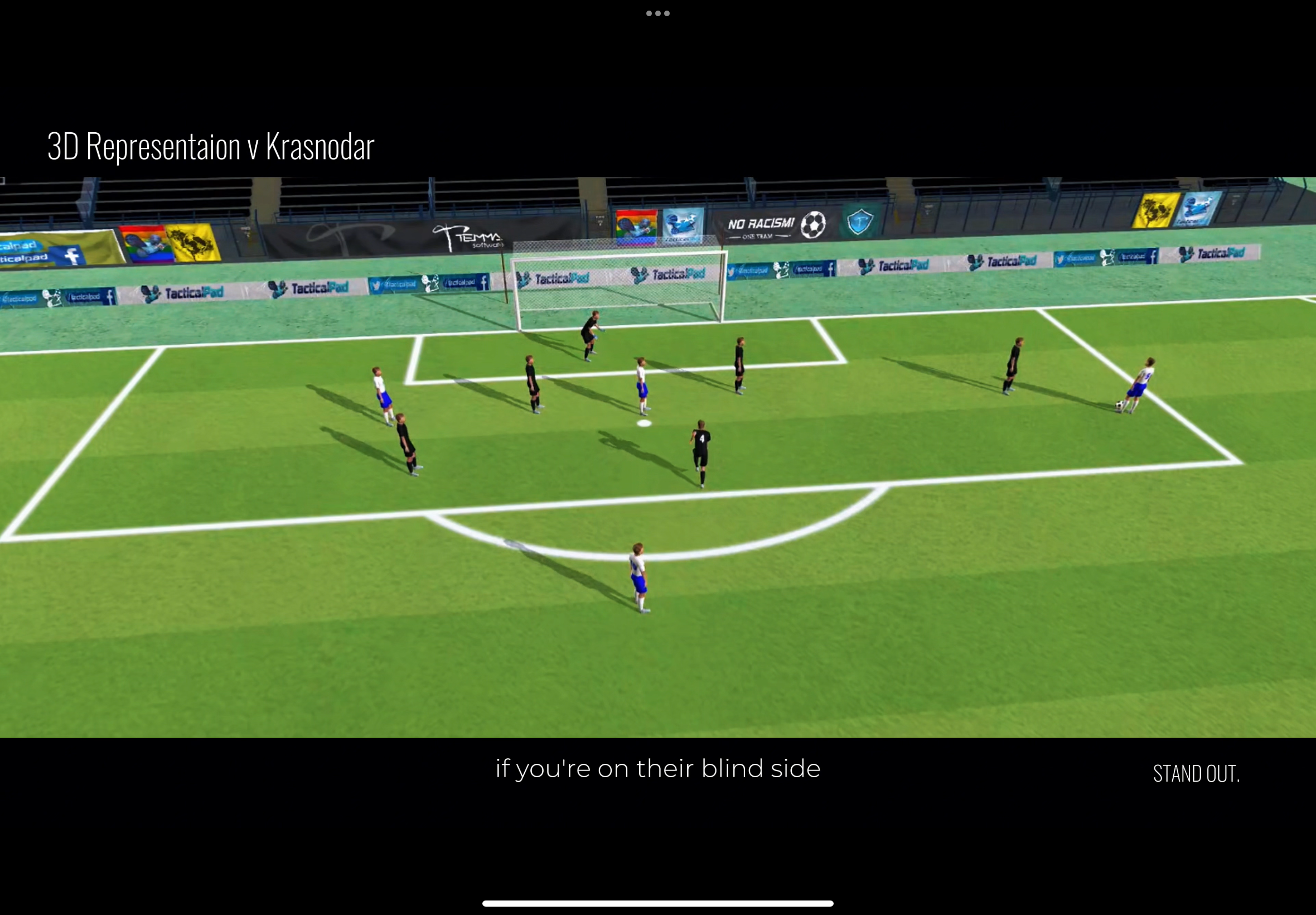
Do not keep running.
Stop.
They move toward goal.
You stay.
That creates separation and control.
THE KEY DETAIL.
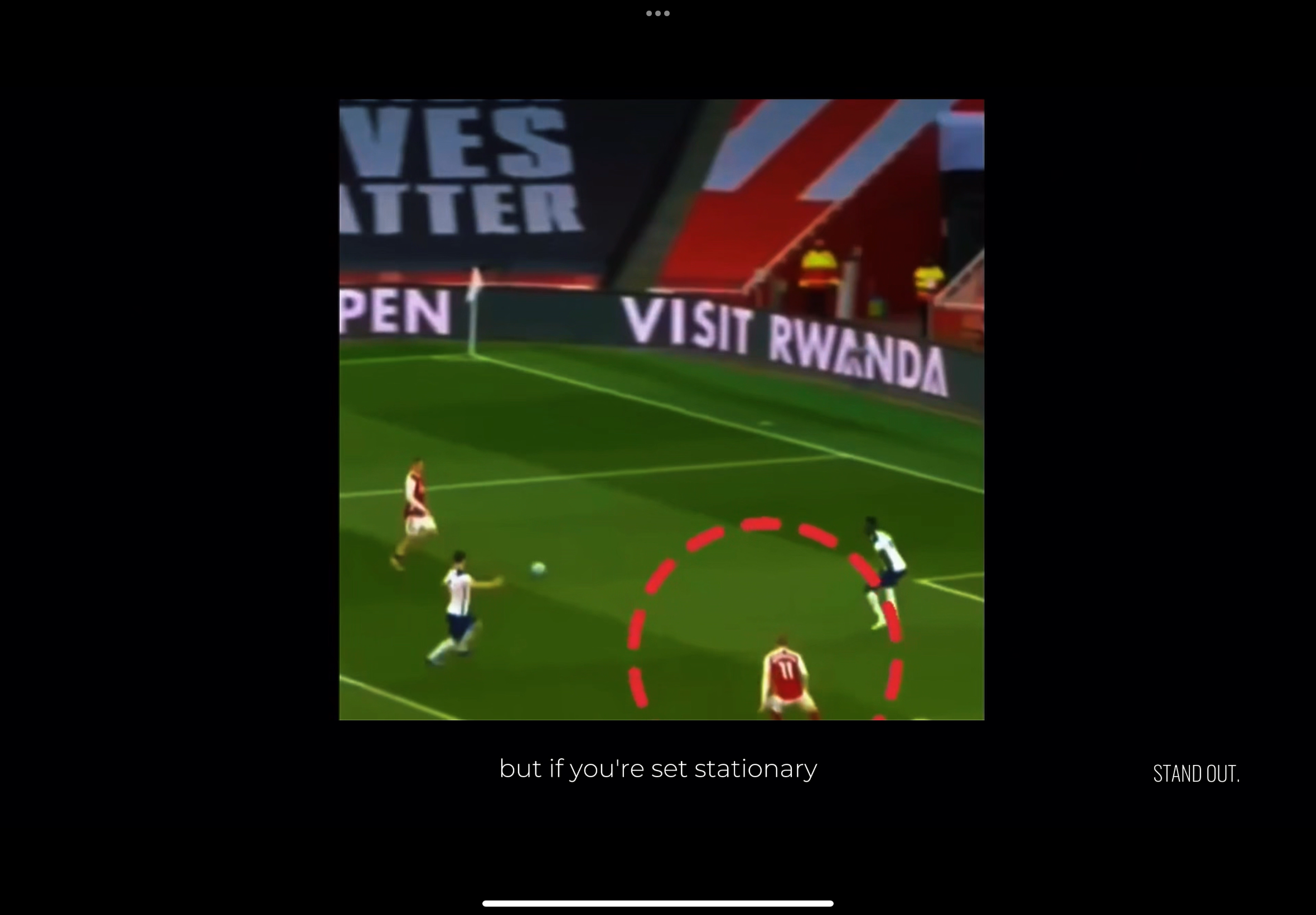
Stationary gives control.
Small movements allow clean adjustments.
Angle and access matter more than proximity.
THE RULE.
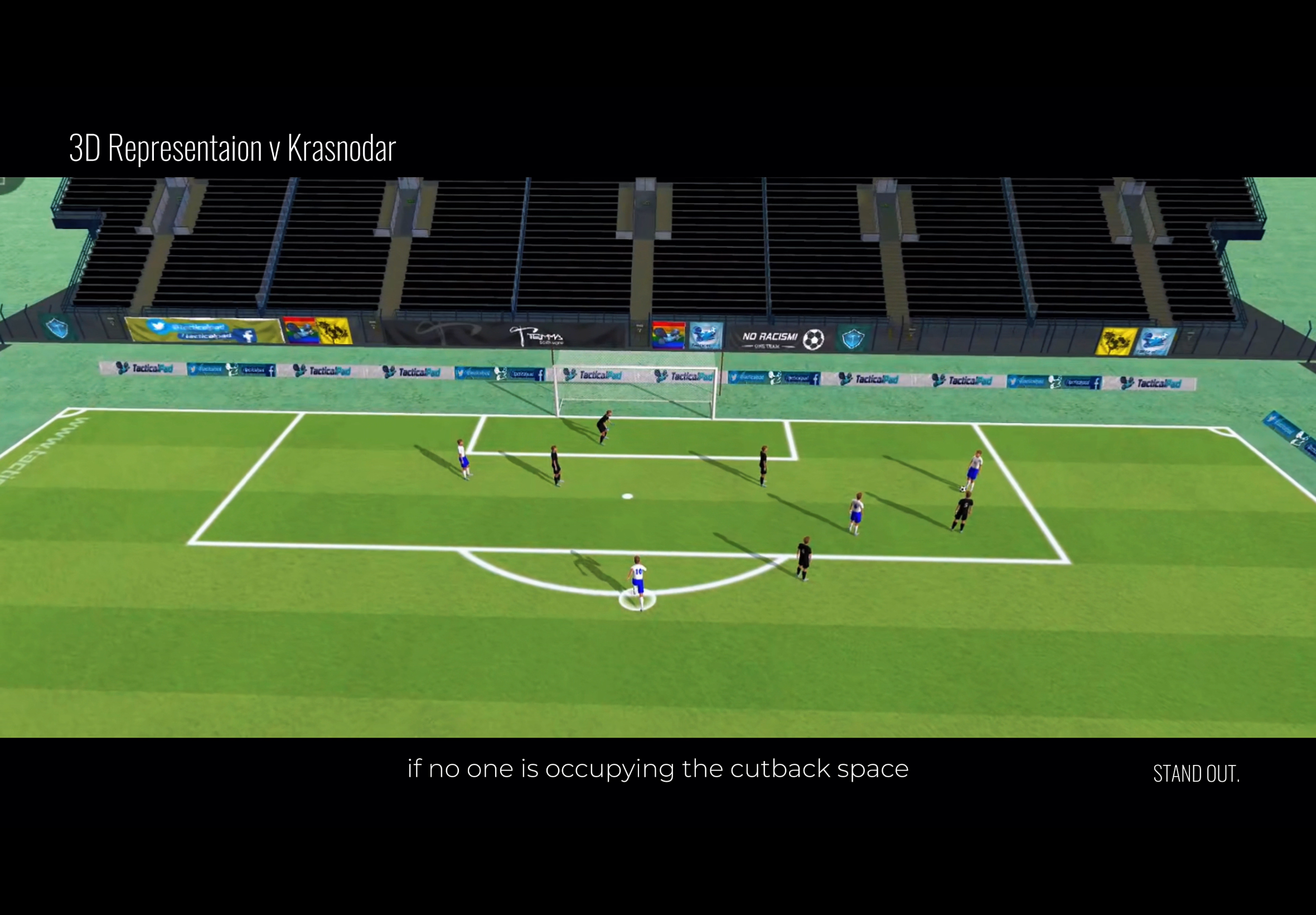
If the cutback space is empty, stay there.
If it’s occupied, then attack the box.
Be visible.
Be a clear option.
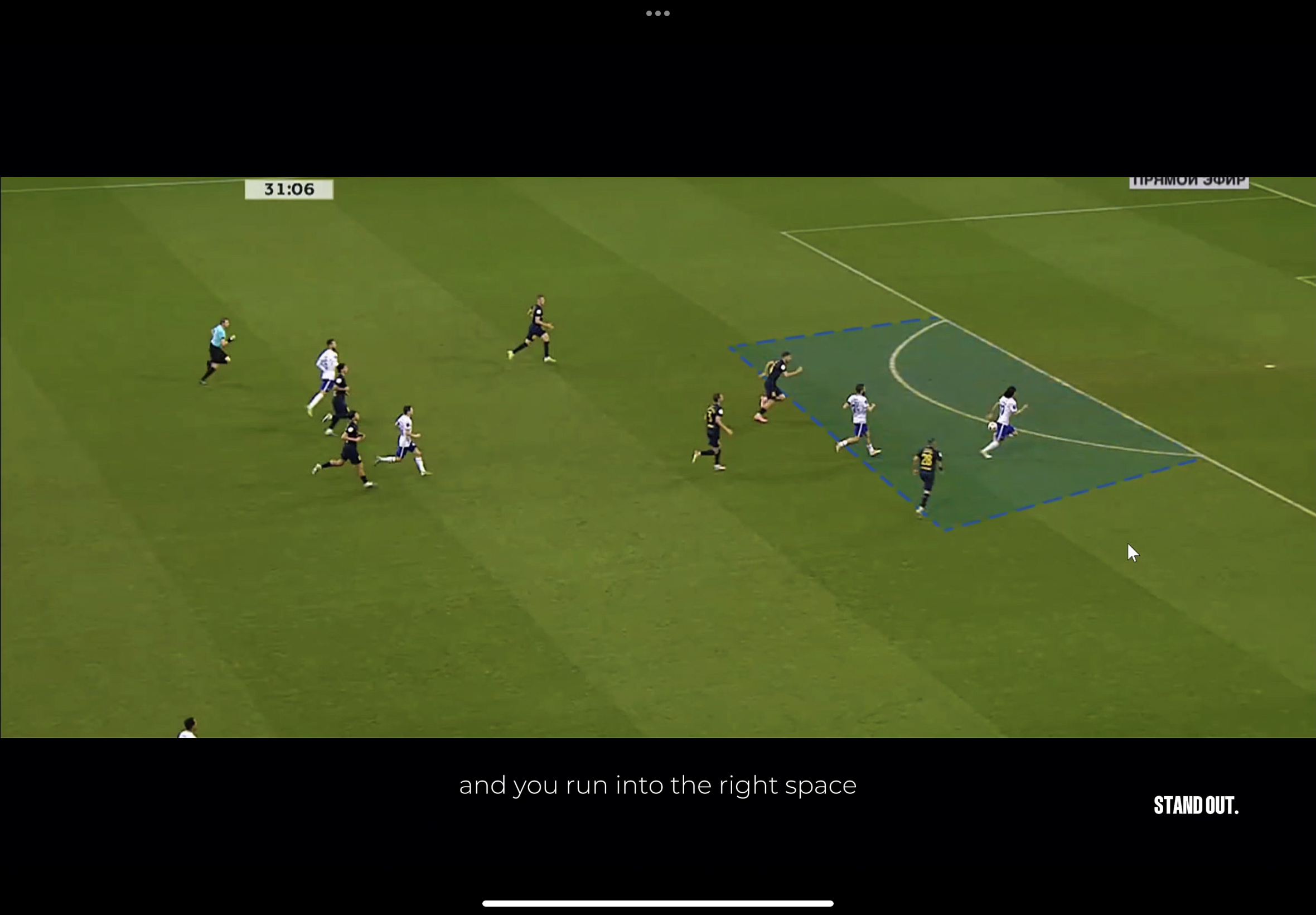
LONG BALL = MOST DANGEROUS SPACE.
Longer balls change the situation.
They give you time.
And what you do during that time decides the outcome.
Your team plays direct.
So instead of resisting it,
use it.
WHERE YOU ARE MOST DANGEROUS.
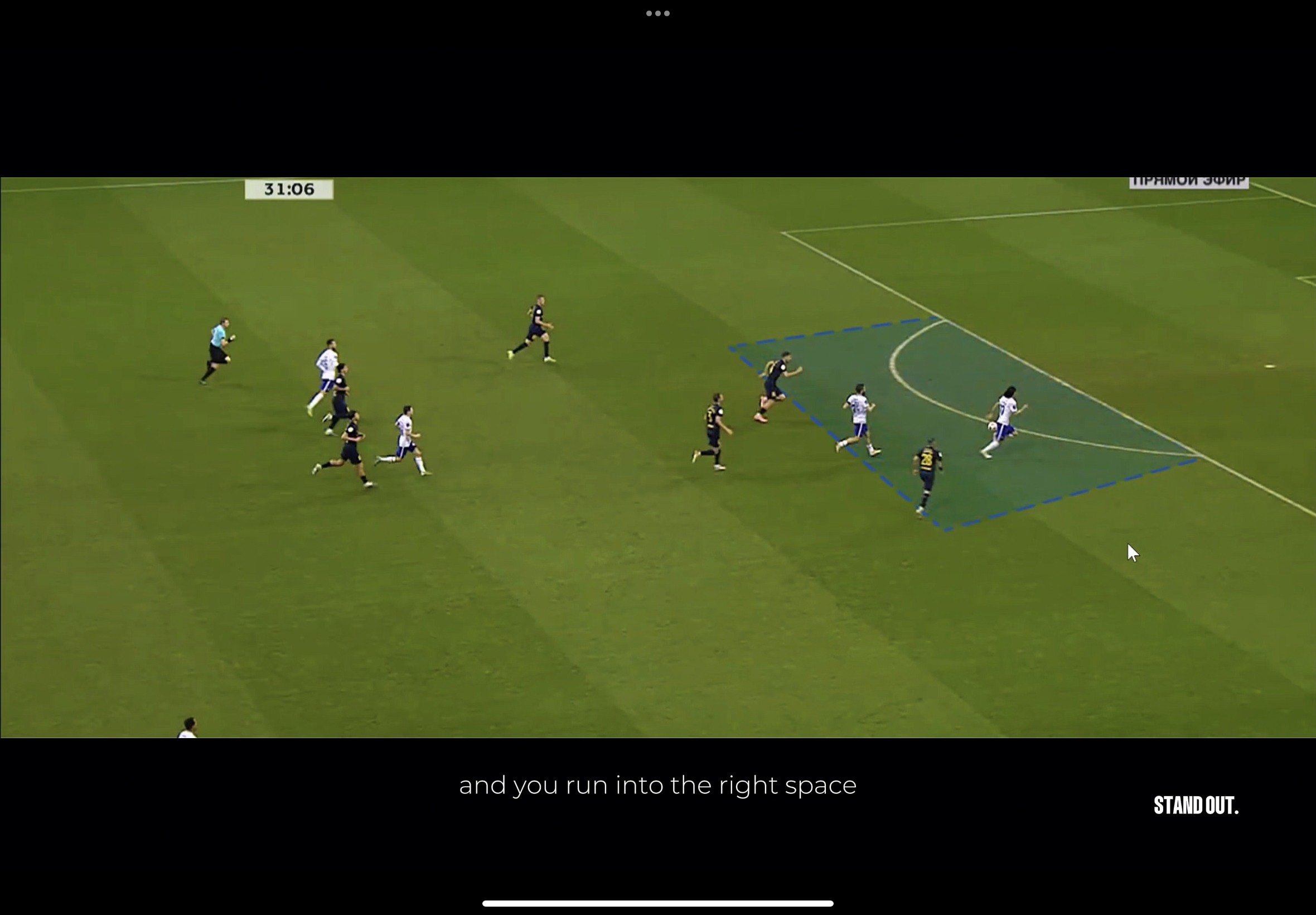
You are most effective when you arrive at the top of the box.
That’s where your shots come from.
That’s where you create real threat.
But the key is not just getting there.
It’s how you arrive.
WHY BODY POSITION DECIDES ARRIVAL.
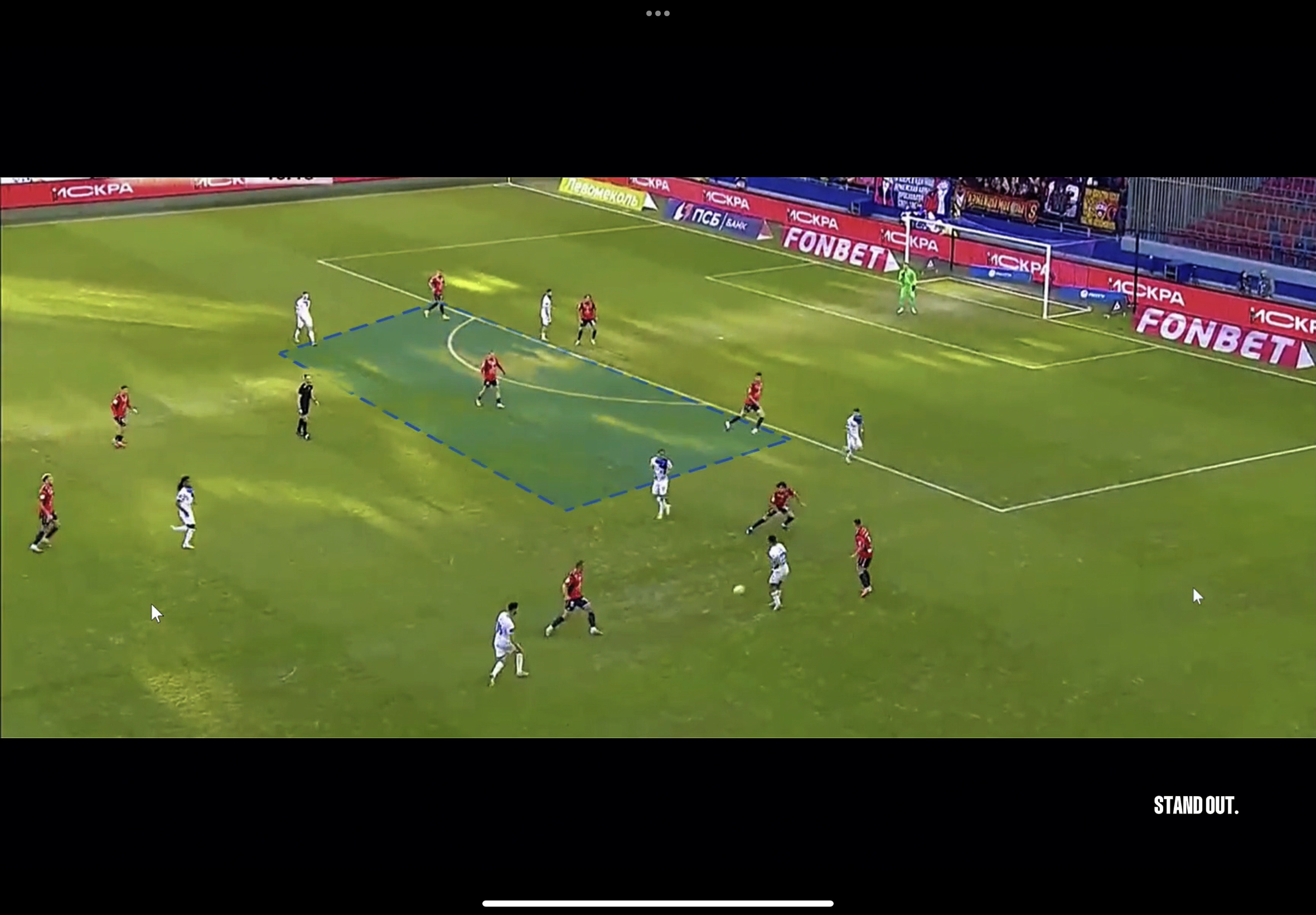
If your body is facing goal instead of the top of the box,
your rotation becomes longer.
That delay is enough for defenders to recover.
Because in football,
rotation takes more time than running.
So if you can already see the space,
you arrive faster.
USING THE TIME OF THE LONG BALL.
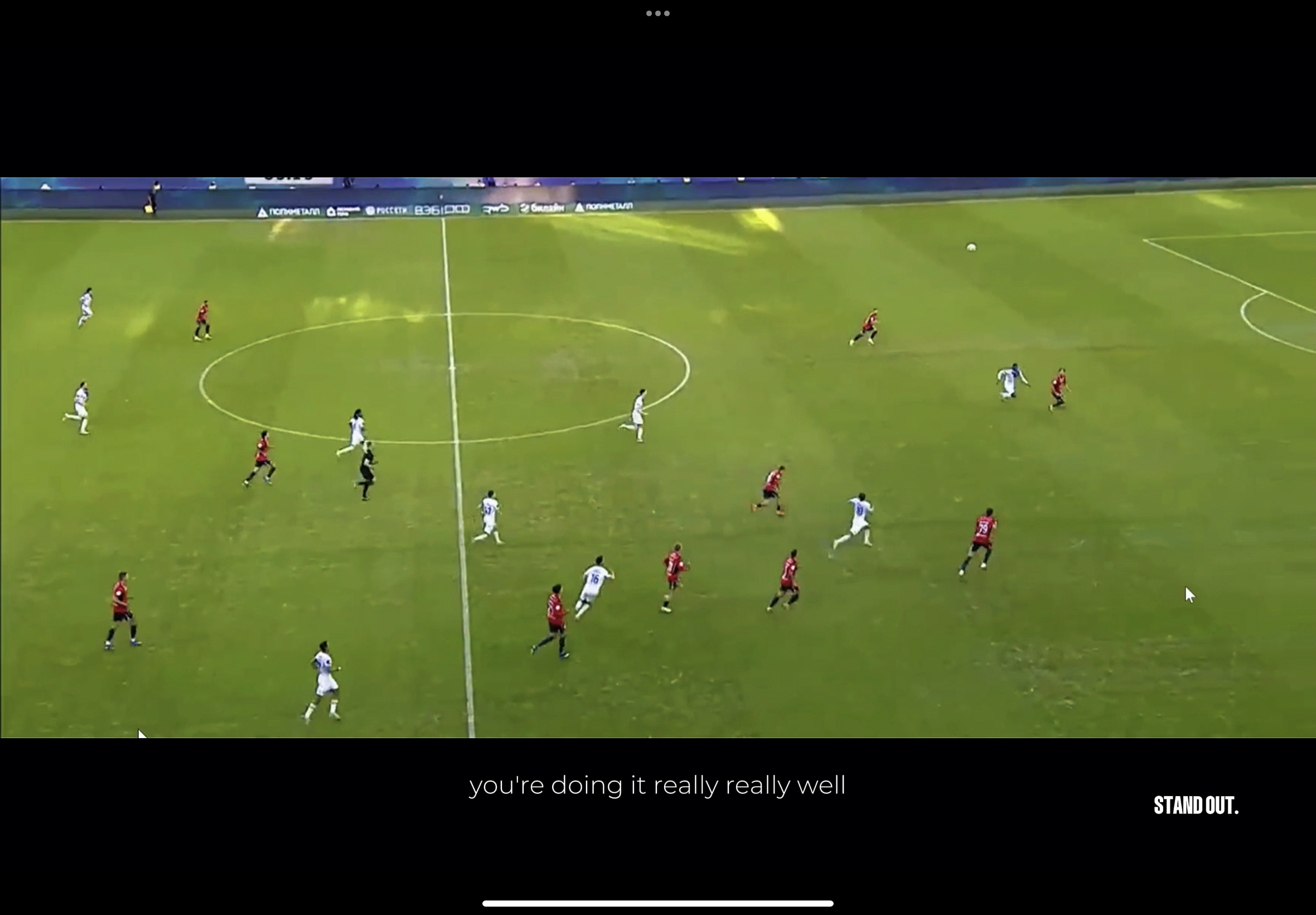
When the ball is played long,
it takes time to travel.
That time is yours.
You don’t watch the ball.
You use that time to move early into the space behind the challenge.
ARRIVE IN STRIDE + TWO TOUCH RULE.
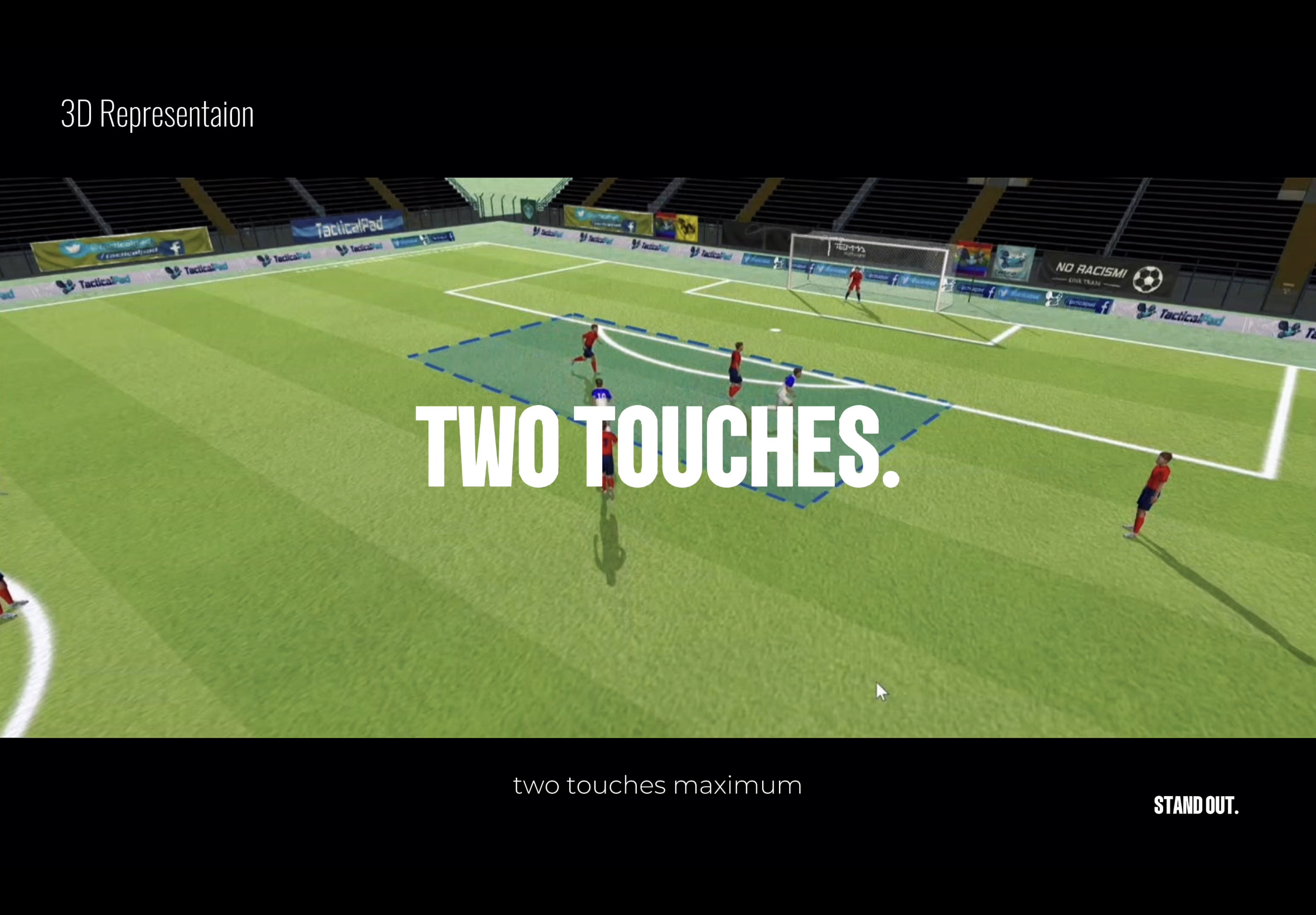
When you move early,
you arrive at the top of the box in stride.
Now you’re facing forward.
Now you control the moment.
In this zone, time is limited.
So your action must be quick.
Two touches maximum.
First touch sets.
Second touch finishes or plays the pass.
Anything more, and the moment is gone.
THE GAP (BALL WATCHING Vs MOVING EARLY).
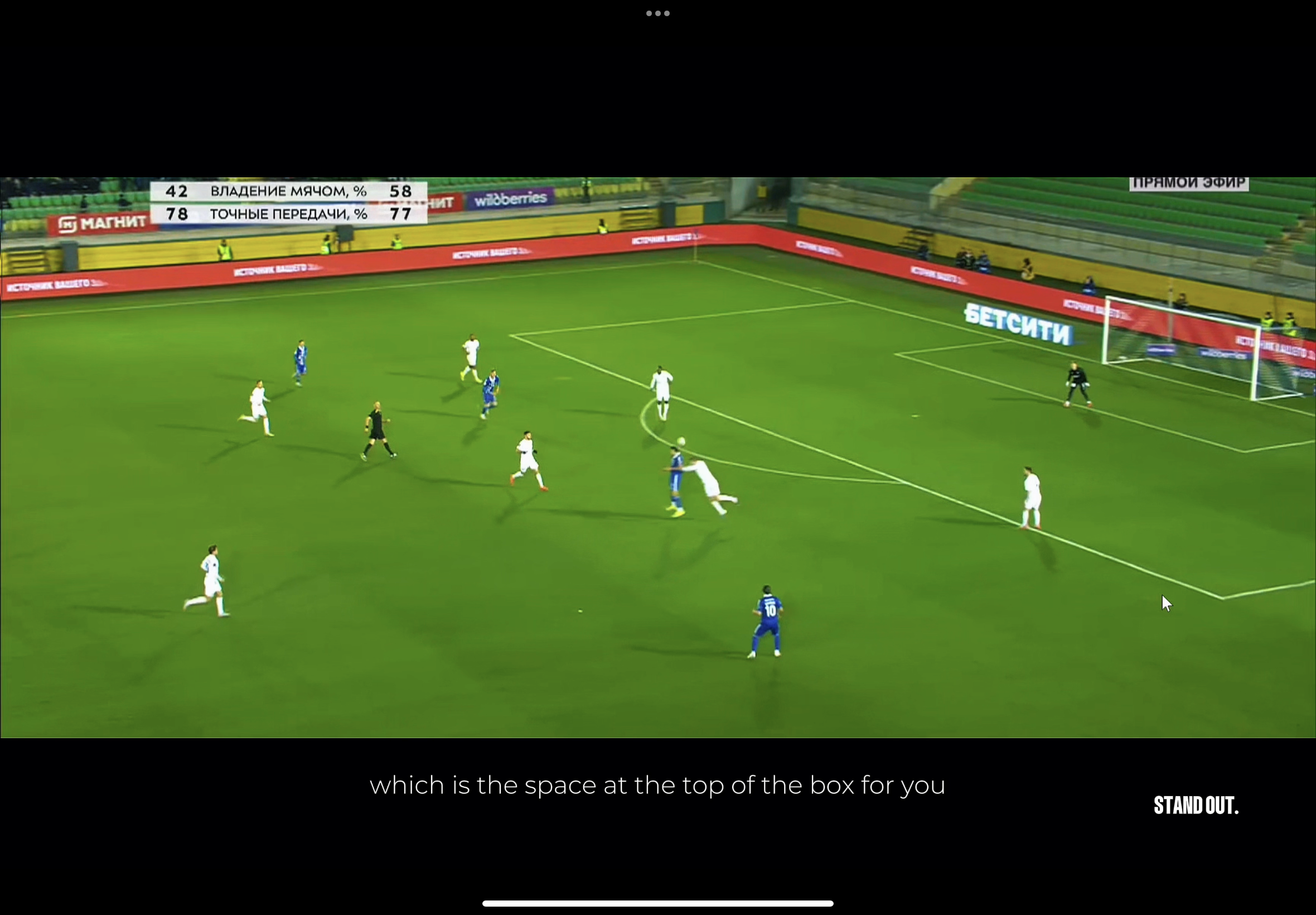
There are moments where you stand and ball watch.
You wait for the layoff.
That delay kills your timing.
You arrive late.
Or in a worse angle.
Instead, move early.
Trust the ball will find you.
Attack the space in stride.
If it doesn’t come, fine.
But when it does,
you’re already there.
Principle.
Long balls give you time.
Use it.
Move early.
See the space.
Arrive in stride.
Finish in two touches.
That’s how you turn direct play
into real chances.
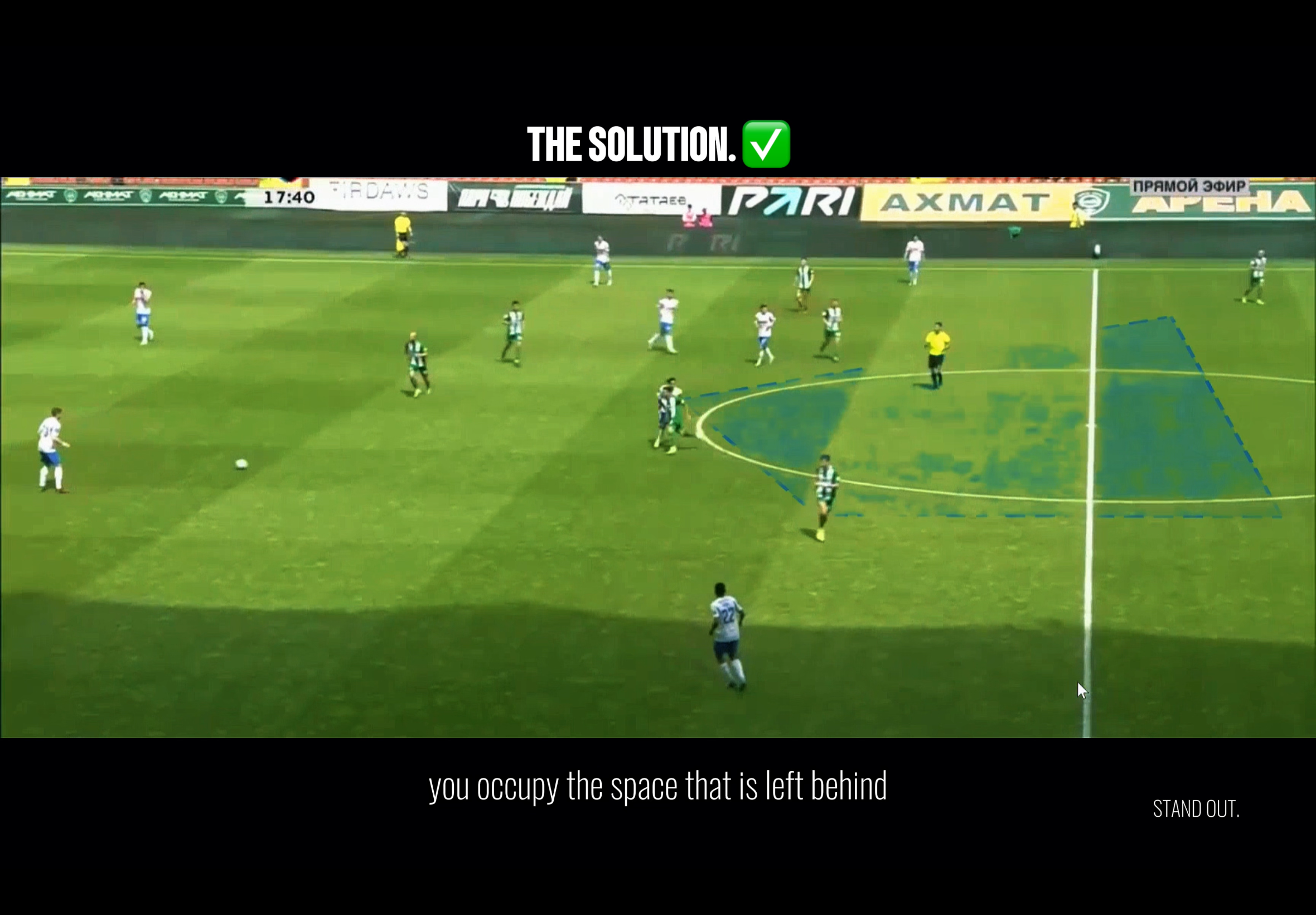
OCCUPY THE SPACE.
Every time a defender steps to press, they leave space behind.
The more aggressive the press, the bigger the space.
The players who recognize this early and move immediately are the ones who consistently receive the ball in dangerous areas.
The Press Creates The Gap
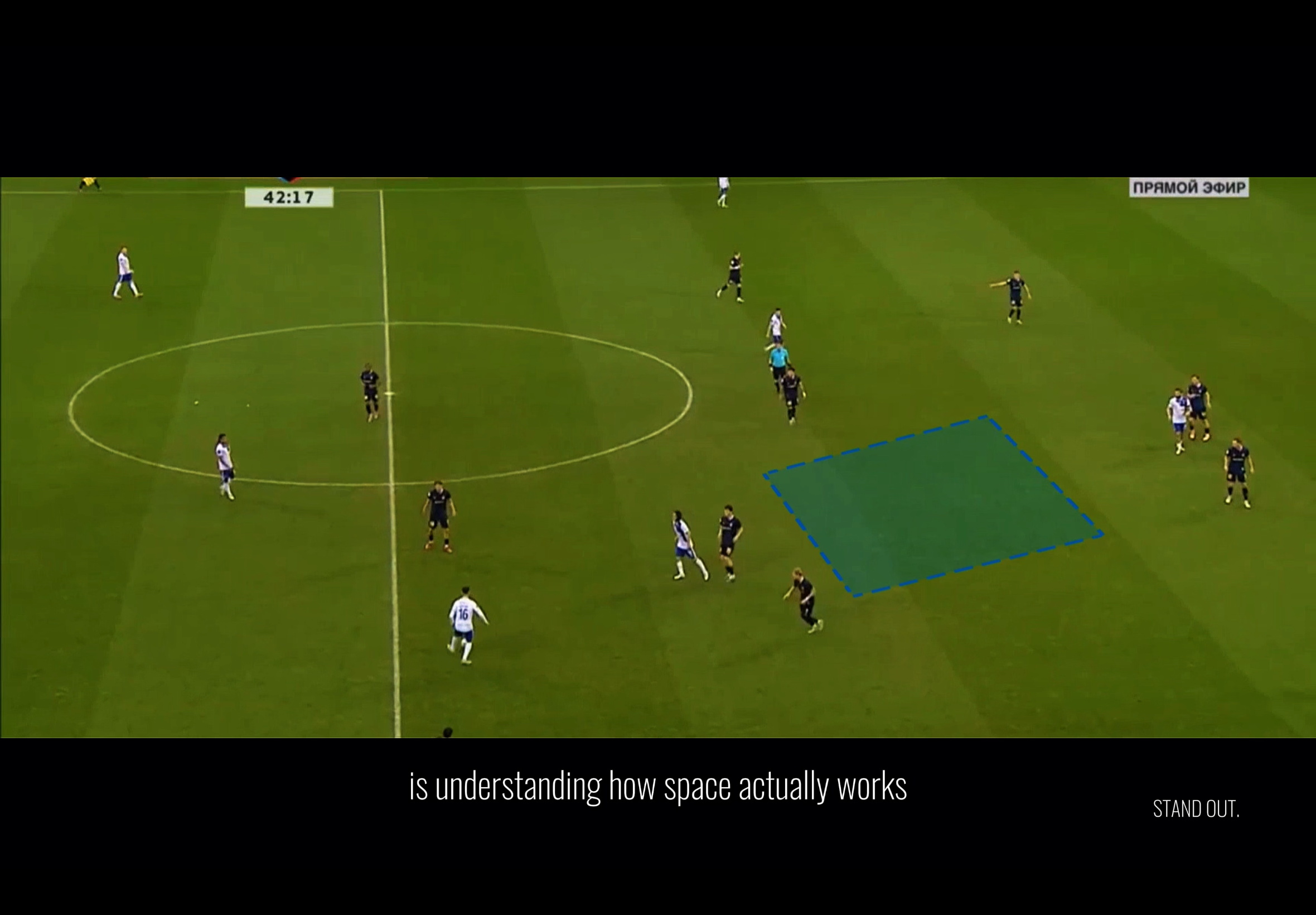
When a midfielder steps out to press, they break their team’s structure.
The line they leave from is no longer intact.
This creates a vertical gap behind the pressing player.
That gap is the space you are looking for.
The Delay In Recovery
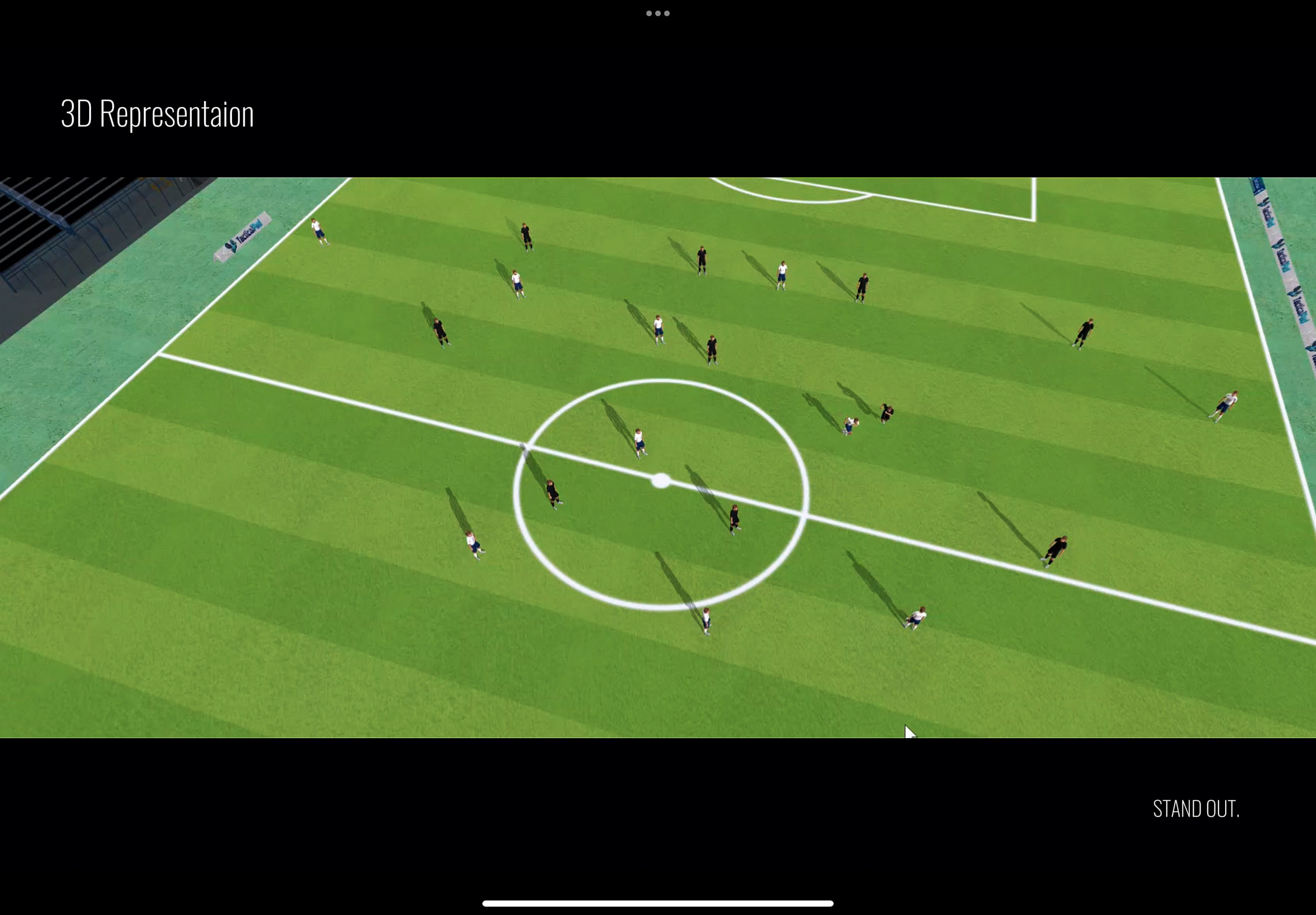
The line behind the pressing player must react.
They need to narrow and close the gap.
But because of the size of the field, that adjustment takes time.
That time is the window.
The space exists before the team can recover its shape.
You Don’t Need To Dribble
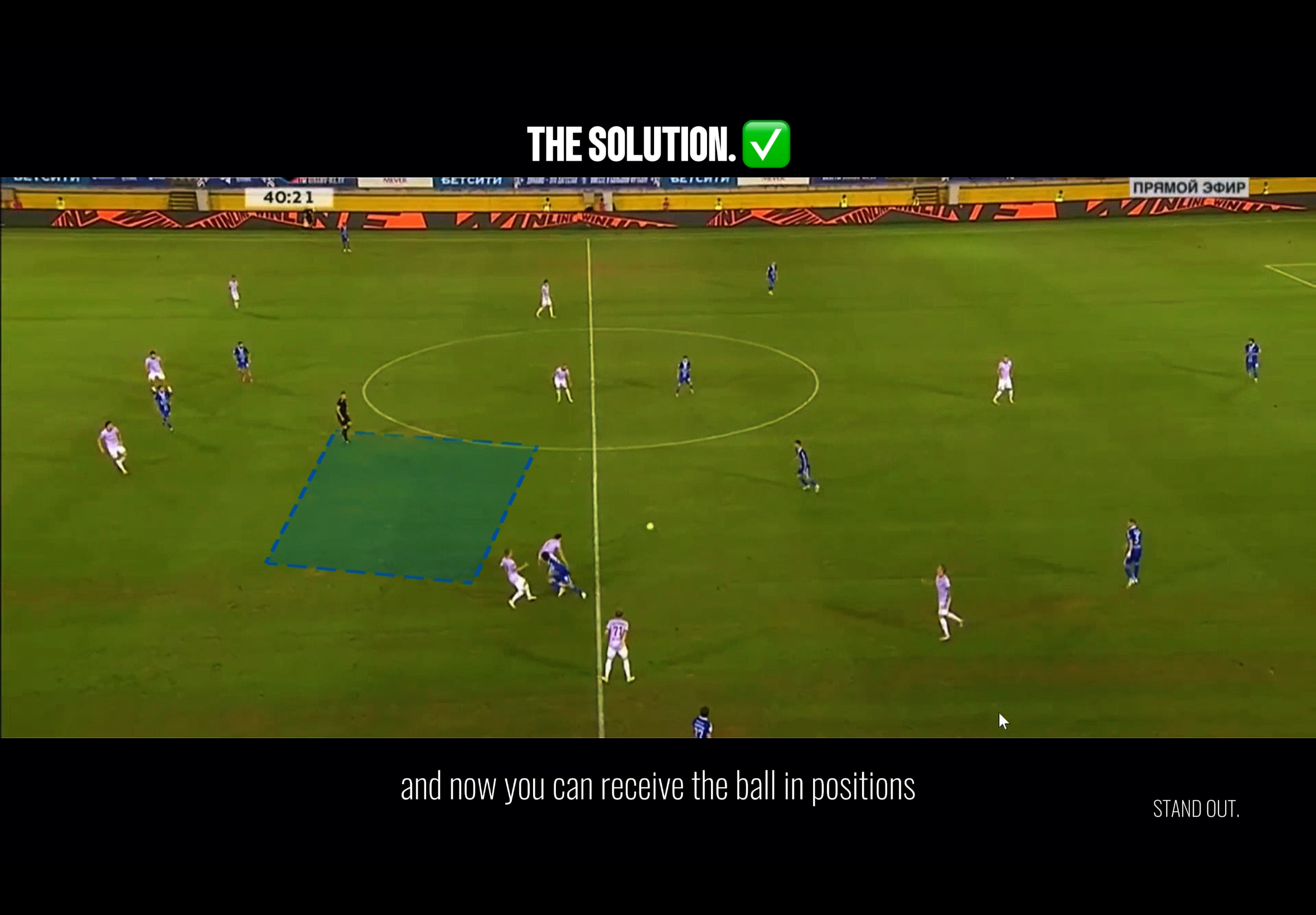
Most players think they need to carry the ball into that space.
You don’t.
The key is to recognize and occupy it.
You can play the ball first.
Then move.
The action is not the dribble.
The action is the run after the pass.
Arrive As The Next Action
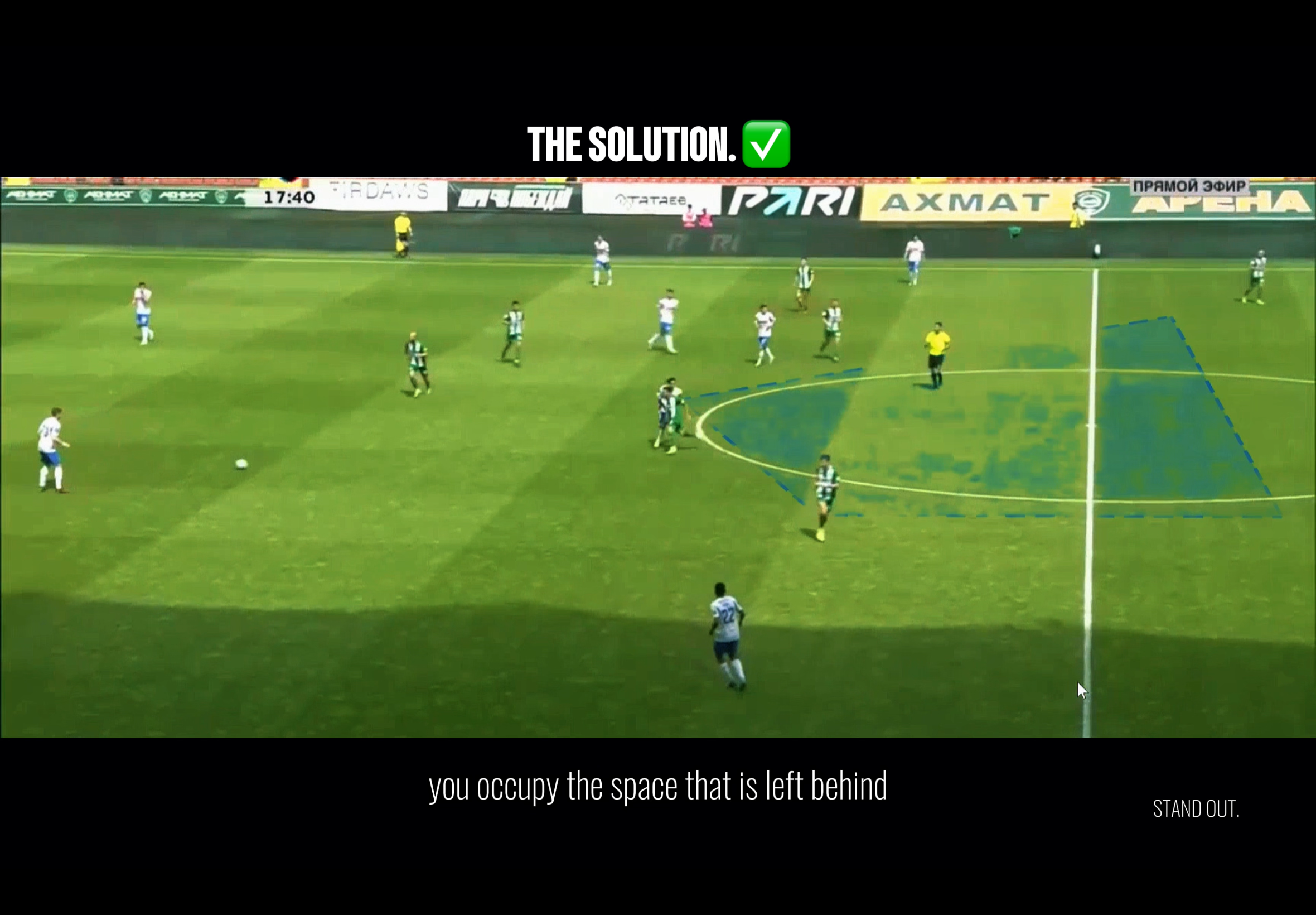
When you move into the space after releasing the ball, you arrive in a new line.
Now you are positioned behind the press.
When the ball comes back to you, you receive facing forward.
That is where you can influence the game.
The Missed Moment
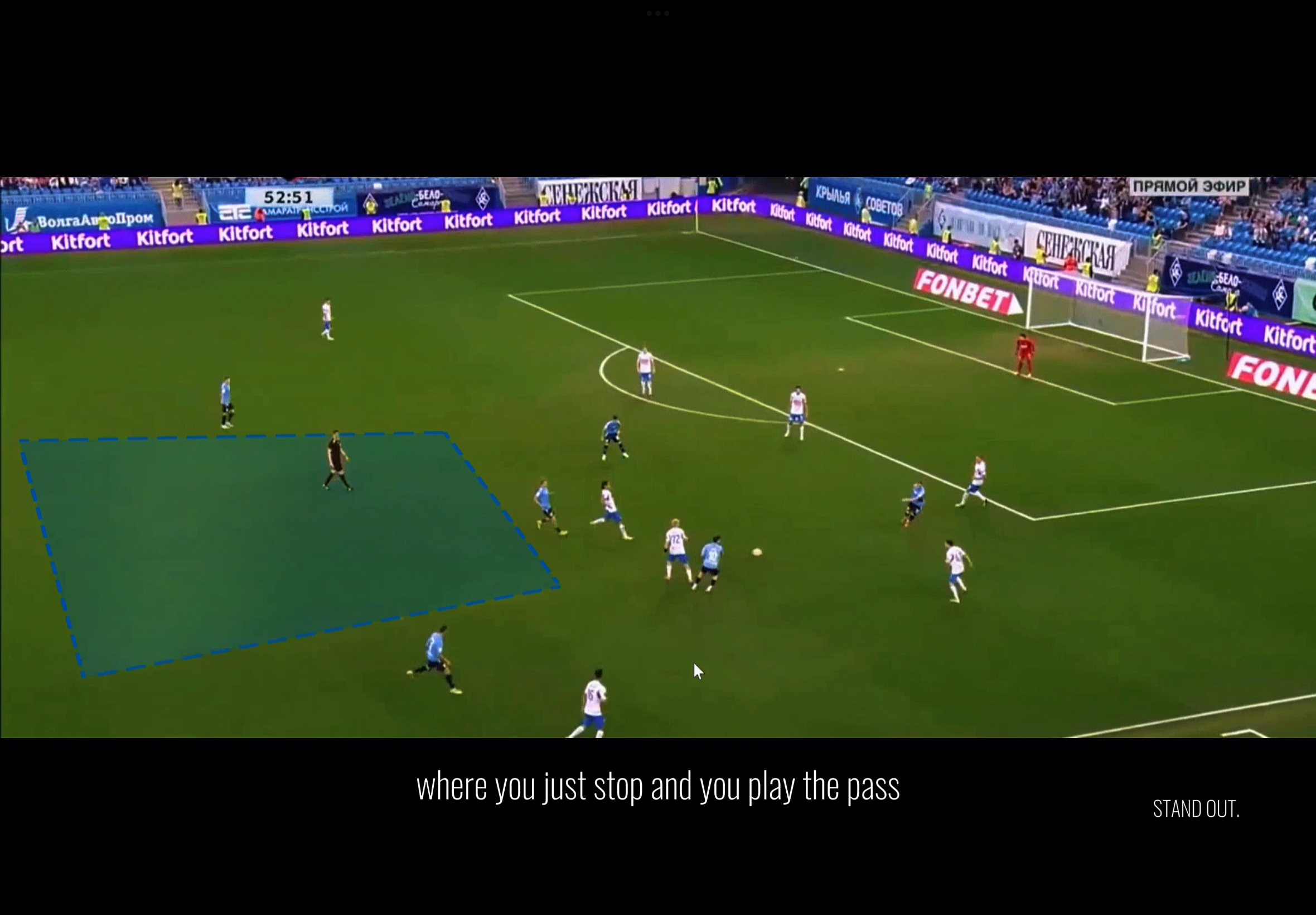
When you pass and stop, the space still exists.
But you are not in it.
Now, when the ball breaks the line to the striker, there is no supporting option underneath.
The opportunity disappears.
Not because it wasn’t there.
But because it wasn’t occupied.
Ball Watching vs Movement
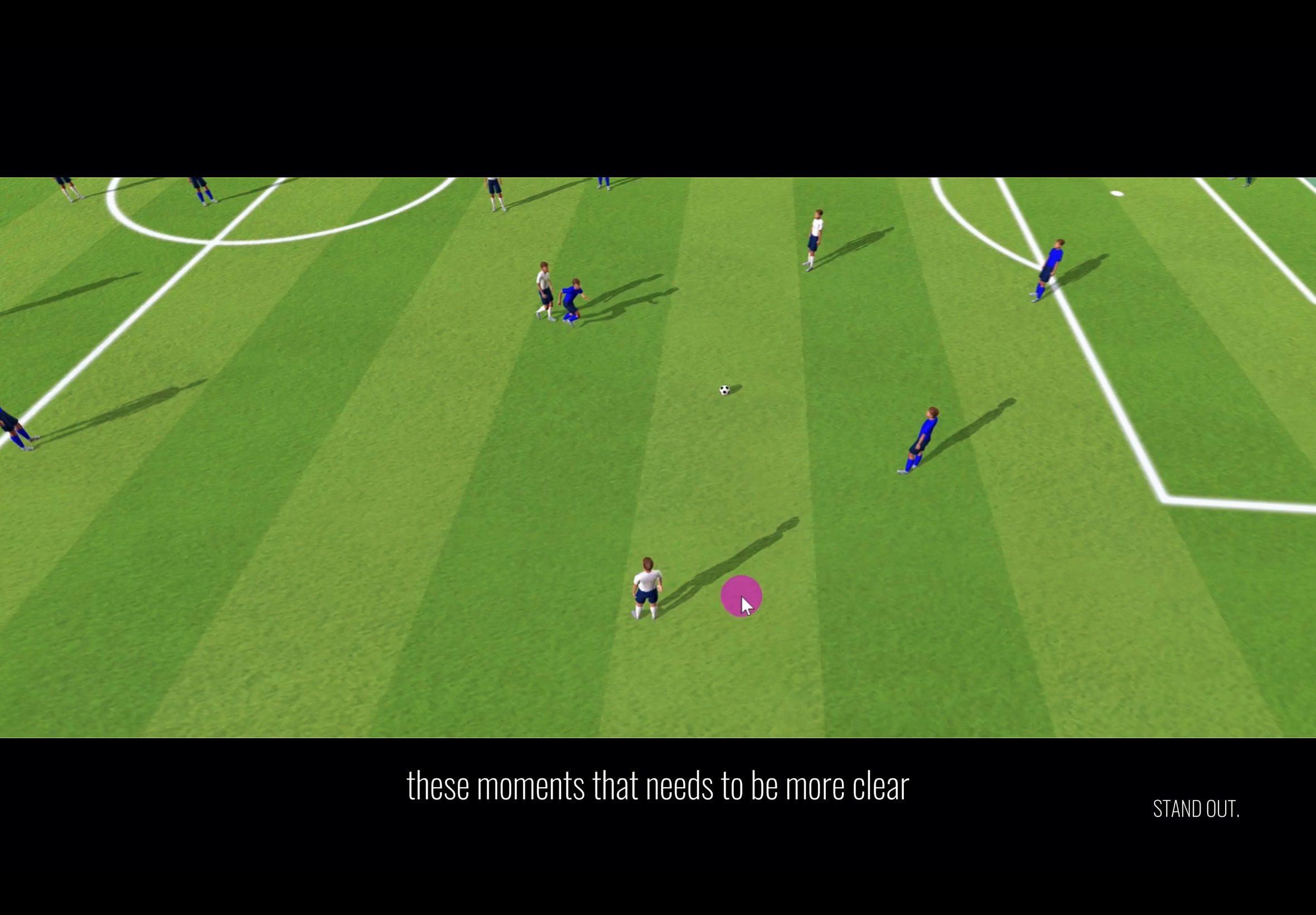
After releasing the ball, players often watch their pass.
That is the mistake.
The best players move immediately.
They understand that the pass creates the space.
And their next action is to arrive inside it.
Key Principle
Space is not found.
It is created by the press.
Recognize the press.
Understand where the gap appears.
Move immediately after the pass.
Arrive behind the line.
That is how midfielders consistently receive the ball in dangerous areas.
CREATE SEPARATION.
At higher levels, getting involved in the game is rarely about asking for the ball.
It is about creating separation before the ball arrives.
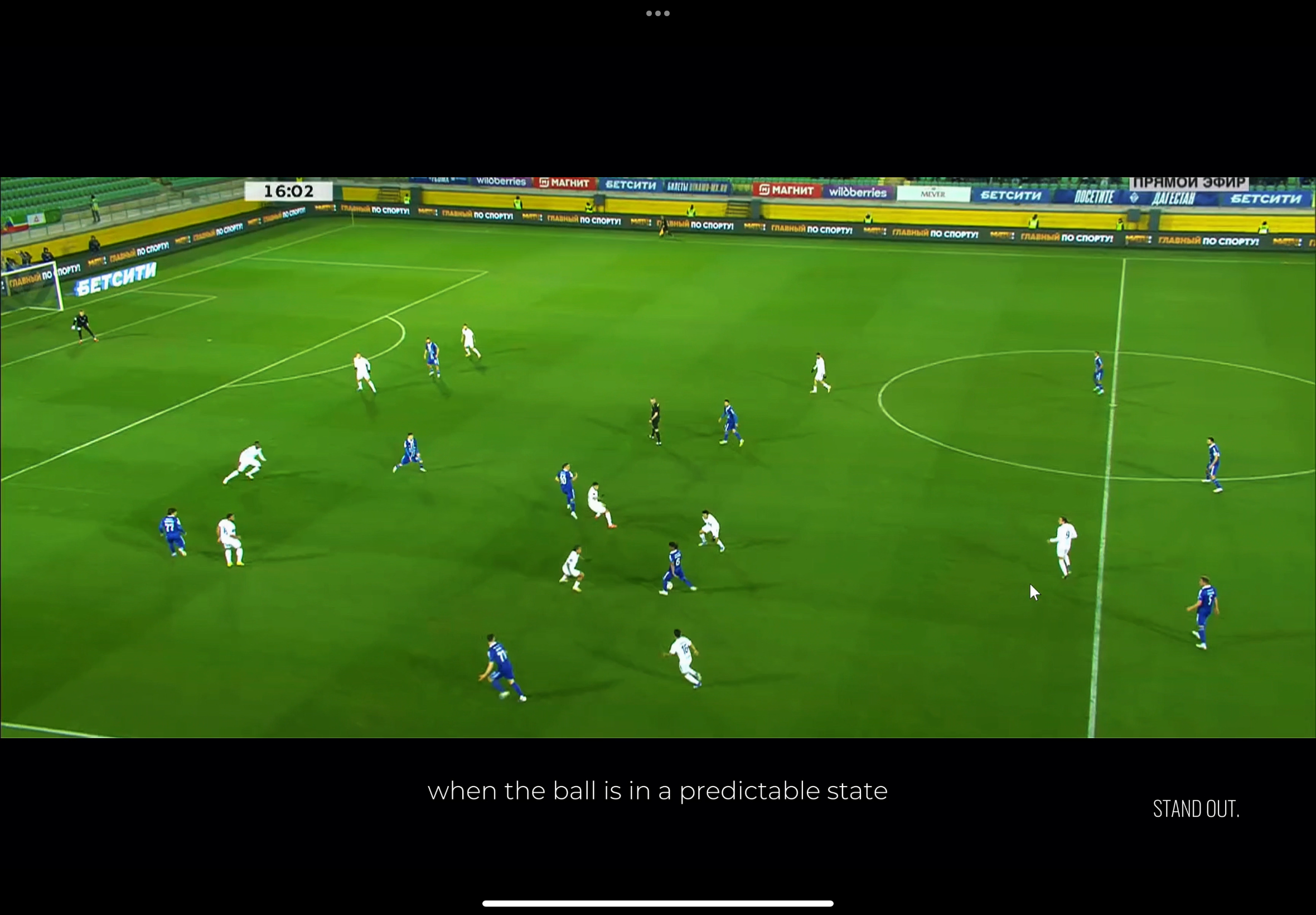
Most opportunities to receive the ball come when the game enters what we call a predictable state. This is when the ball is traveling and you can clearly read where it will arrive.
In those moments, the ball is not the problem.
Timing is.
The players who move as the pass is being played create separation. The players who wait until the ball arrives usually receive under pressure.
This small difference in timing often decides whether you receive the ball facing forward or with a defender on your back.
PREDICTABLE PASS.
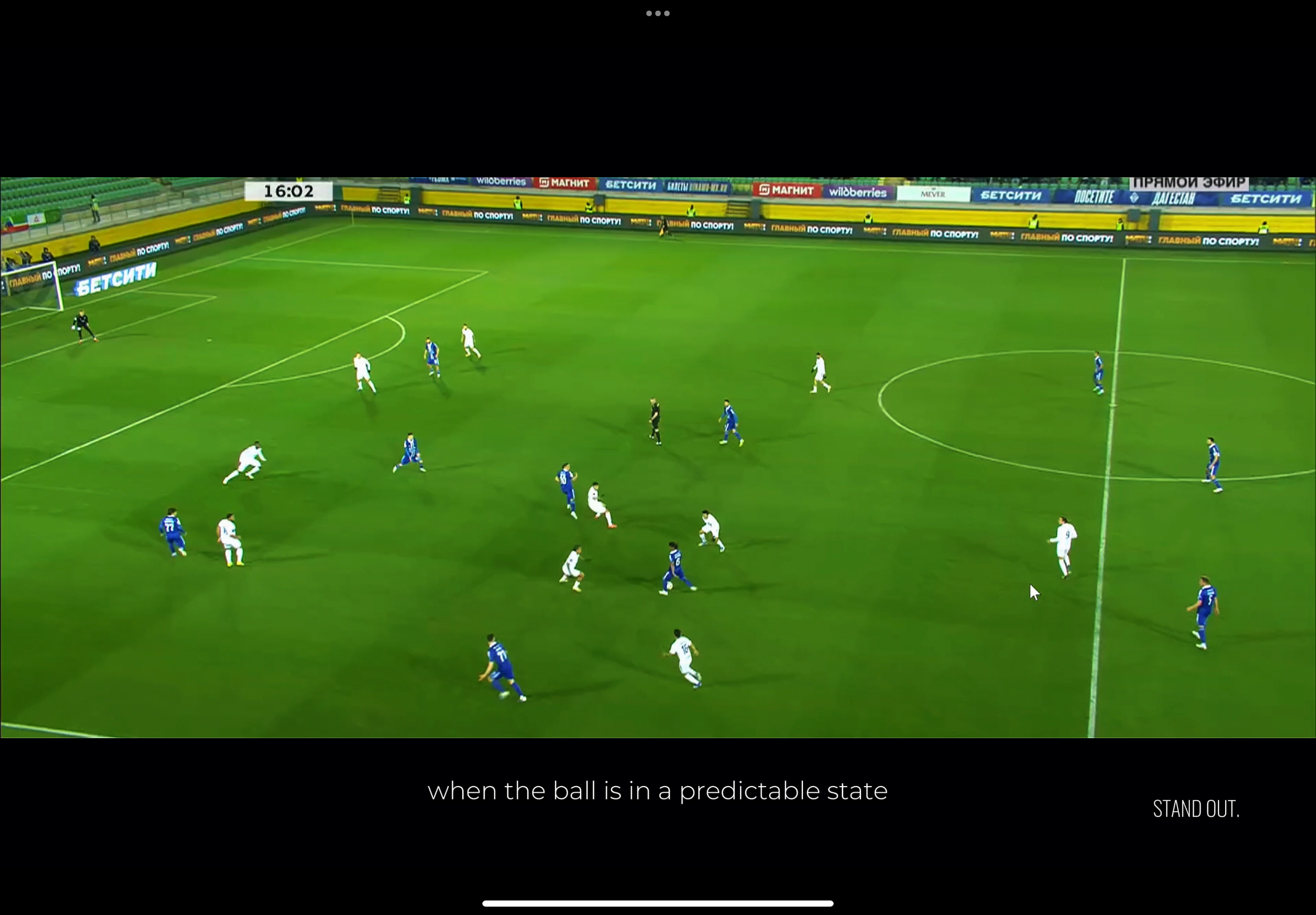
When the ball is traveling, the situation becomes predictable.
You can read the trajectory and know where the ball will arrive.
Because of that, you do not need to wait.
This is the moment to move.
The earlier you recognize the trajectory, the earlier you can get ahead of the player marking you.
Move As The Pass Is Played.
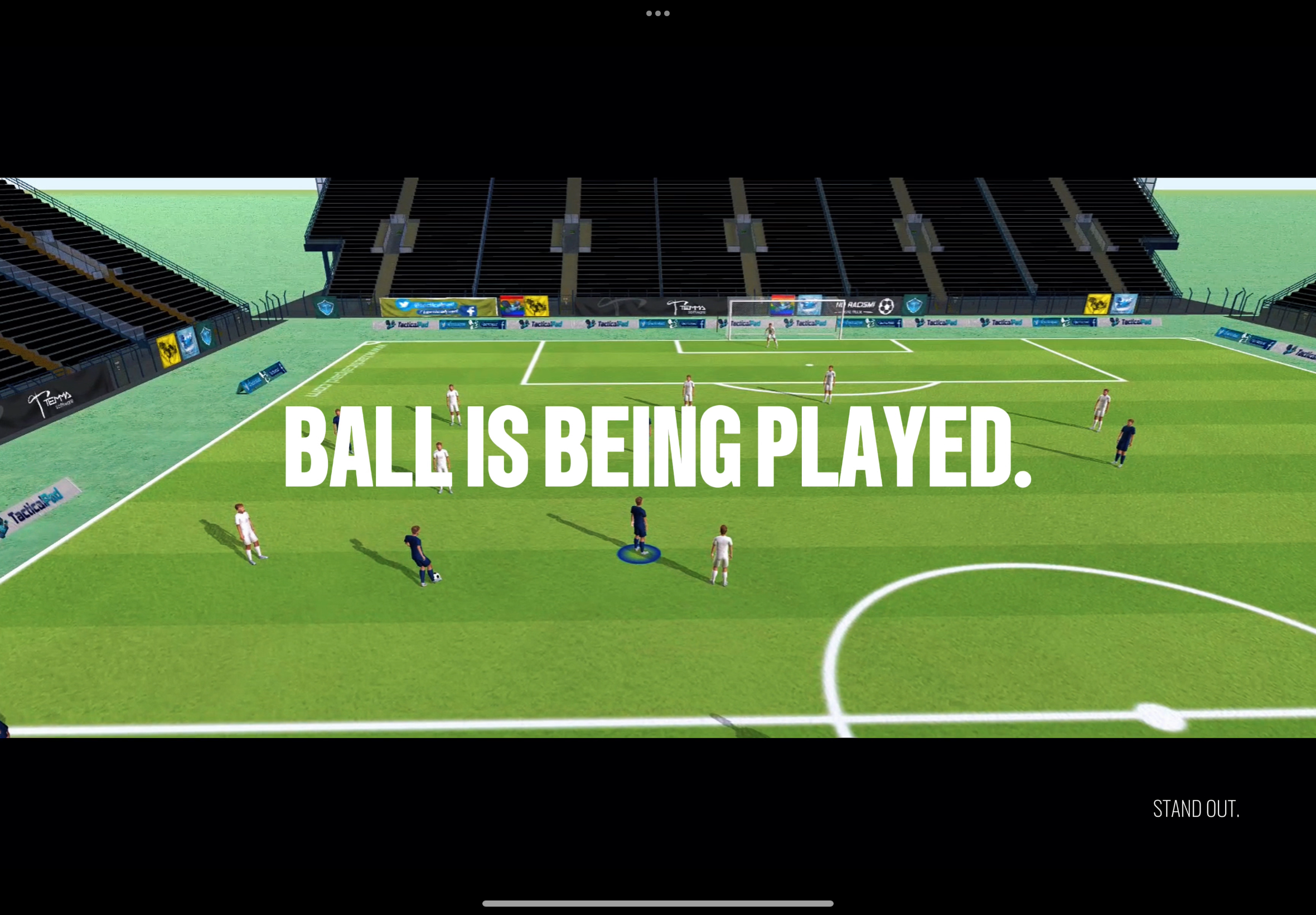
The key cue is simple.
Move when the pass is played, not when the ball arrives.
If the movement starts late, the defender stays connected to you.
But if you move as the ball is being played, you gain a step of separation.
At higher levels, that single step is often the difference between receiving under pressure and receiving in space.
Artificial Transition.
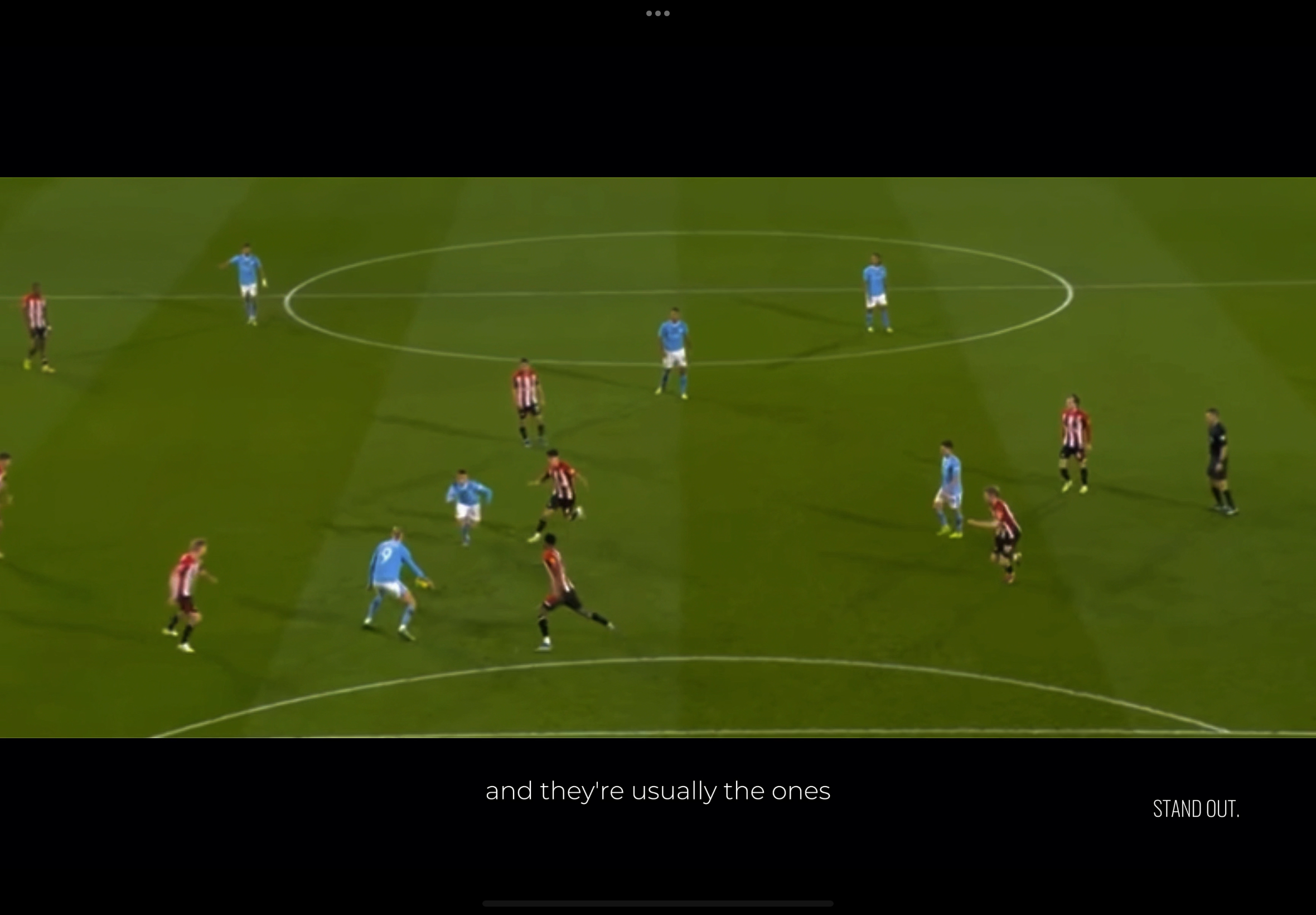
When the ball breaks a line into central areas, players naturally become ball watching.
Their attention goes to the ball.
This creates a temporary moment where defensive structure becomes unstable.
These moments behave like small transitions inside possession.
The players who recognize them early can arrive in the next space before defenders recover.
The Third Man.
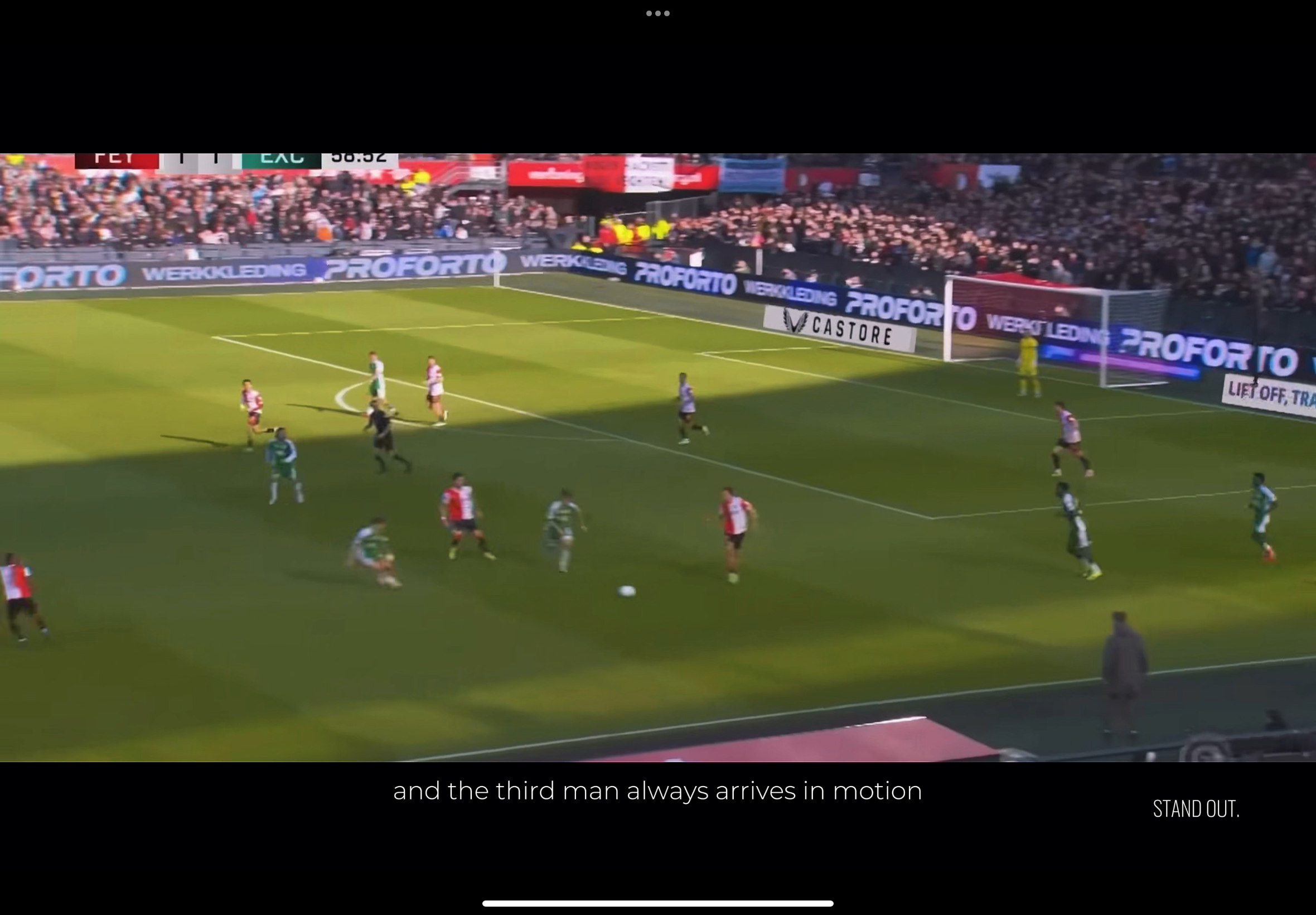
Often you will not receive the first pass.
You will receive the next action.
This is the third man.
When the striker receives the ball with their back to goal, defenders usually focus on the ball.
That is the moment to move underneath or beyond them.
If the layoff comes, you receive facing forward.
If it does not, your run still stretches the defensive line and creates space elsewhere.
Receive In Motion.
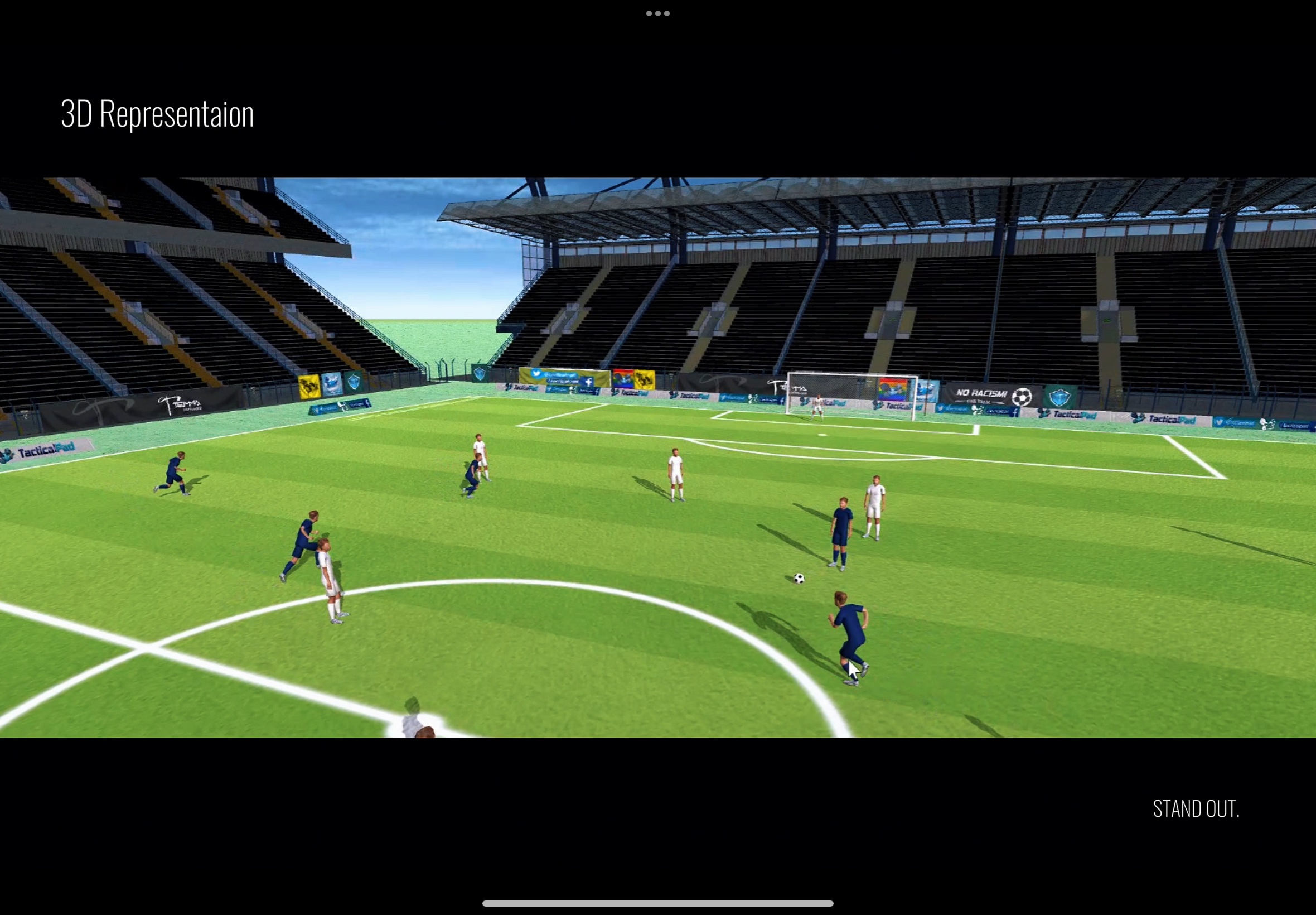
The best players in this position rarely stop their movement.
They attack the ball in stride.
Receiving while moving forward changes the behavior of defenders.
When a player receives the ball with forward momentum, defenders hesitate to step because the next touch can eliminate them.
Stopping before the ball arrives removes that advantage.
Principle.
Separation is rarely created after you receive the ball.
It is created before the ball arrives.
Recognize the predictable moment.
Move as the pass is played.
Arrive as the third man.
Receive in motion.
That is how attacking midfielders become consistently involved in the game.
JAVAD,
Change of pace breaks the marker.
When teams defend man-to-man, the defender follows you everywhere.
In these situations, your change of pace becomes everything.
If you jog toward the ball, the defender stays comfortable. He can see you and the ball at the same time. Nothing forces him to react.
But when the pace changes suddenly, the defender cannot anticipate the first step.
That first step creates separation.
And that small separation gives you control of the next action.
Separation reveals the free player.
When separation appears, the game becomes easier.
In this moment, creating separation would allow the player on the ball to pass into you comfortably.
From there, the next action becomes clear.
The free midfielder is available.
One touch breaks the first line of pressure.
Without separation, that pass becomes risky.
With separation, the pass becomes simple.
Predictable moments create opportunities.
There is another moment where separation becomes easier.
When the ball travels long through the air, it enters what we call a predictable state.
The ball is traveling for several seconds.
It is not going to grow wings and fly somewhere else.
You know where it will arrive.
That time allows you to change your pace and create separation from your marker.
Most defenders watch the ball during these moments.
That is your chance.
Accelerate. Create separation.
And move underneath the player receiving the ball.
The third man moment.
Against man-to-man defenses, the ball rarely reaches you directly.
Instead, it often arrives through the third man.
The ball goes into one player.
You move underneath them.
And they lay the ball into your path.
That is where you receive the ball facing forward.
Reading these moments is important.
Because the third-man action is often where the attack truly begins.
MY THOUGHTS.
Sometimes you disappear in games.
Not because you do not receive the ball.
But because when you receive it, the action often stops. You protect the ball, play backwards, and the play resets.
For an attacking player, impact comes from positive actions forward.
That means receiving the ball and doing something that moves the attack forward.
To do that, you first need separation from your marker.
Separation creates the space needed to turn, pass forward, or attack.
This framework explains how separation appears in games.
Impact does not start with the ball.
It starts with separation from your marker.
Change the pace.
Create the separation.
Read predictable moments.
Arrive as the third man.
That is how attacking players turn simple touches into forward actions.