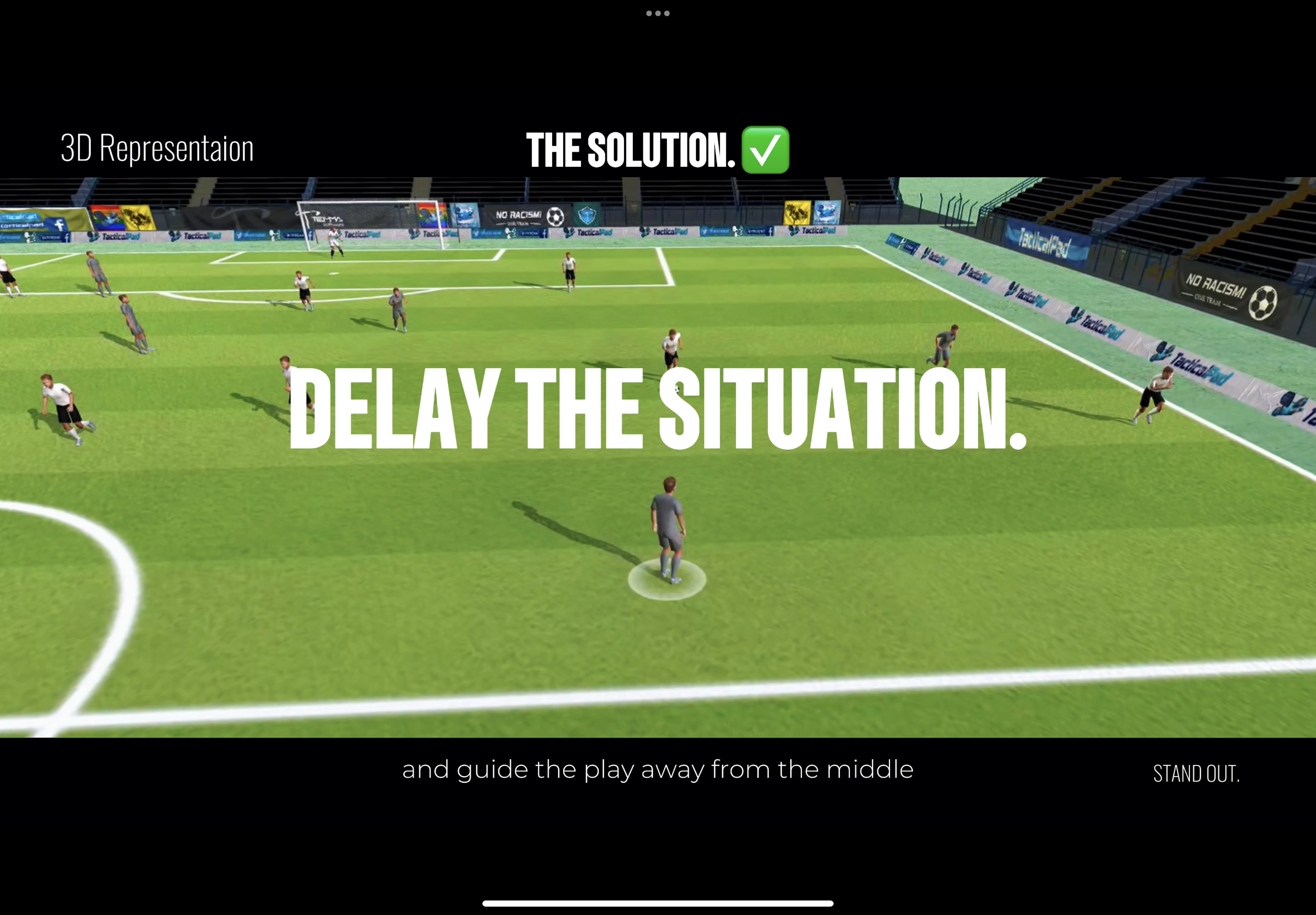
LATE TO THE PRESS, WHAT NOW?
At higher levels, you will be late.
That is not the problem.
The problem is what you do next.
THE SITUATION.
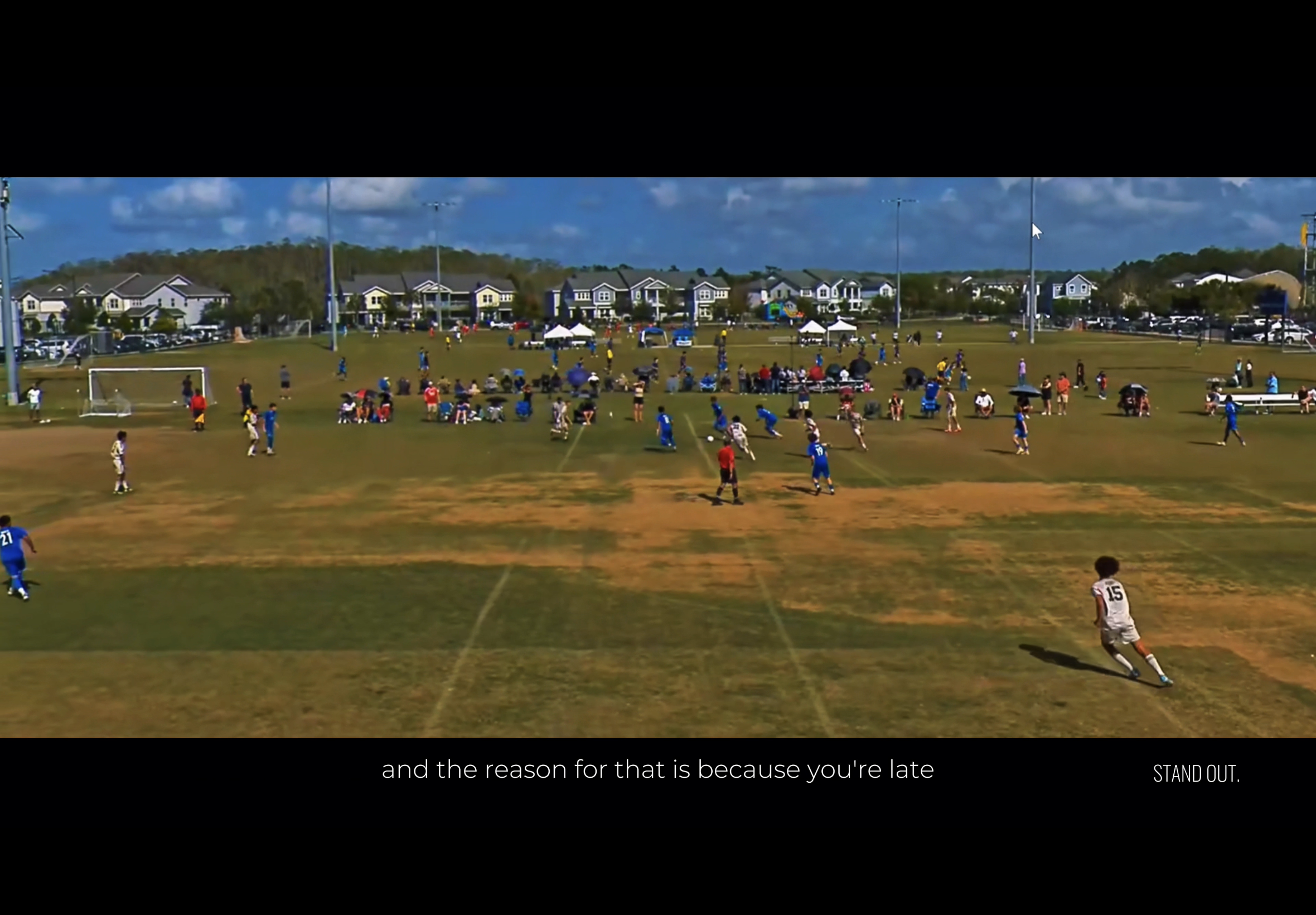
You are far from the player.
He has control.
He can see you and his options.
Your press is not threatening.
WHY YOU’RE VULNERABLE.
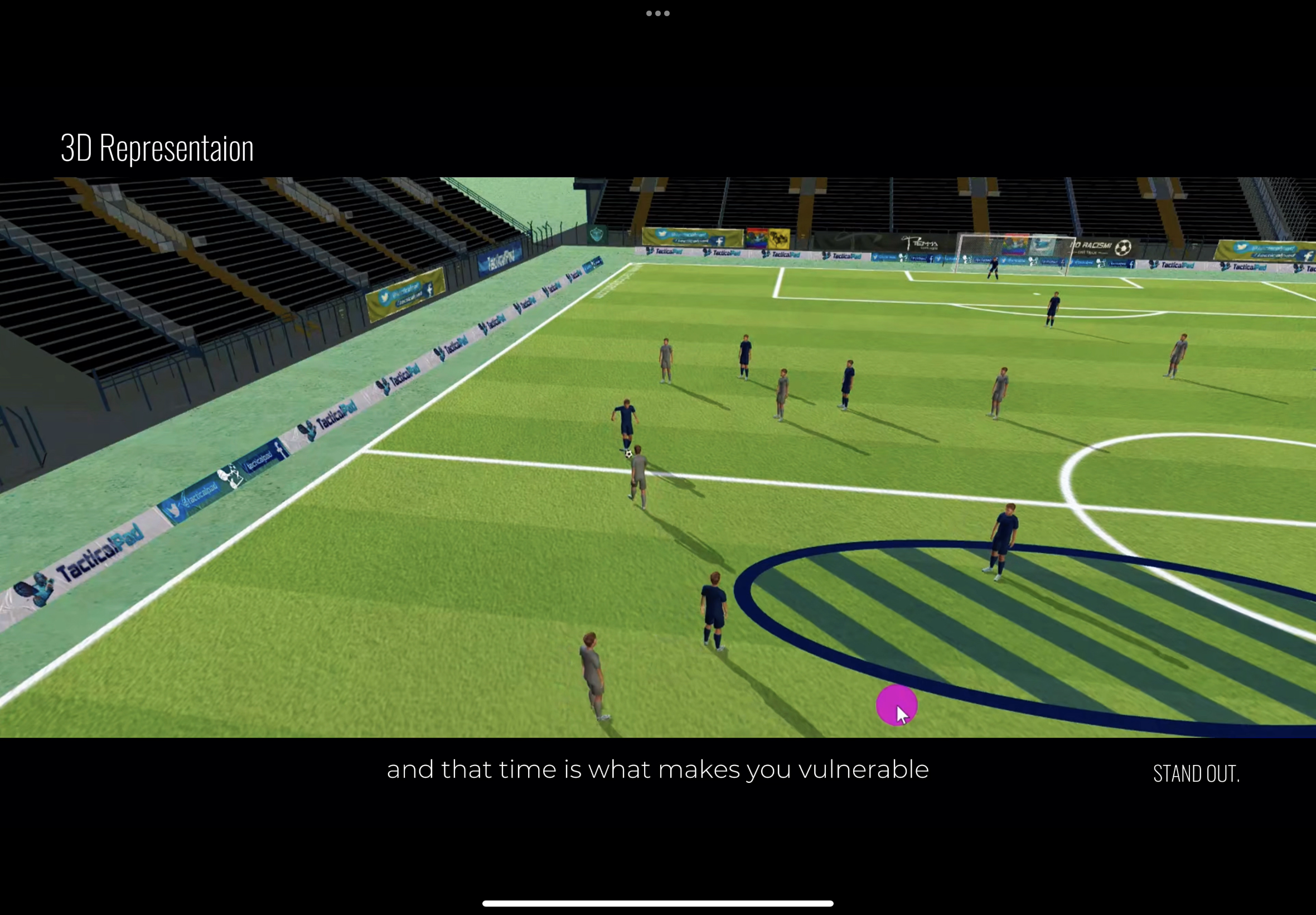
When you press late,
you expose space behind you.
Space appears where the press starts.
The later you are,
the easier that space is to attack.
THE MISTAKE.
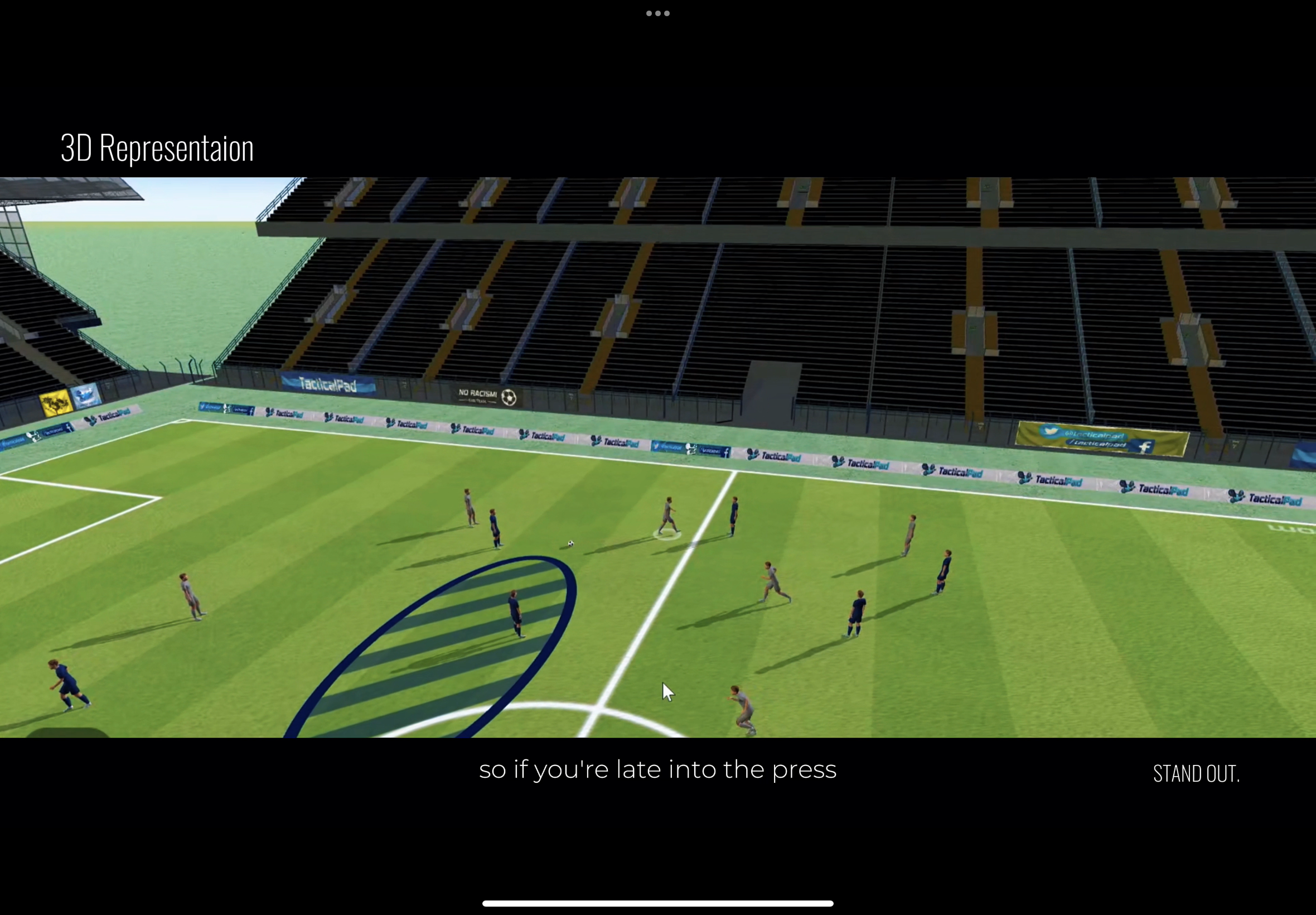
You are late,
but you still try to press aggressively.
Now you get played through.
Or cut off into central space.
THE SHIFT.
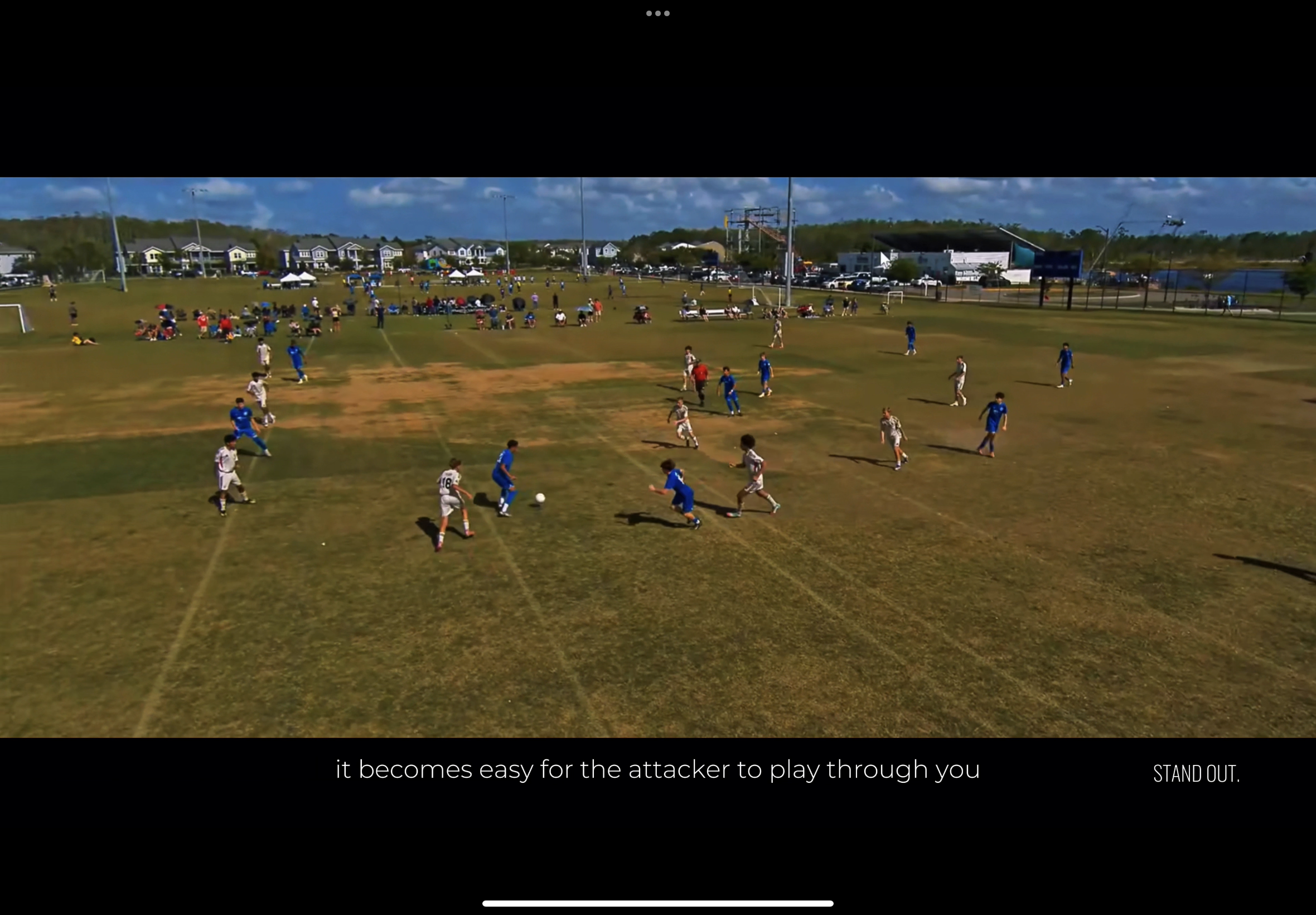
When you are late,
it is no longer about the ball.
It is about the space.
TAKE SPACE FIRST.
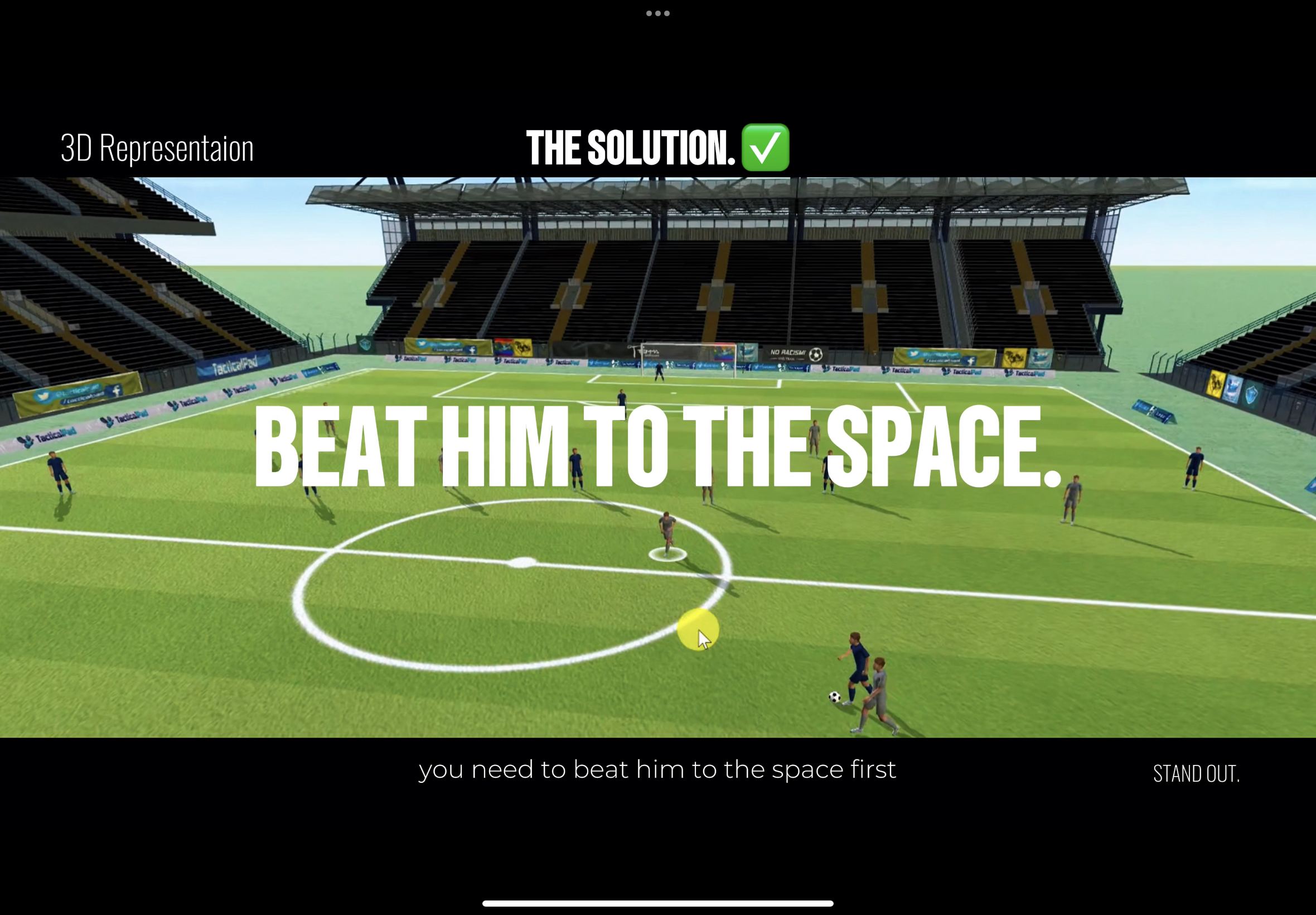
Sprint to the most dangerous space.
Usually central.
Do not chase the player.
Beat him to where he wants to go.
WHEN YOU CAN PRESS.
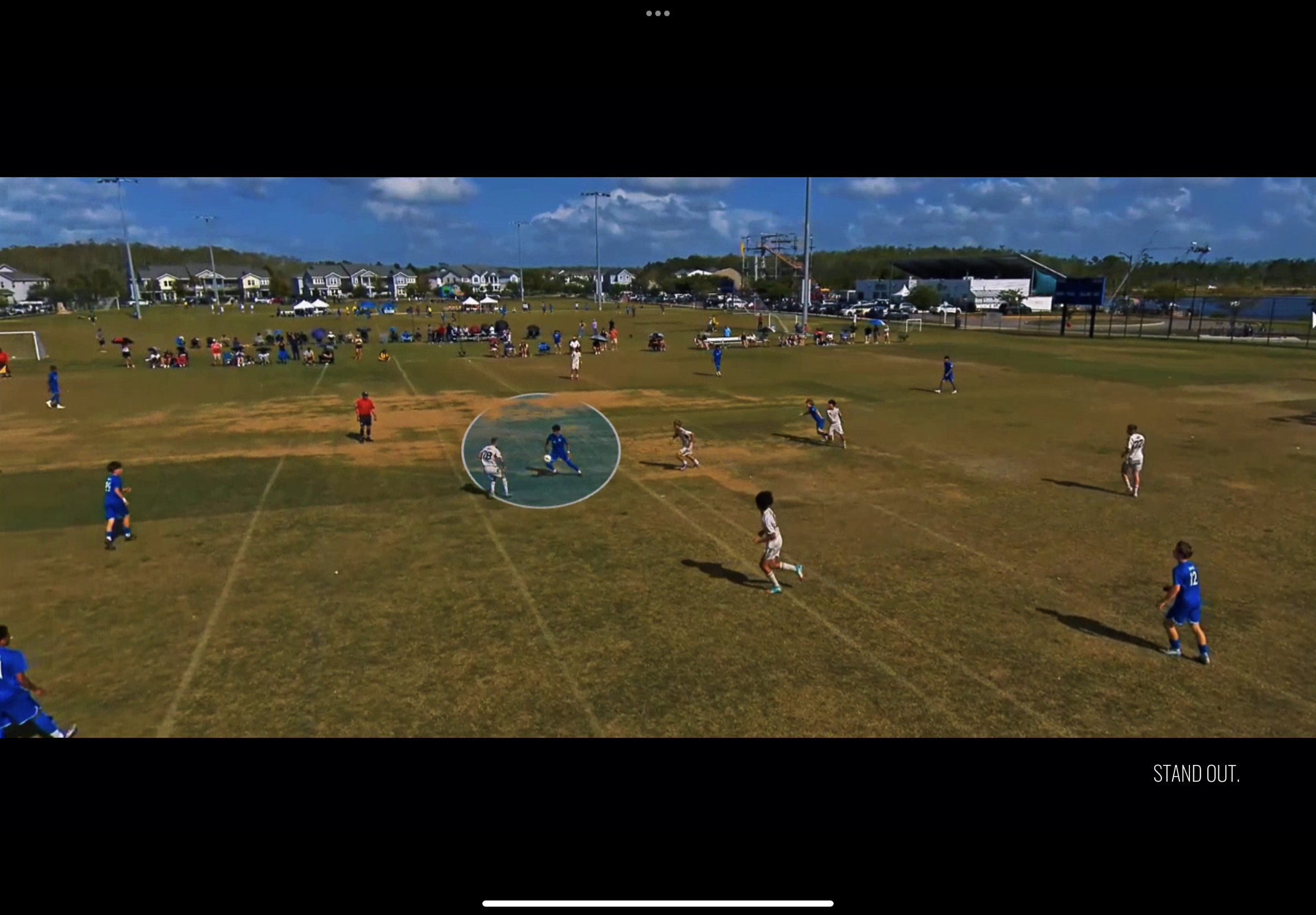
If you are already close,
inside that two-meter distance,
then you can be aggressive.
WHEN YOU CANNOT PRESS.
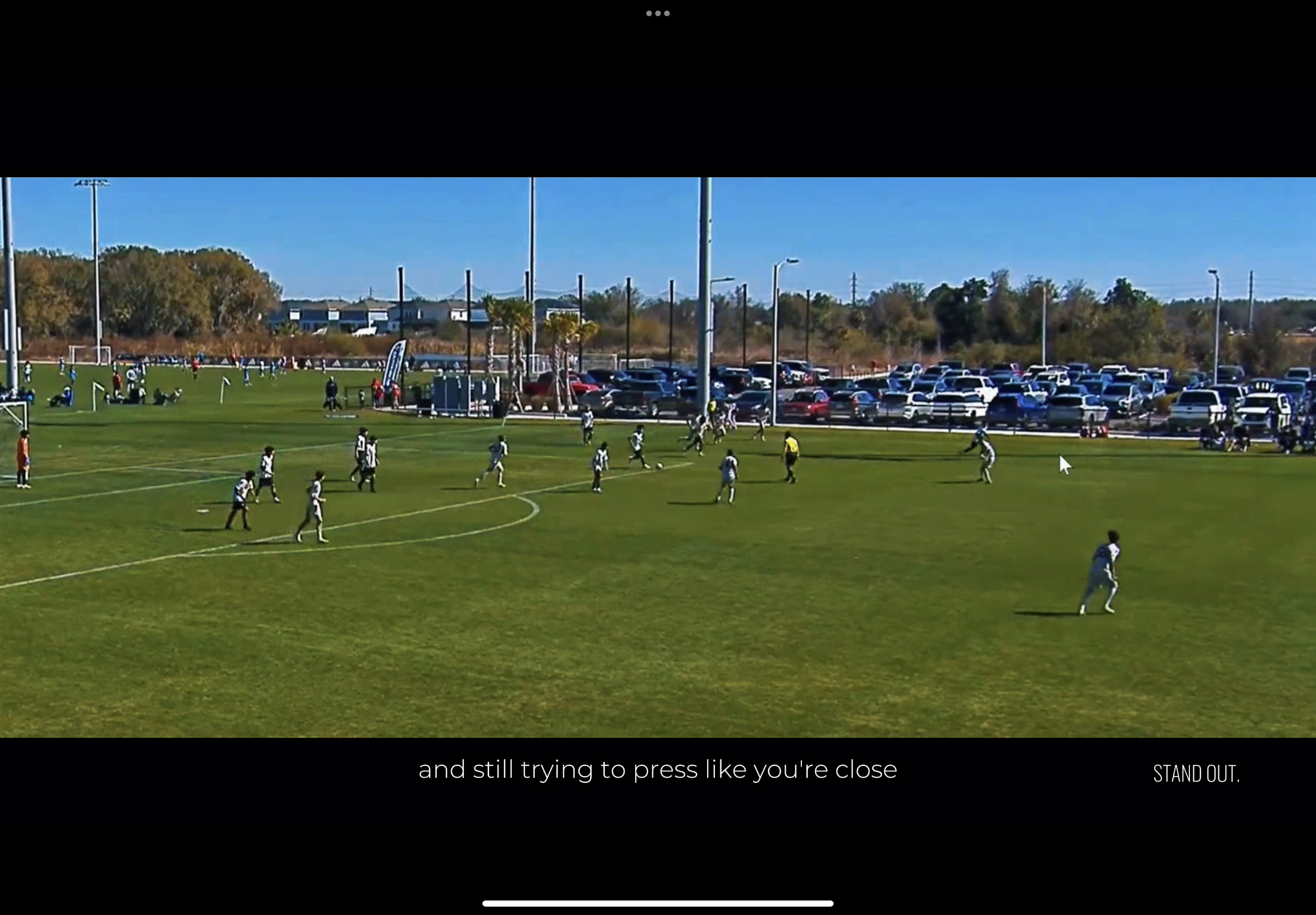
If you are far,
do not commit.
Hold your position.
Steer the play wide.
DELAY THE GAME.
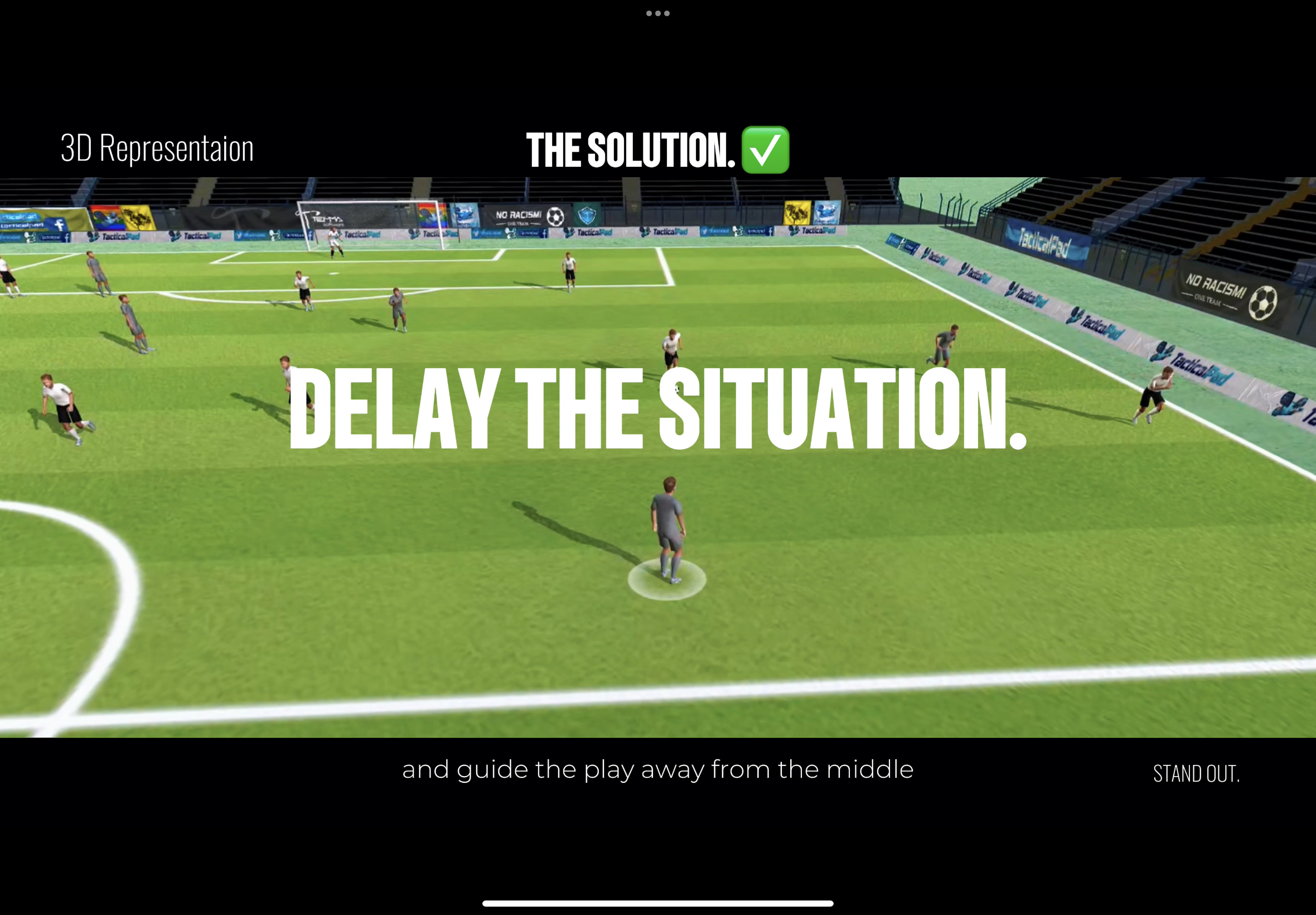
Accept the transition.
Do not try to win it immediately.
Slow it down.
Wait for support.
PRINCIPLE.
Close = press.
Late = protect space.
That is how you control the next phase.
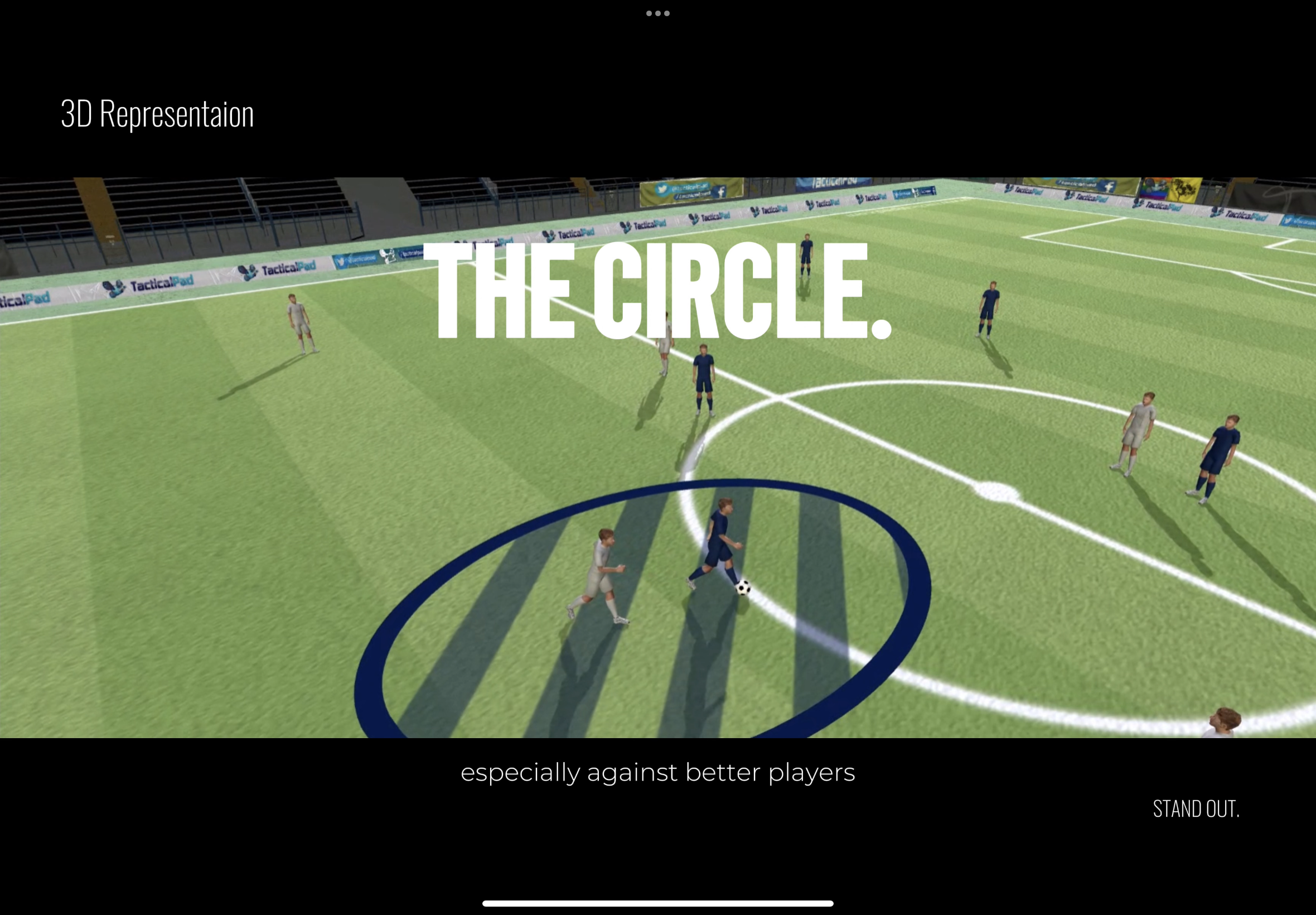
ATTACK THE FIRST TOUCH.
At higher levels, winning the ball is rarely about constant aggression.
It is about choosing the right moment to go.
That moment is the first touch.
PREDICTABLE STATE.
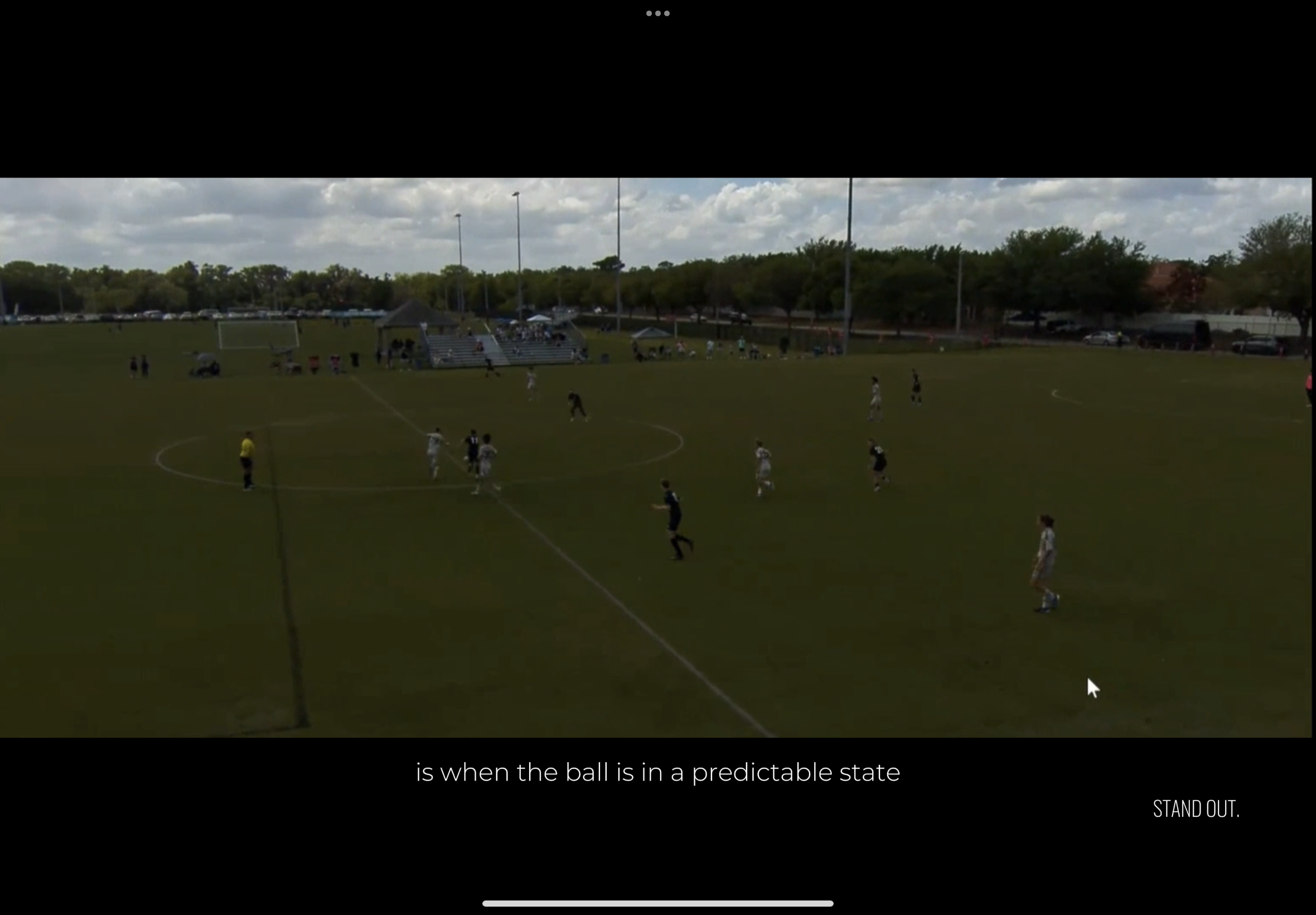
When the ball is traveling, the situation is predictable.
You can read where it will arrive.
That is your first opportunity to be aggressive.
If you cannot intercept the pass, the next moment is the first touch.
THE FIRST TOUCH WINDOW.
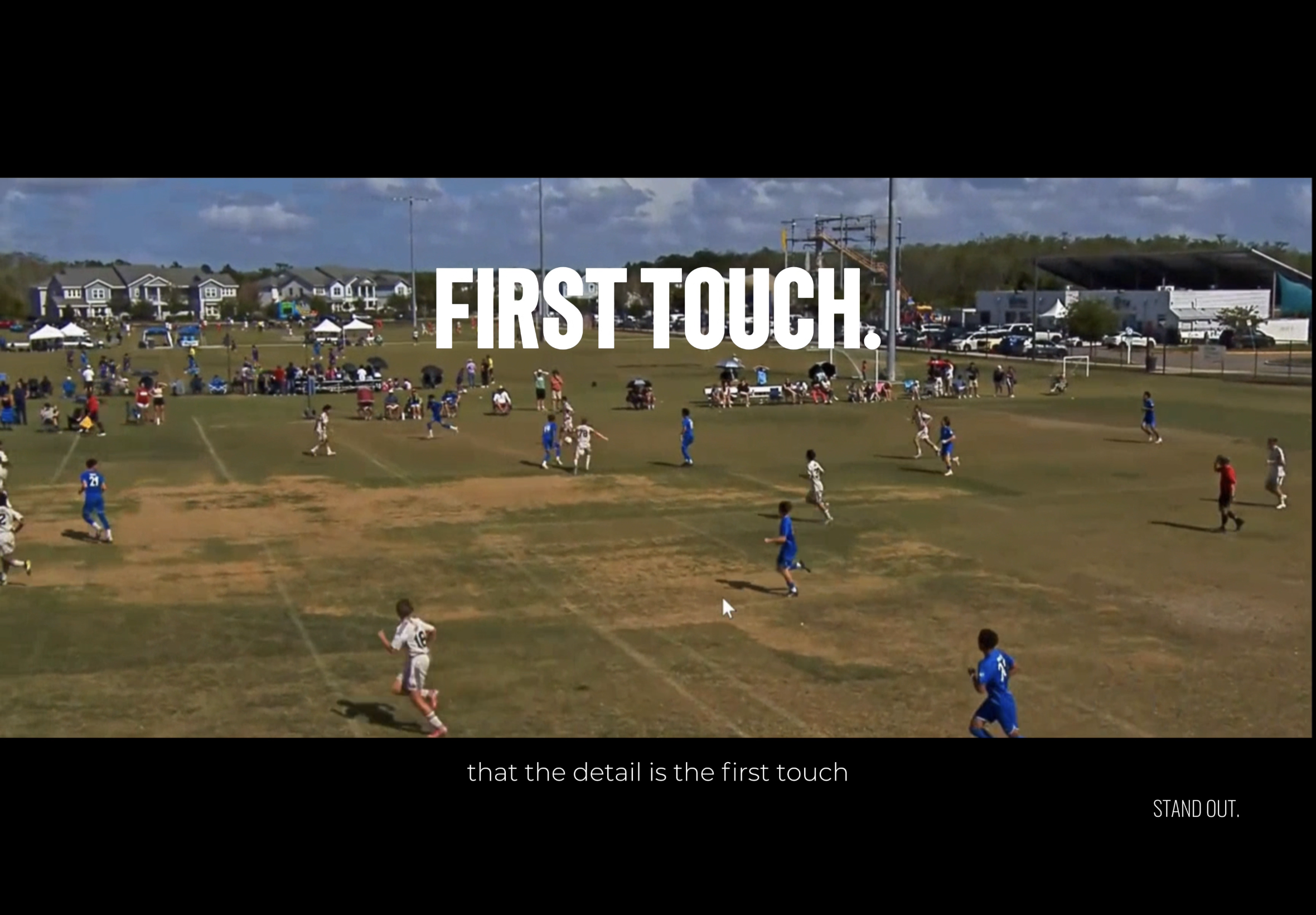
The first touch is not fully controlled.
Between the first and second touch, the ball is free.
This is the window where you win the ball.
After the second touch, control is established.
The moment is gone.
THE TWO METER RULE.
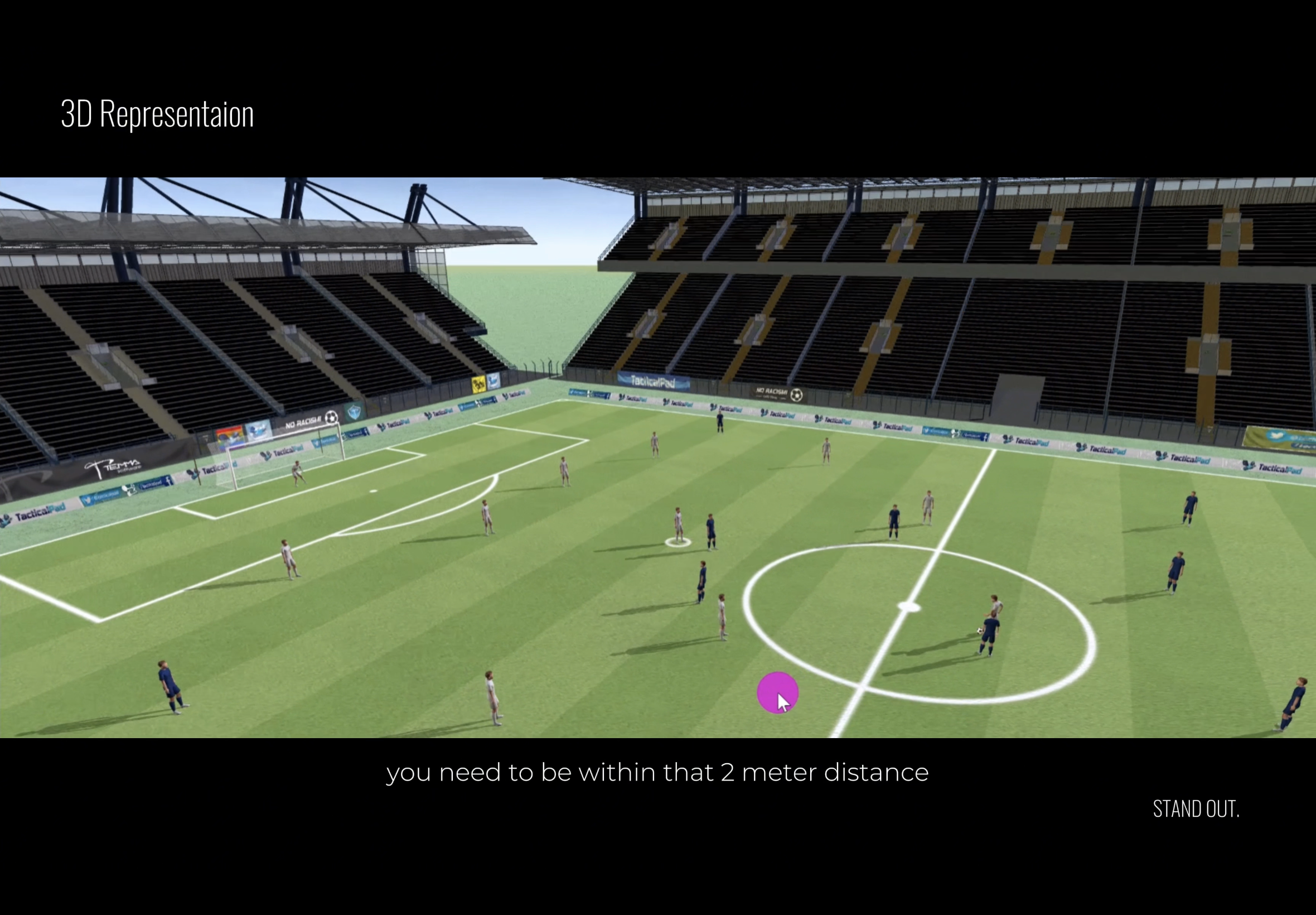
You must be close enough to act.
Imagine a two-meter circle around the player.
If you are inside it, you can step and win the ball.
If you are outside it, you are late.
CONTROL BEFORE AGGRESSION.
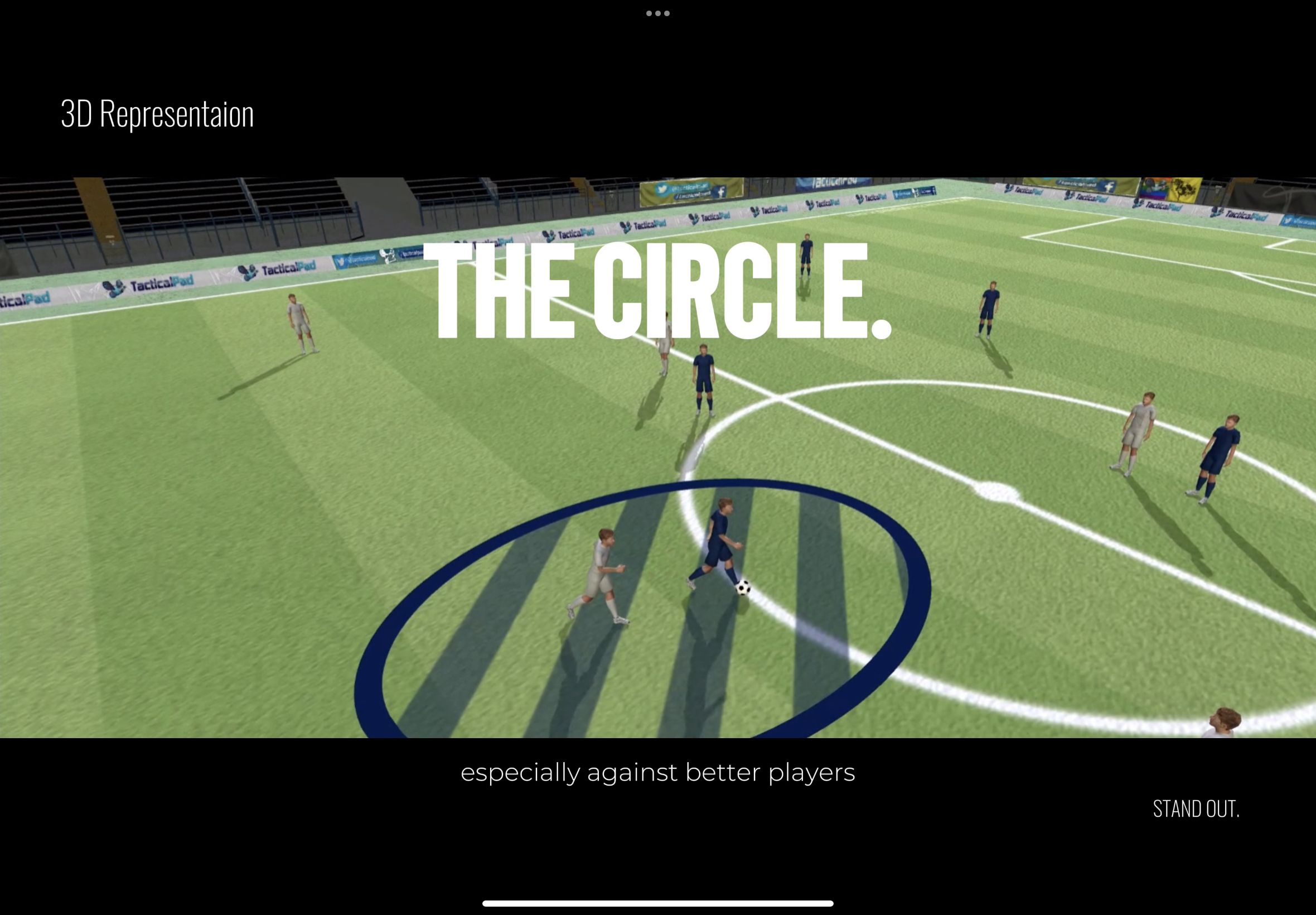
You do not want to jump early.
If you go too early, you get turned.
You want to stay controlled, inside the 2m circle.
You want to wait.
Then you go on the first touch.
TIMING THE ACTION.
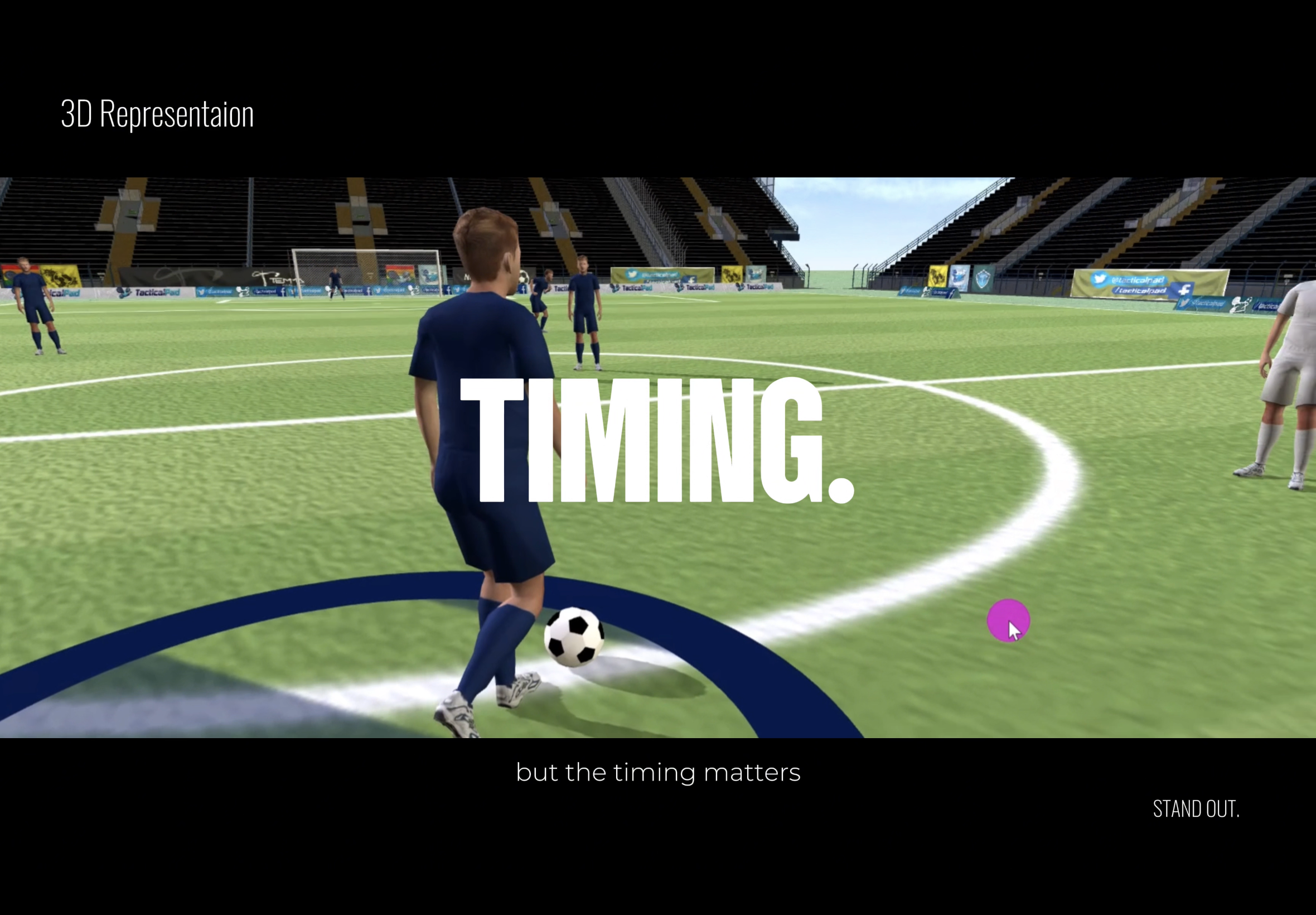
Patience creates the opportunity.
The first touch triggers the action.
That is when you step.
That is when you commit.
PRINCIPLE.
Do not rush.
Do not wait too long.
Stay within the distance.
Attack the first touch.
That is how you win the ball consistently.
TRACK YOUR MAN.
At higher levels, these are the moments that get punished.
Not your positioning.
Not your effort.
What you do when the ball travels long.
THE MOMENT.
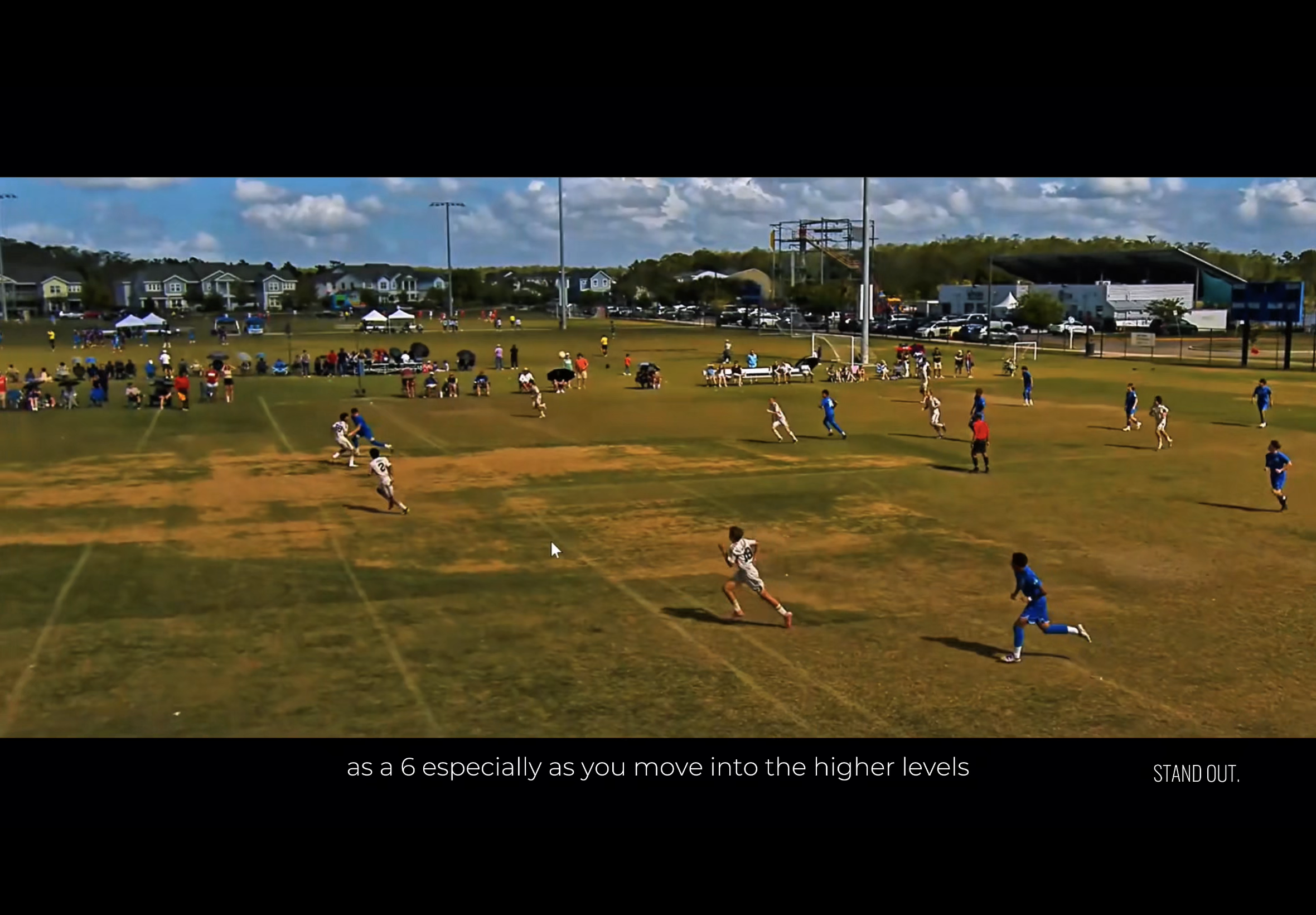
Whenever the ball is played long,
or in transition,
your job is clear.
Track your man.
Do not let him arrive first
to the most dangerous space.
THE OPPORTUNITY.
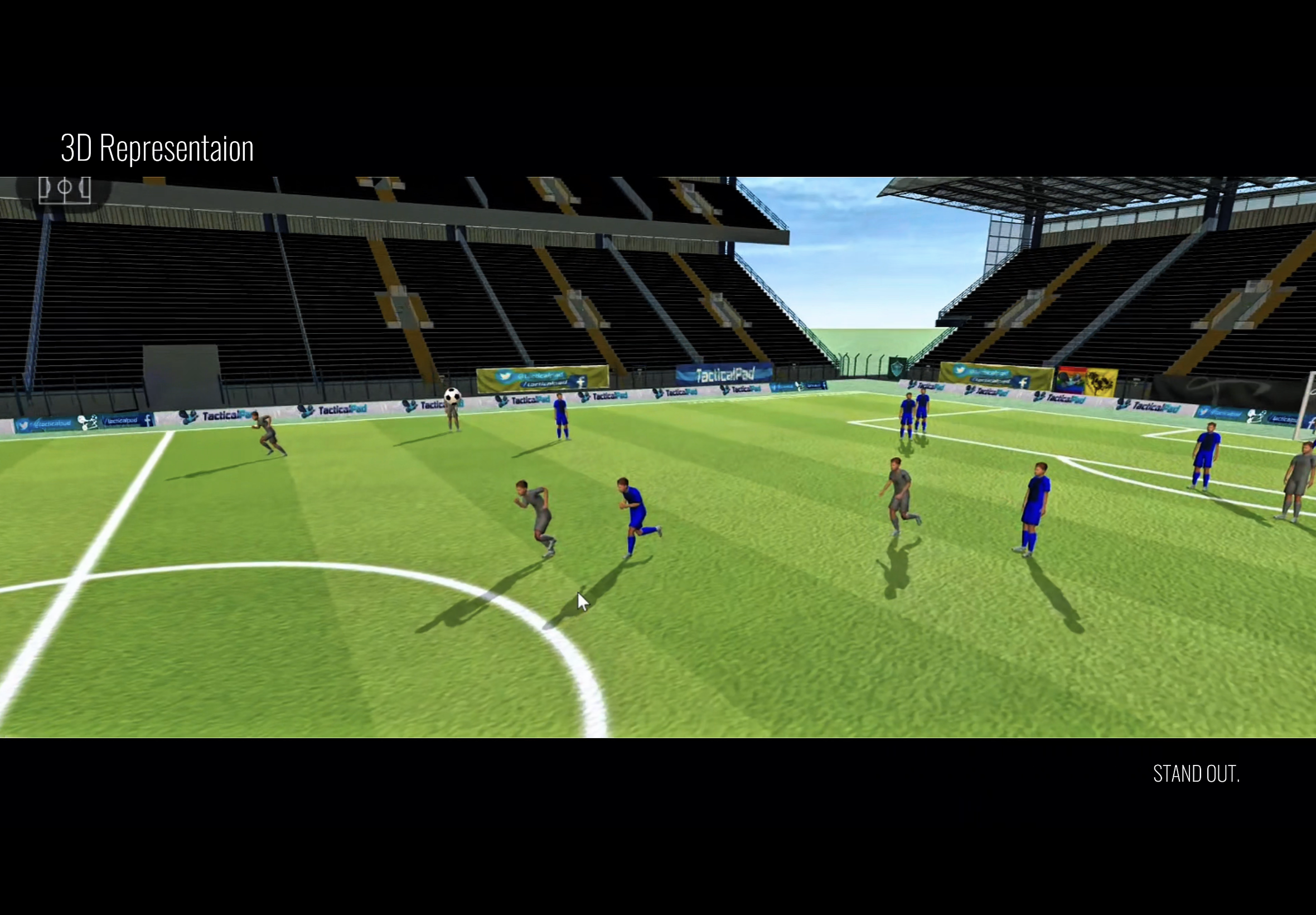
When the ball travels long,
it gives you time.
That time is not for watching the ball.
It is for getting ahead of your marker
and protecting the space in front of him.
THE GAP.
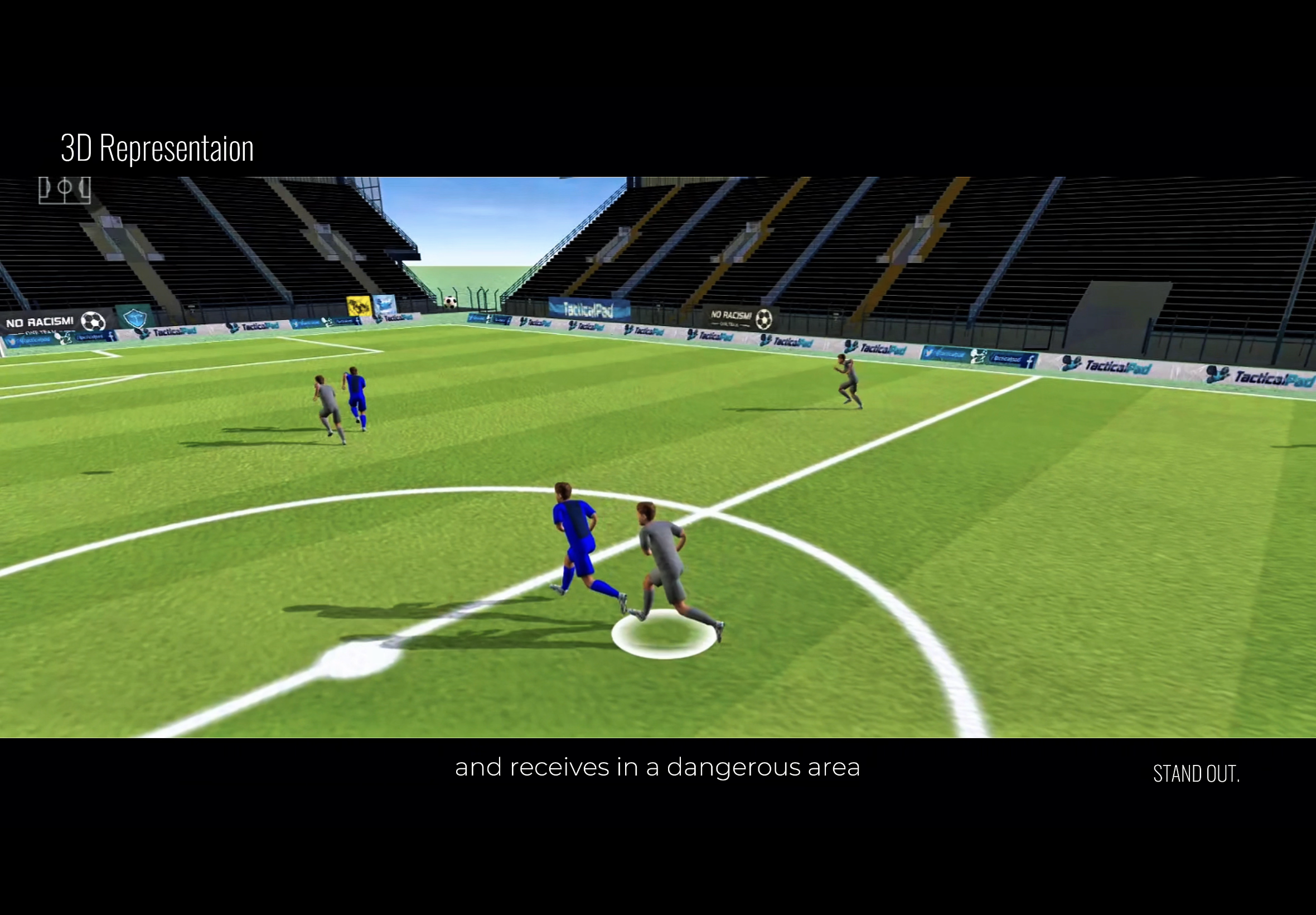
Right now, you become ball-watching.
Your eyes stay on the ball.
And by the time you react,
you are late.
The player you’re responsible for
arrives first
and receives in a dangerous area.
NOT ABOUT SPEED.
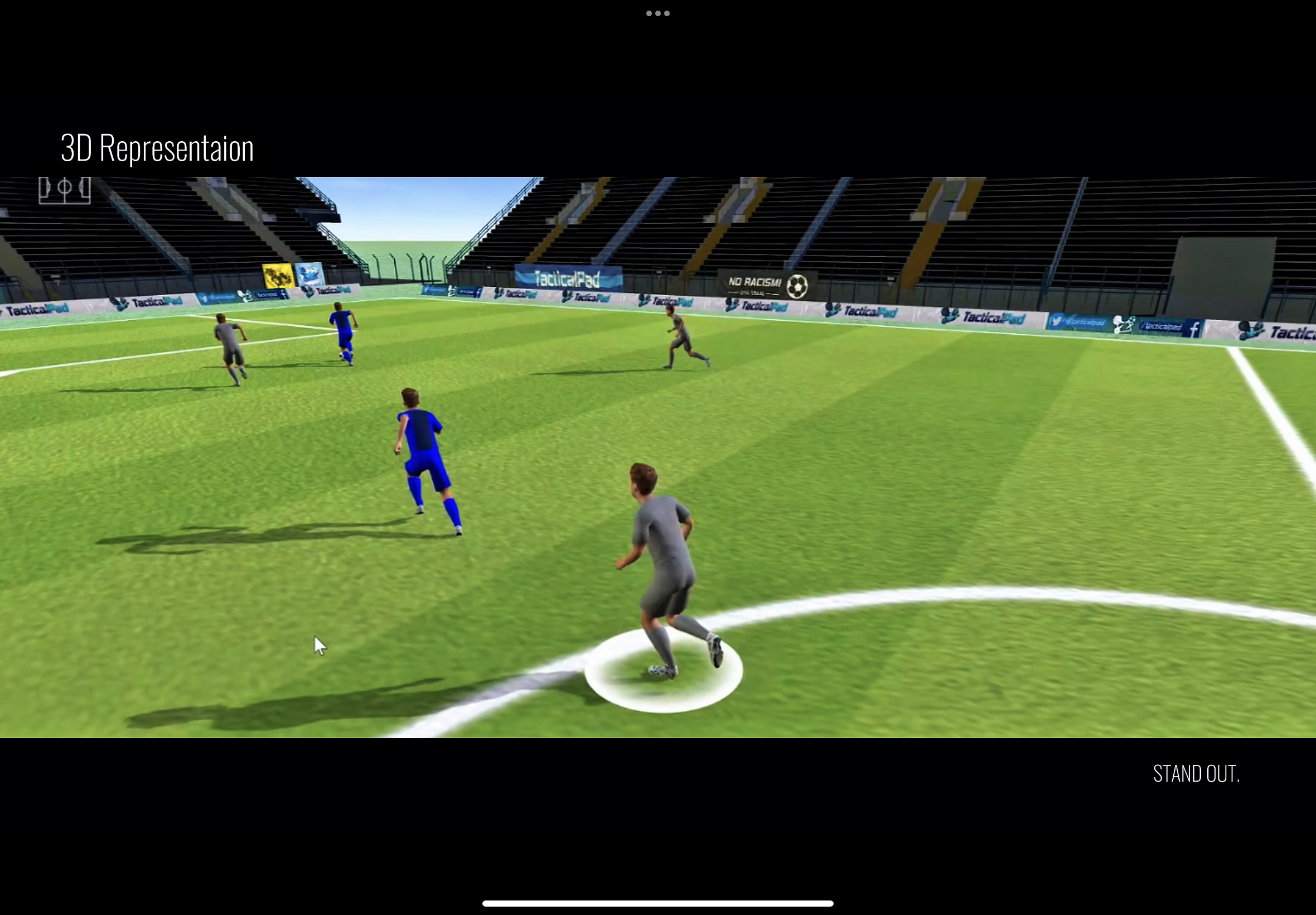
This is not an athletic issue.
You can sprint.
You show that.
The problem happens earlier.
It is what you look at.
PREDICTABLE STATE.
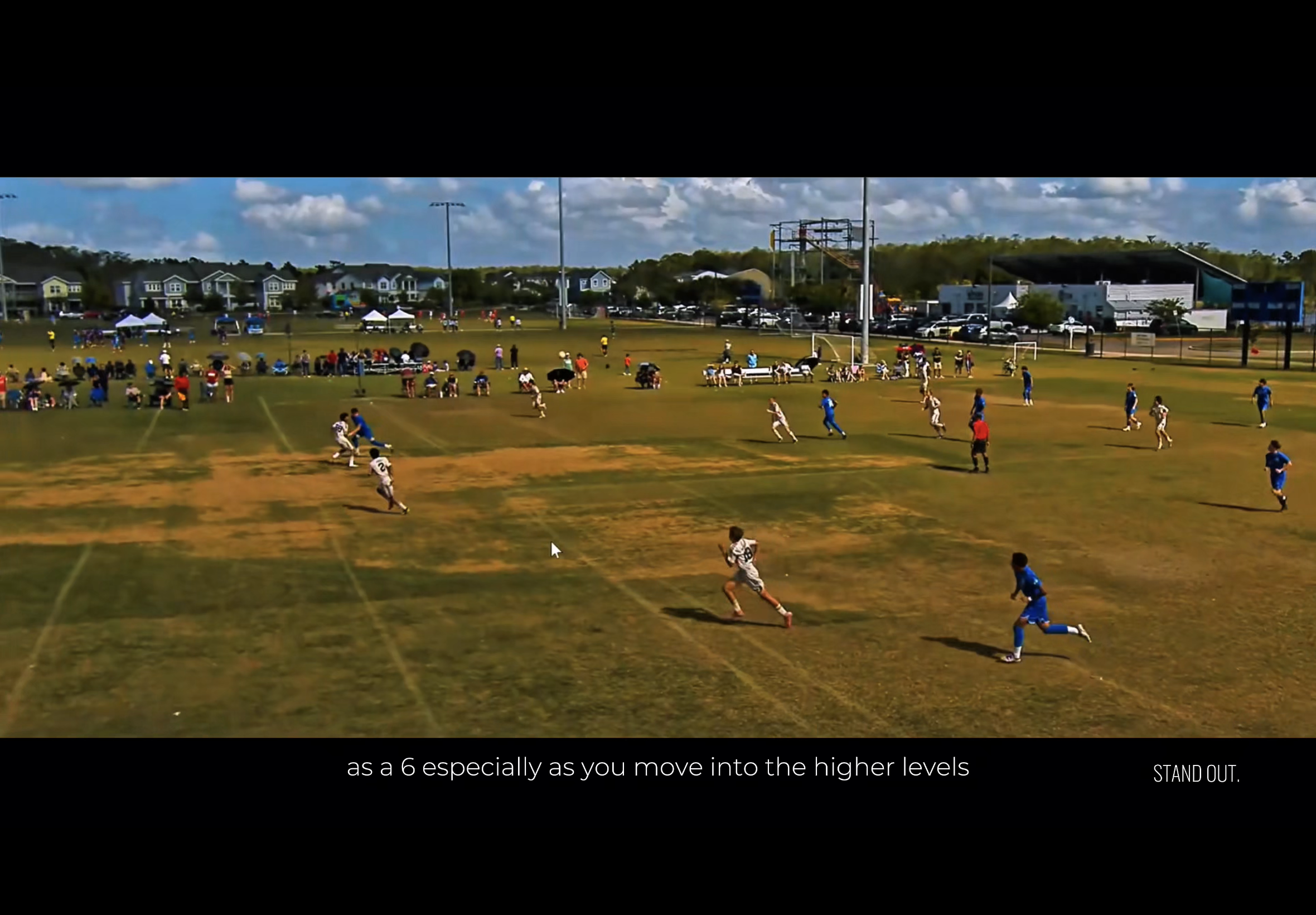
When the ball is traveling long,
it is predictable.
You already know where it will land.
So your focus does not need to stay on the ball.
It needs to shift.
PLAYER-ORIENTED.
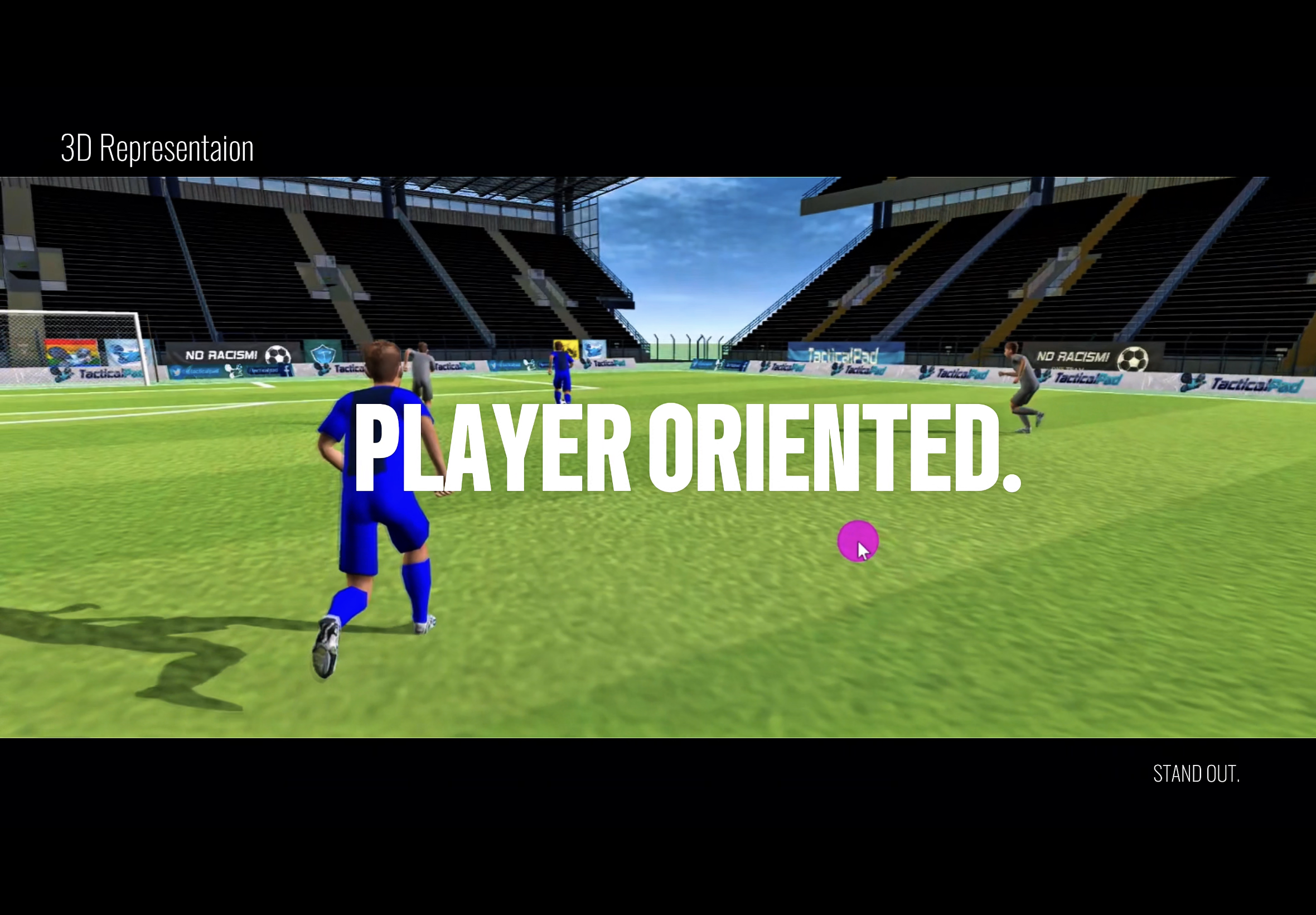
You go from ball-oriented
to player-oriented.
You track your man first.
You get goal side.
And you arrive before him
to the space that matters.
SEE BOTH.
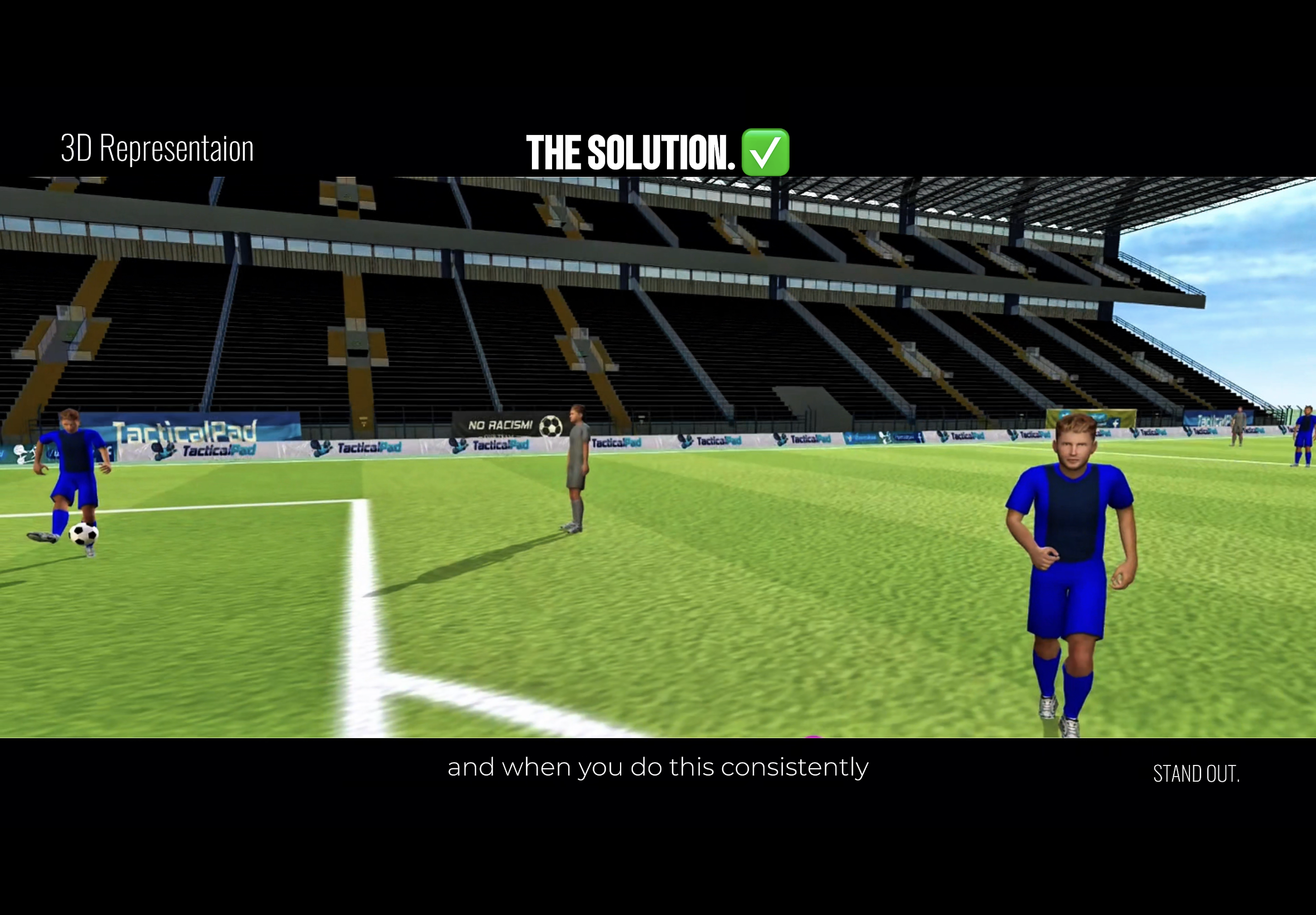
Being play-oriented does not mean losing the ball.
You position yourself
so you can see both
the ball and your man
in the same frame.
Now you anticipate
instead of reacting.
WIN THE MATCHUP.
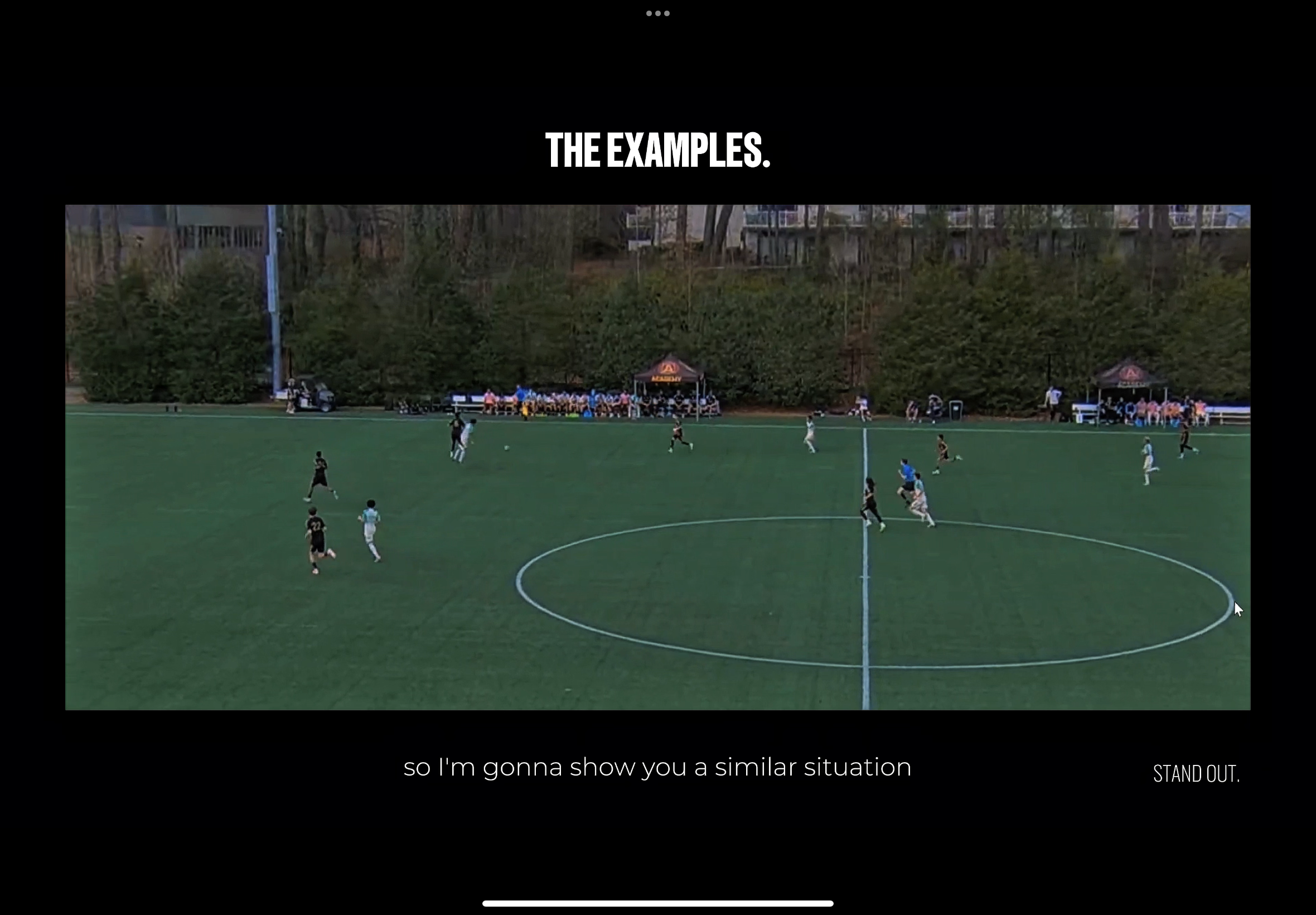
When you do this consistently,
you do not lose these duels.
You win them.
You win the knockdowns.
You control the next action.
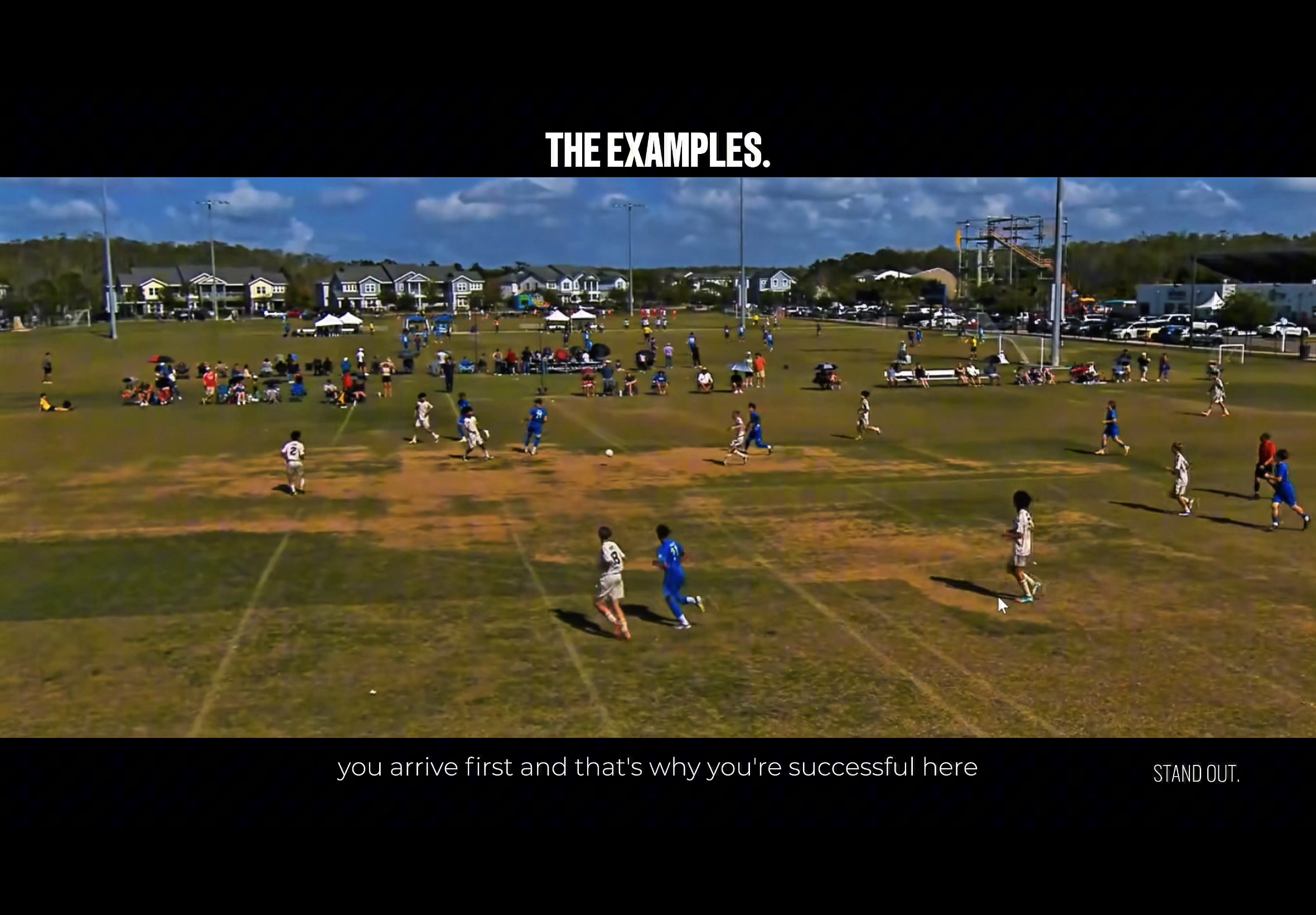
YOU ALREADY SHOW IT.
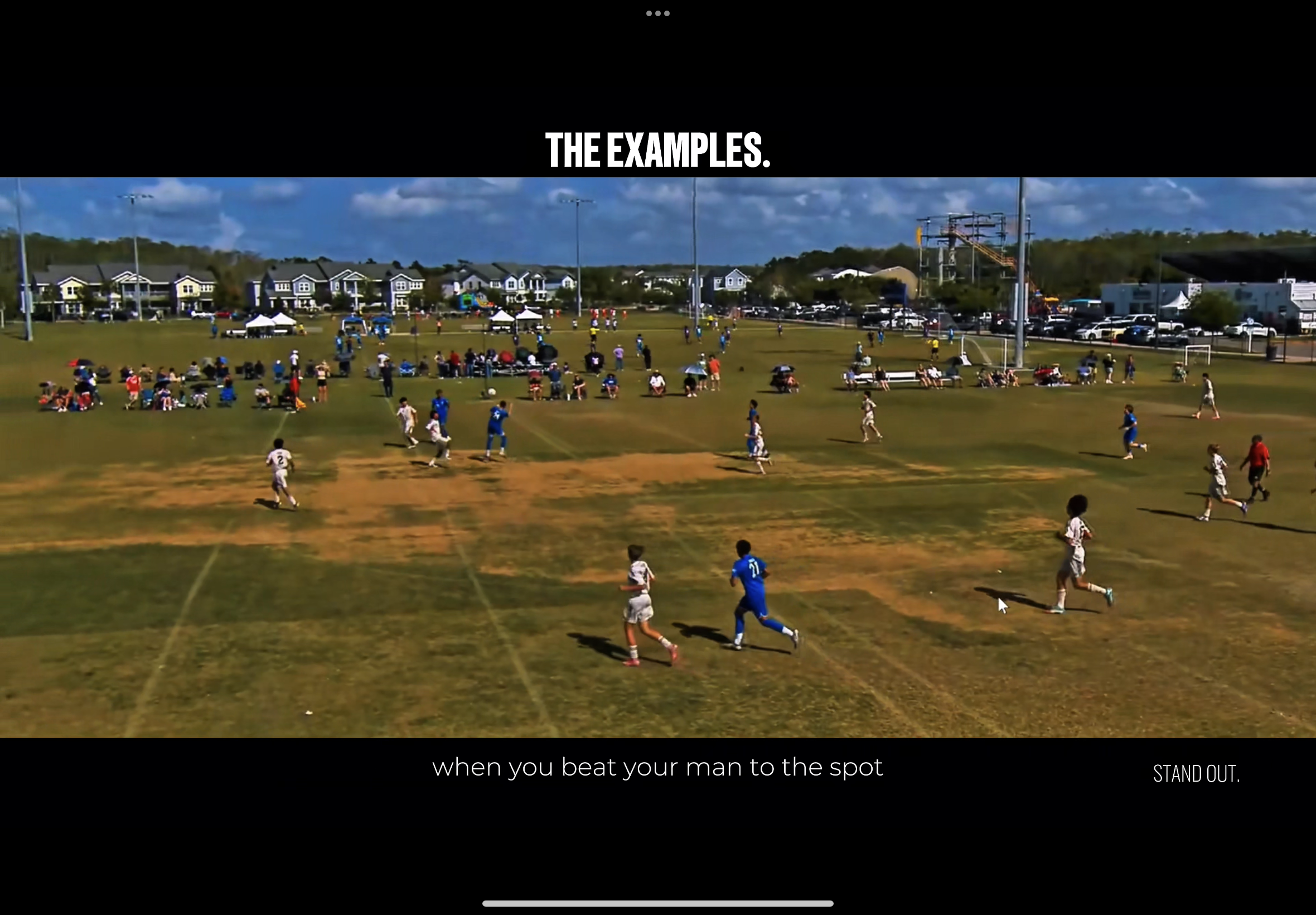
There are moments in your game
where you beat your man to the spot.
When you arrive first,
you win the action.
That is already there.
PRINCIPLE.
When the ball travels long,
track your man.
Get goal side.
Arrive first.
That is the standard for a six.
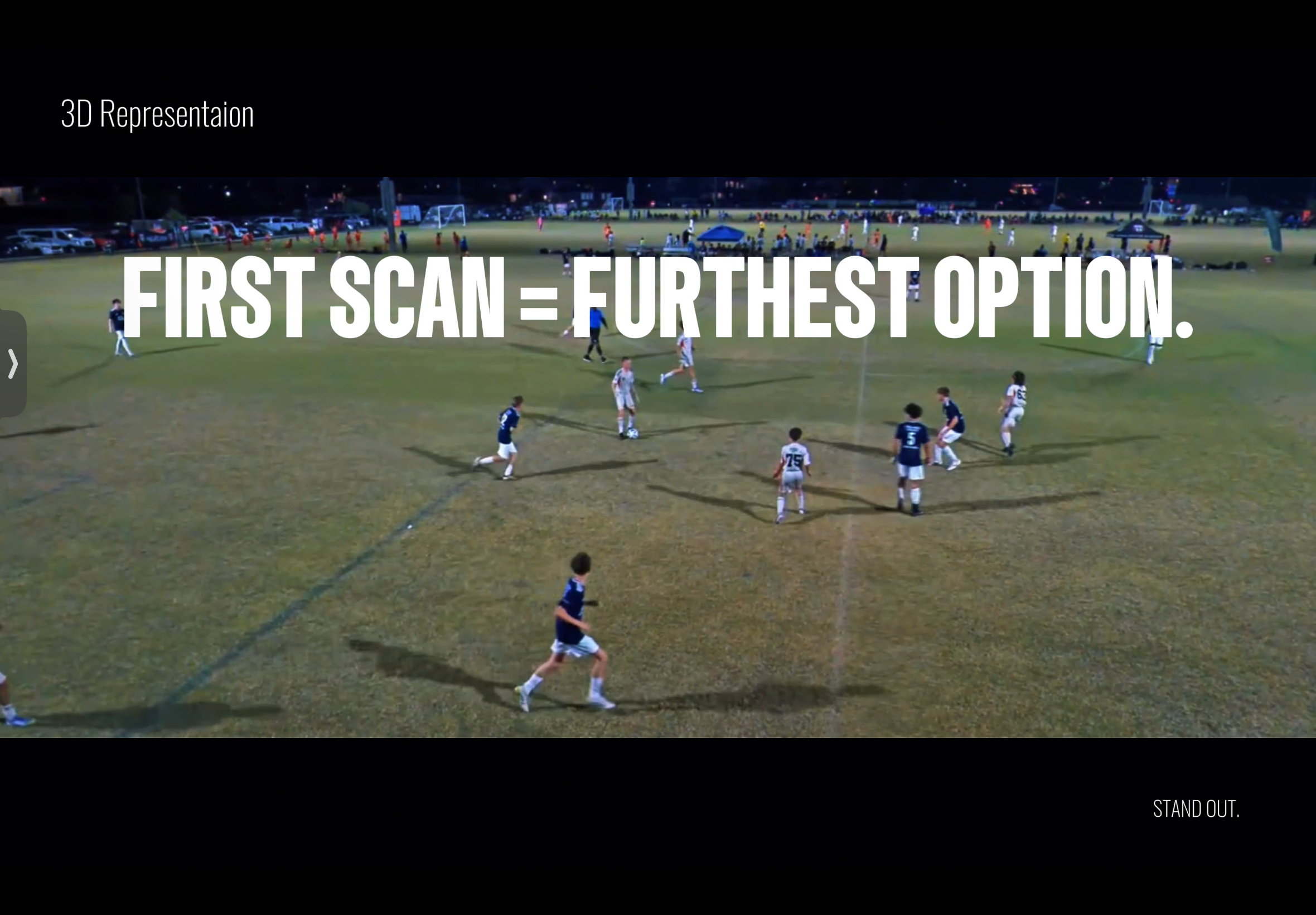
TRANSITION = FURTHEST OPTION FORWARD.
When the ball switches hands.
The six sets the foundation for the attack.
The opposition isn’t organized.
Their attacking structure is still stretched, the field is still big, and when they lose the ball, that shape doesn’t recover instantly.
It leaves gaps.
And your role is not to circulate.
It’s to punish.
The Moment Is Not to Circulate.
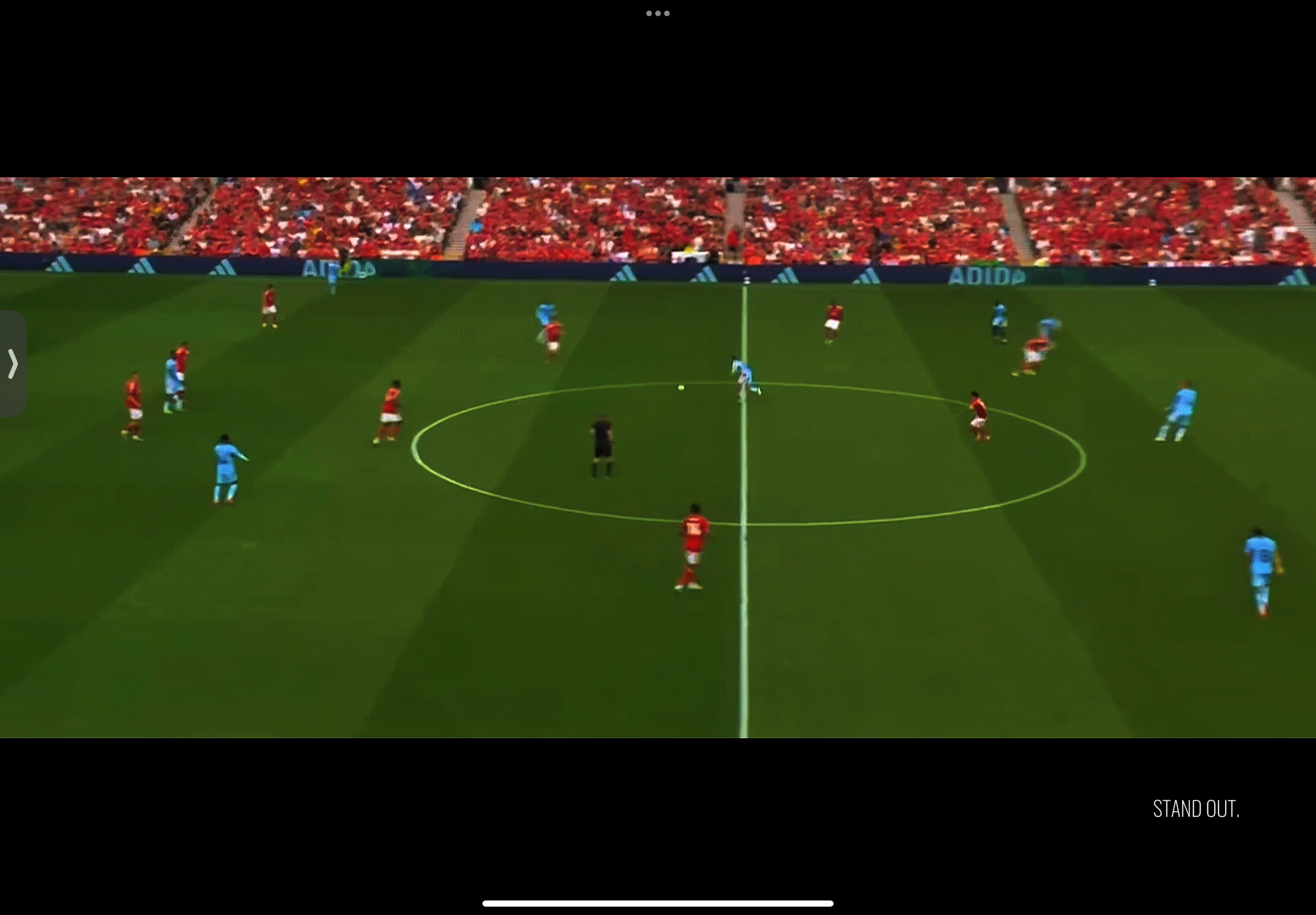
When you win the ball, your first instinct cannot be to slow the game down.
This isn’t a moment for combinations.
This isn’t a moment to reset.
The opposition is still in their attacking shape.
They are expansive.
Which means they are exposed.
Why Gaps Exist in Transition.
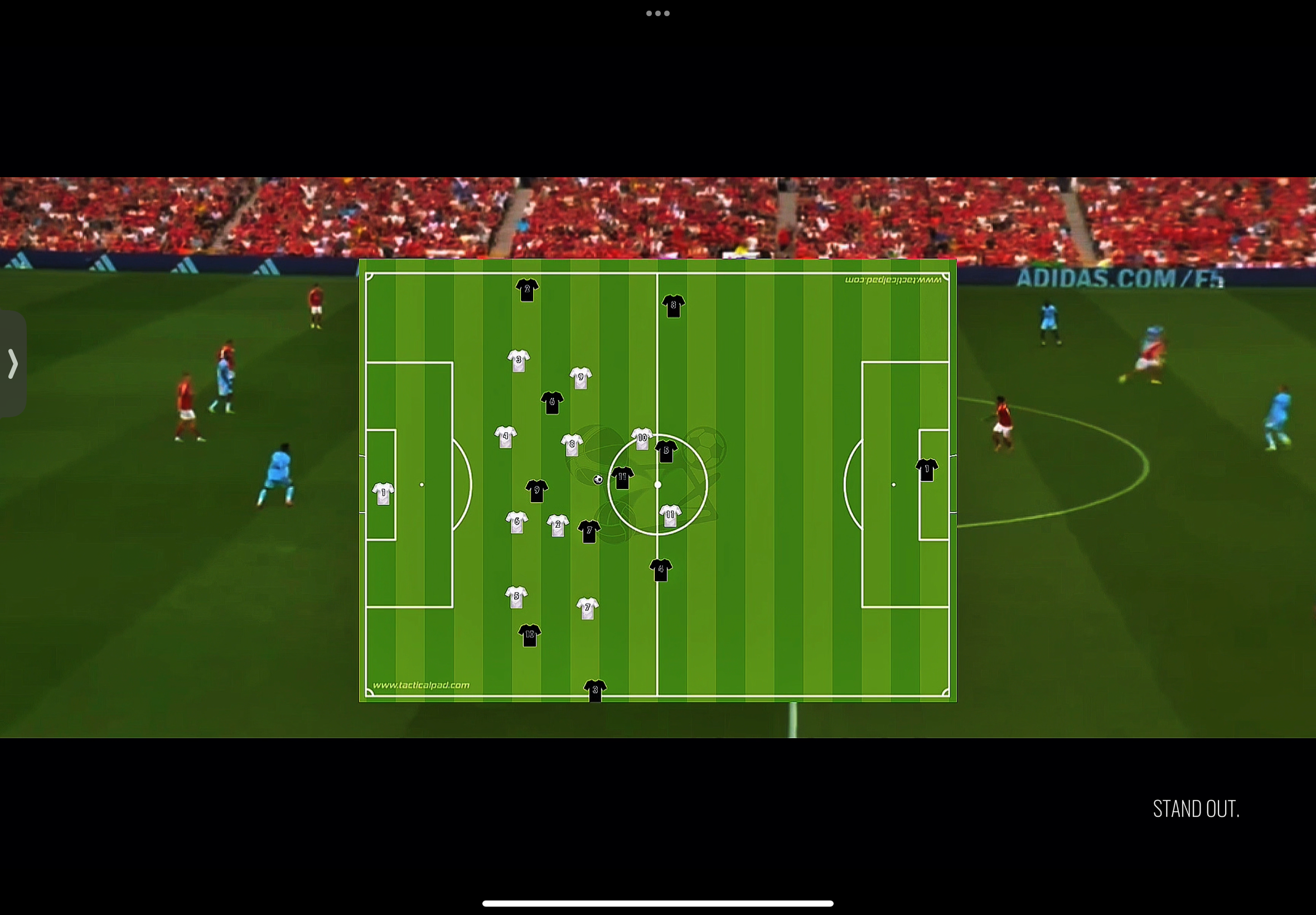
When teams attack, they stretch the pitch.
They push players forward.
They increase the distances between lines.
When they lose the ball, those distances don’t disappear.
They stay.
That creates gaps.
Between defenders.
Between midfield and defense.
The window is short.
But it’s where the game opens.
Find the Furthest Option Forward.
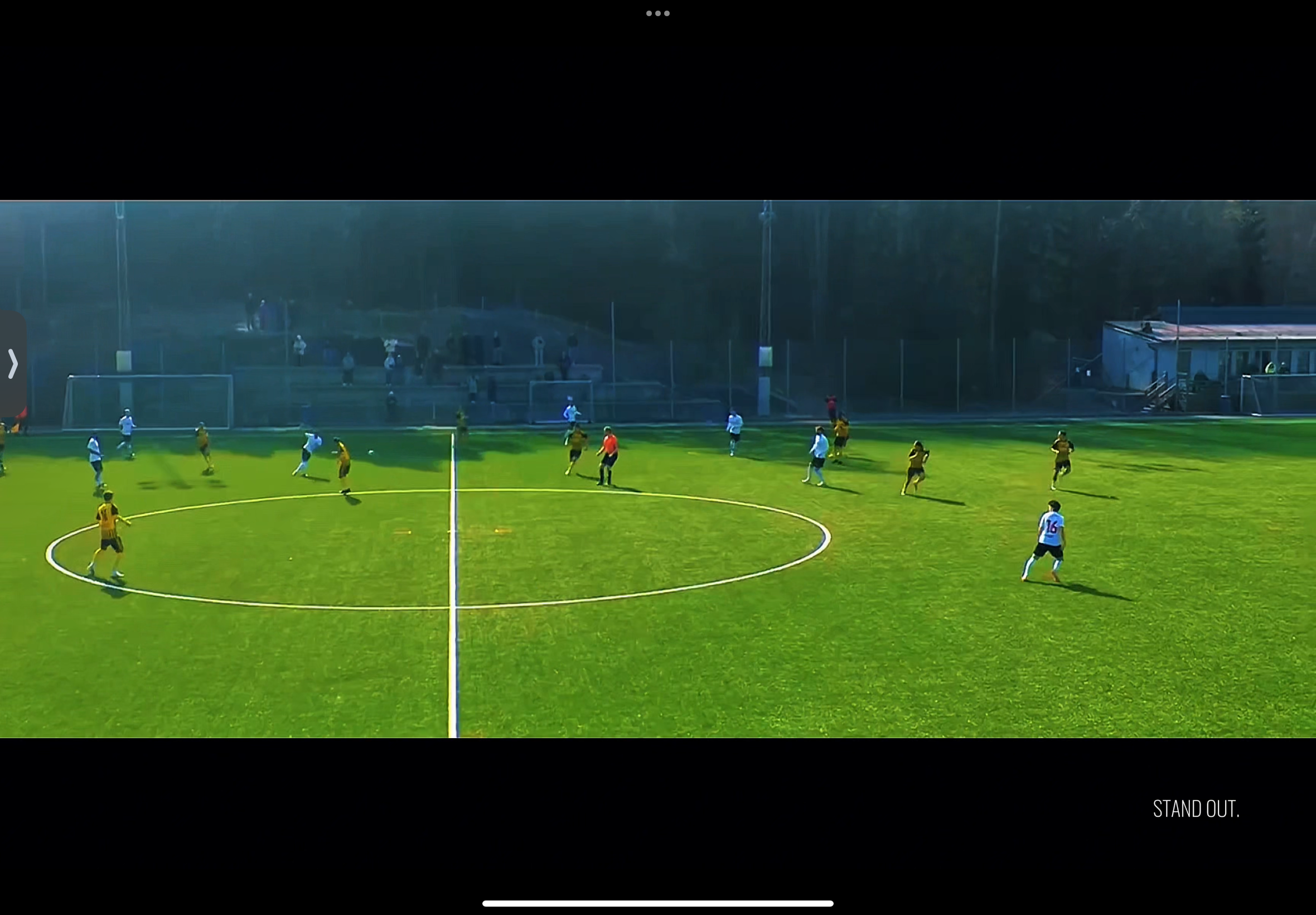
As a six, your job in that moment is to locate where the structure is broken.
The reference is fixed.
The furthest option forward.
That player is already inside the gap the opposition hasn’t closed.
Seeing it early changes your role.
You’re no longer moving the ball.
You’re starting the attack.
Play Through the Structure.
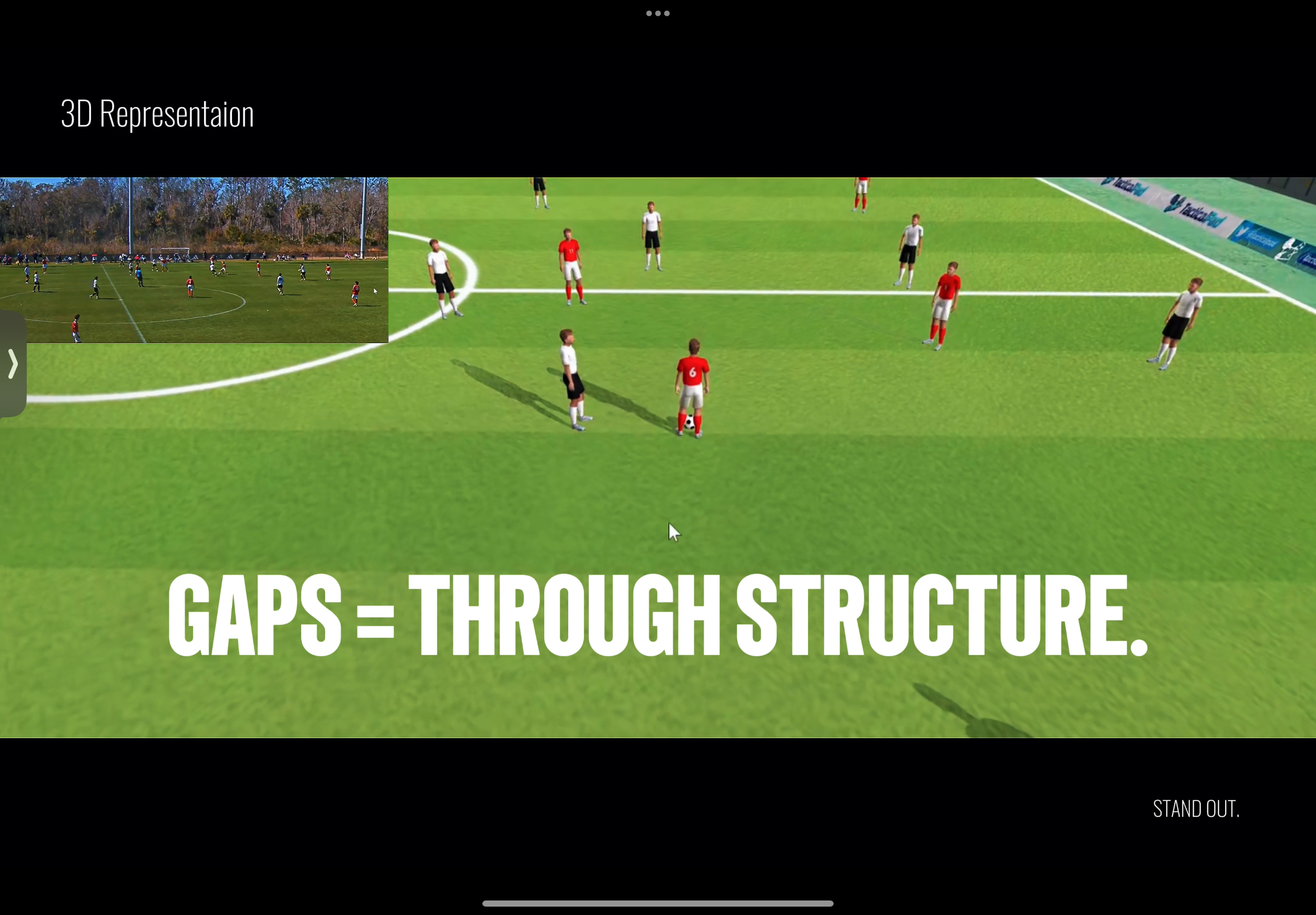
When the gap is there, the action is clear.
You play through it.
In behind.
Into stride.
So the attacker meets the ball behind the line.
The detail that decides it:
You overhit rather than underhit.
If it runs through, the play stays alive higher up.
If it’s short, it gets cut out and the moment ends.
When teams attack, their line sits higher than it can defend.
That space is there.
You use it.
Fewer Touches, Faster Impact
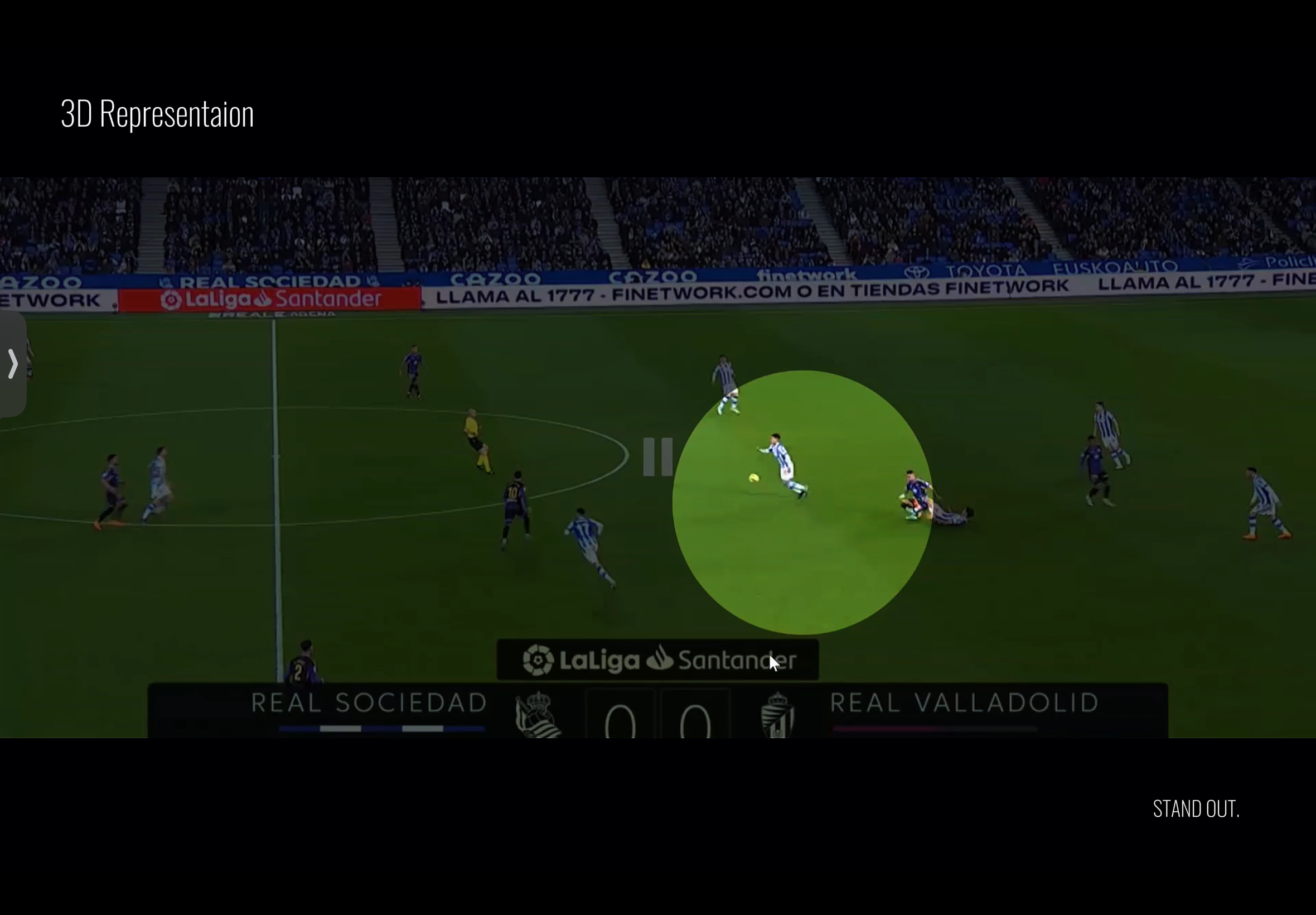
Every extra touch reduces the window.
Each touch gives the opposition time to recover.
The best sixes don’t wait.
They see it early.
They play it early.
One touch.
Two at most.
Because the decision is already made.
The First Scan.
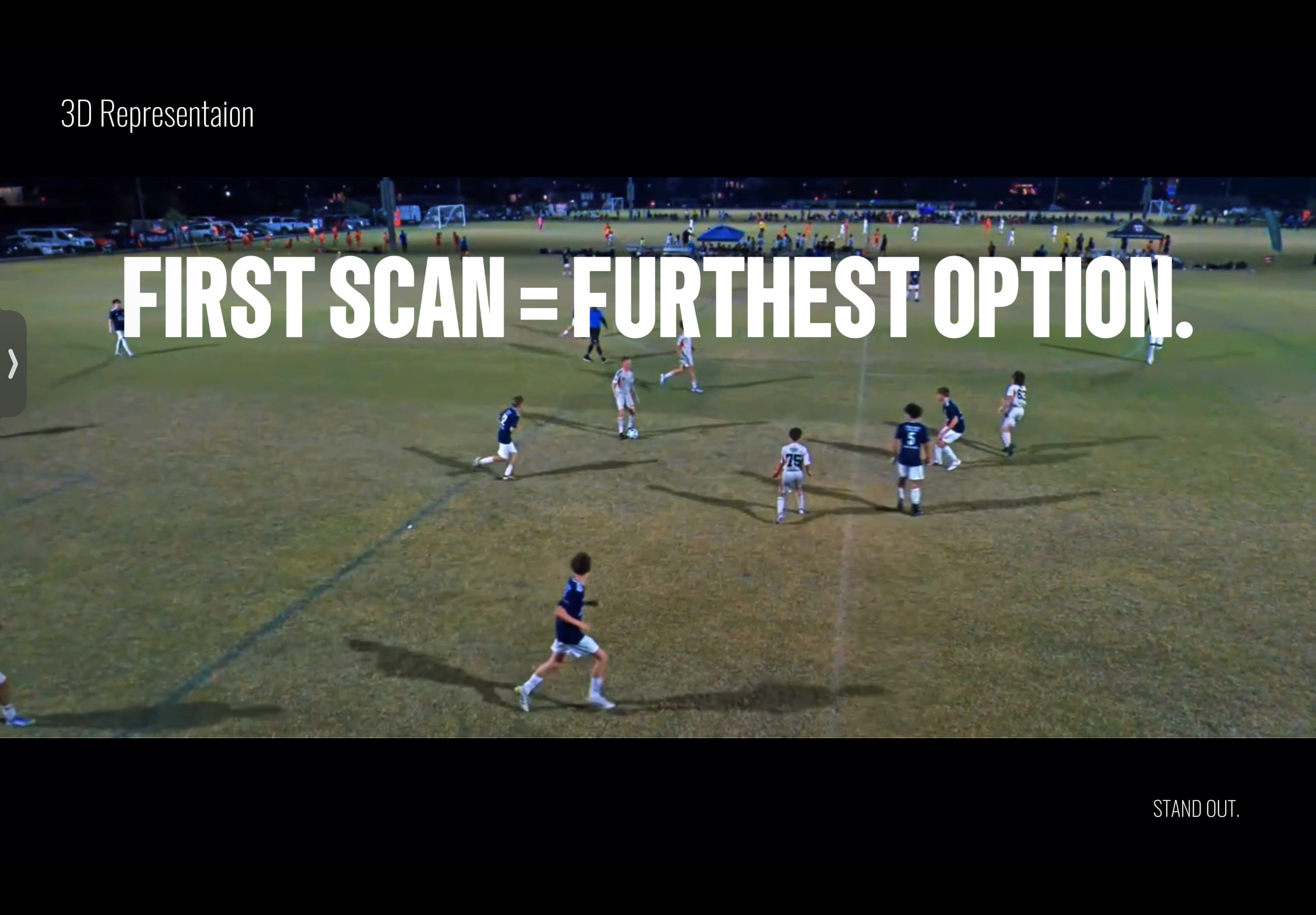
Your first scan defines the action.
It has to be the furthest option forward.
When you scan furthest, everything else comes into view with it.
You don’t search for the picture.
You already have it.
And the earlier you see it, the faster you act.
PRINCIPLE.
Transition is the most vulnerable moment in the game.
Recognize it early.
Scan furthest forward.
Play through the gap.
That’s where the role changes.
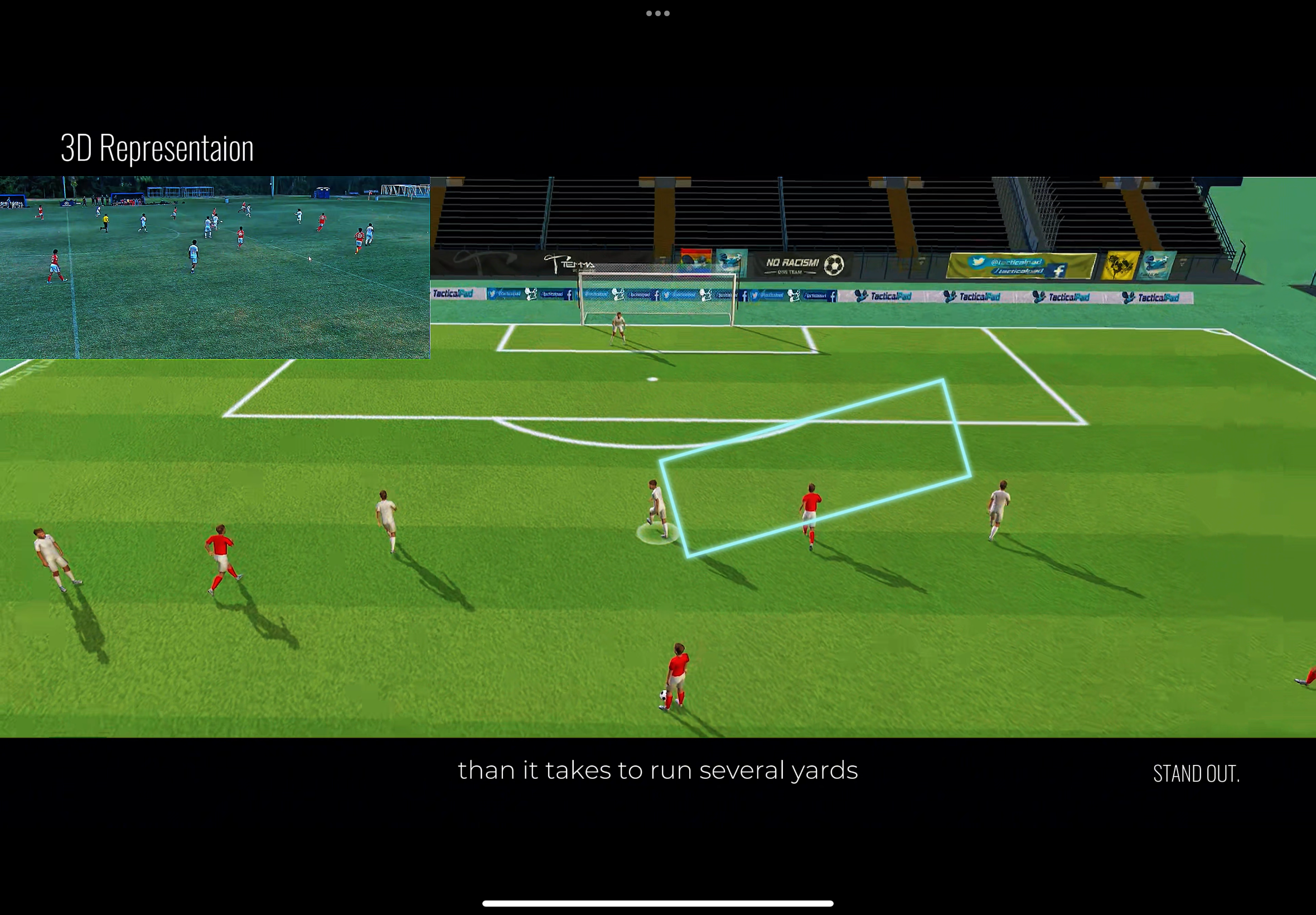
BLINDSIDE.
Ball carrying is not just about progressing the ball.
It is about forcing decisions from the back line.
When you eliminate the midfield line and drive forward, the situation changes. Now you are directly engaging the defensive line.
At that moment, the objective is not to release the ball early.
The objective is to carry until the back line is forced to break.
Because once the line breaks, the advantage appears.
Carry Creates Questions.
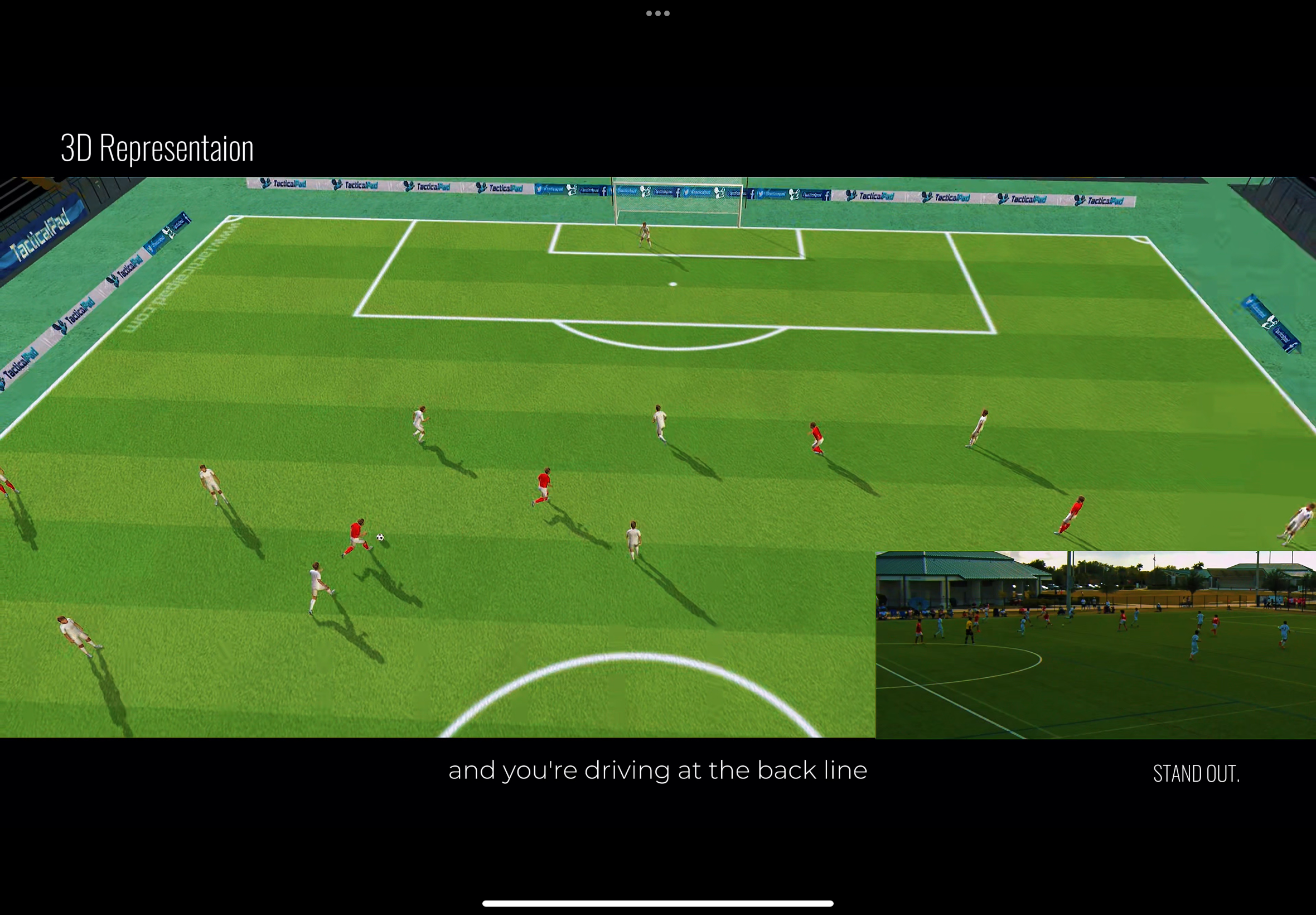
When you drive at the back line, defenders naturally drop.
They run toward their own goal so they can see both the ball and the runners behind them.
But the more you carry, the more pressure you apply.
At some point, one defender has to step.
That is the moment you are looking for.
Breaking The Line.
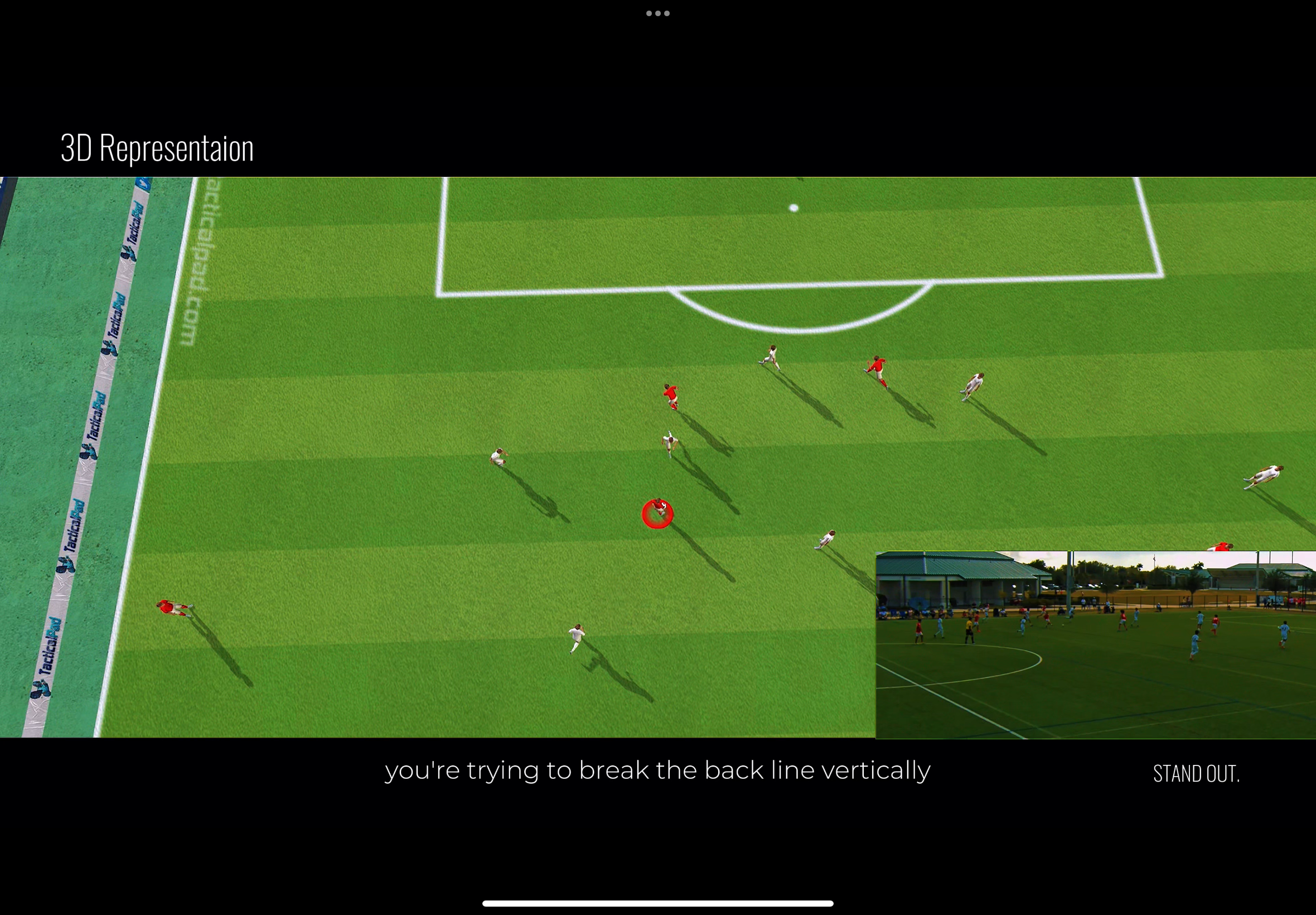
The moment a defender steps, the back line is no longer connected.
It breaks vertically.
Now there is a gap between defenders.
That gap is the window to play through.
Ball carrying is what creates that gap.
The Second Defender Problem.
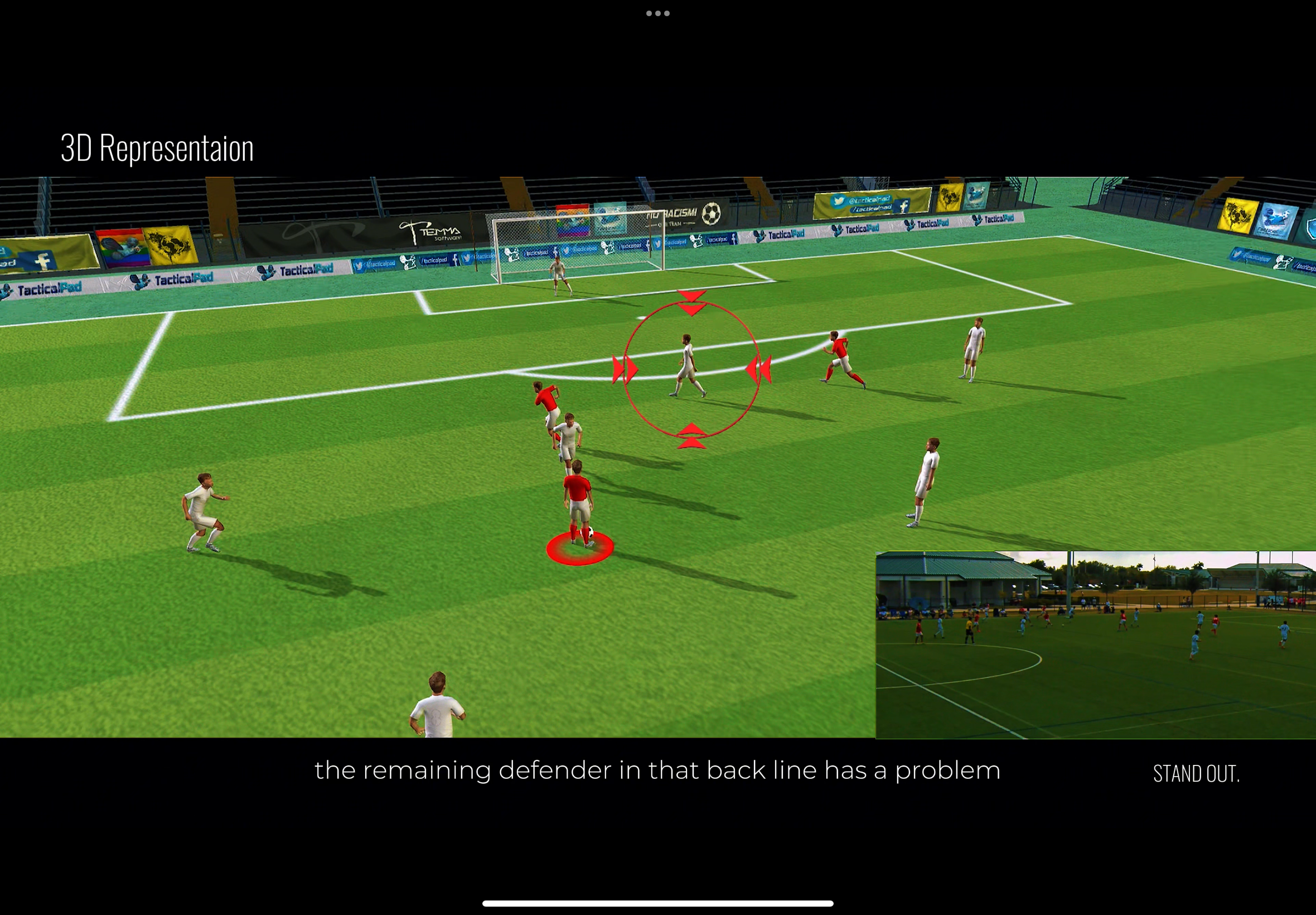
When one defender steps, the remaining defender has a new problem.
They are now responsible for multiple threats.
The player on the ball.
And the runner behind.
They cannot control both without compromising their body position.
Body Shape Over Position.
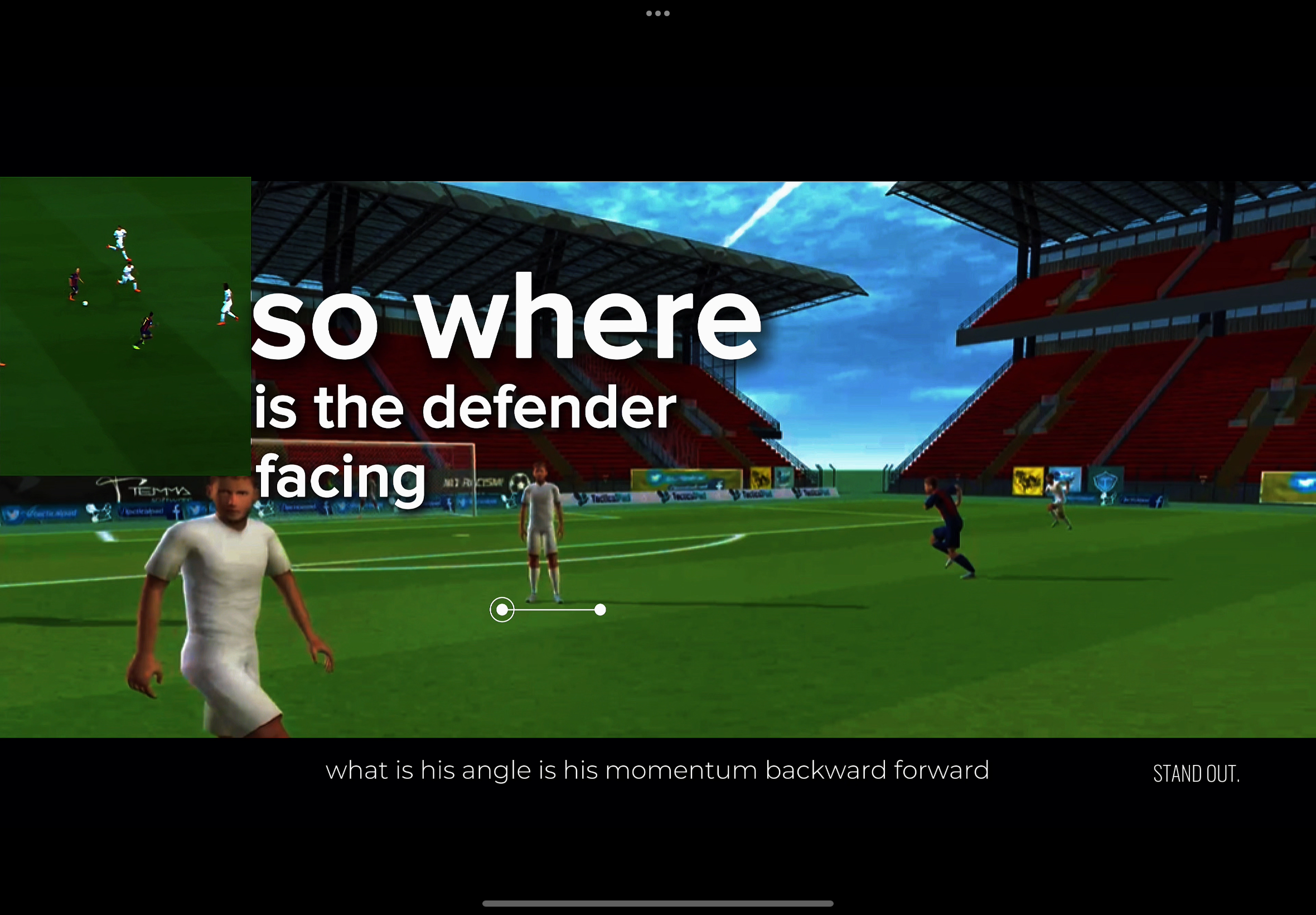
What matters is not where the defender is.
It is how they are positioned.
Body shape determines:
what they can see
how fast they can react
how quickly they can turn
A defender can be in the “right” position but still be out of control because of their body shape.
THE BLIND SIDE.
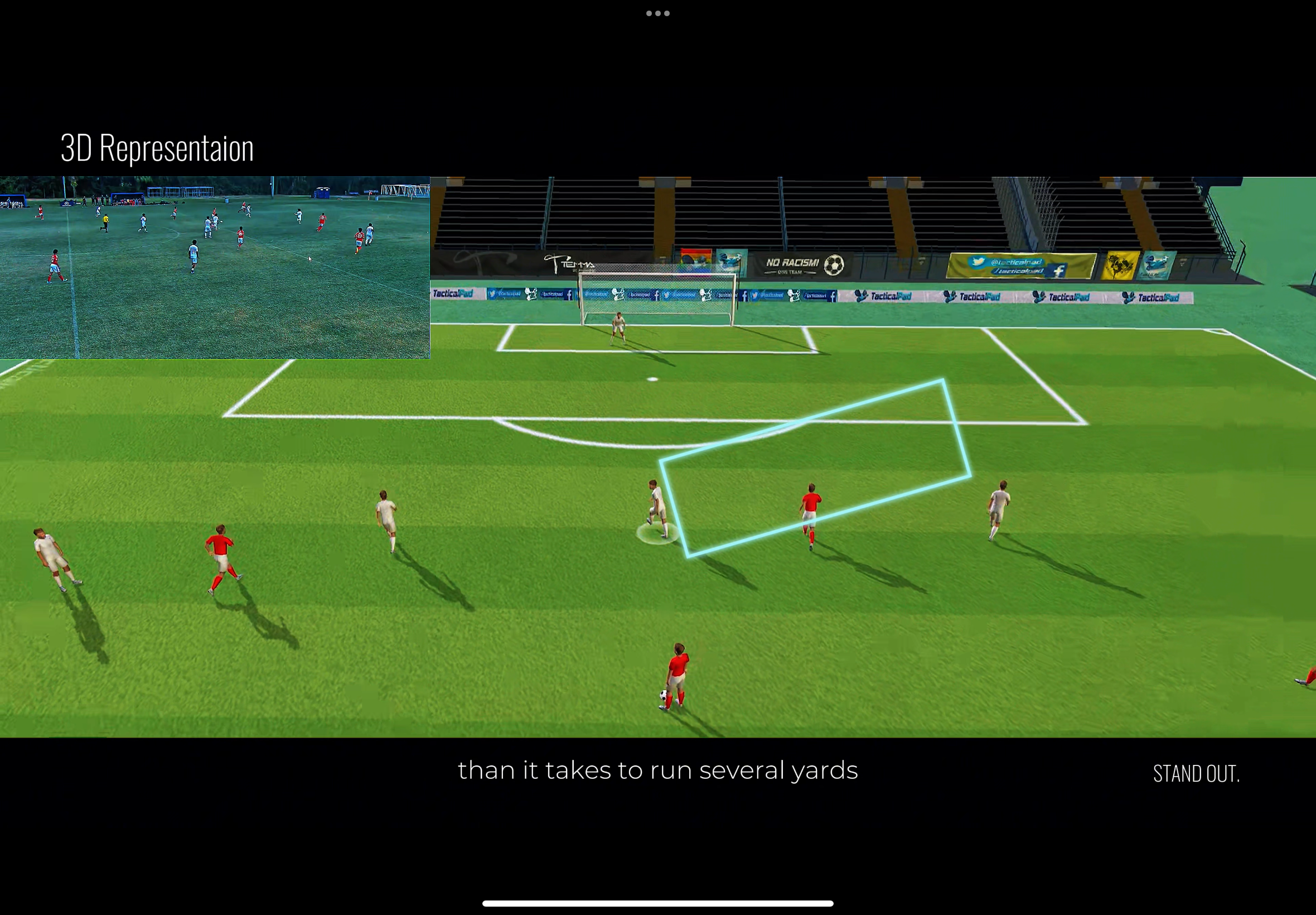
The blind side is where defenders lose control.
Not just because they cannot see it.
But because reacting to it requires a full body rotation.
That rotation creates delay.
More delay than it takes for an attacker to move into space.
Because of that, the pass does not need to be perfect.
Even a pass into feet becomes dangerous.
The first touch can go behind the defender while they are still turning.
The Scan.
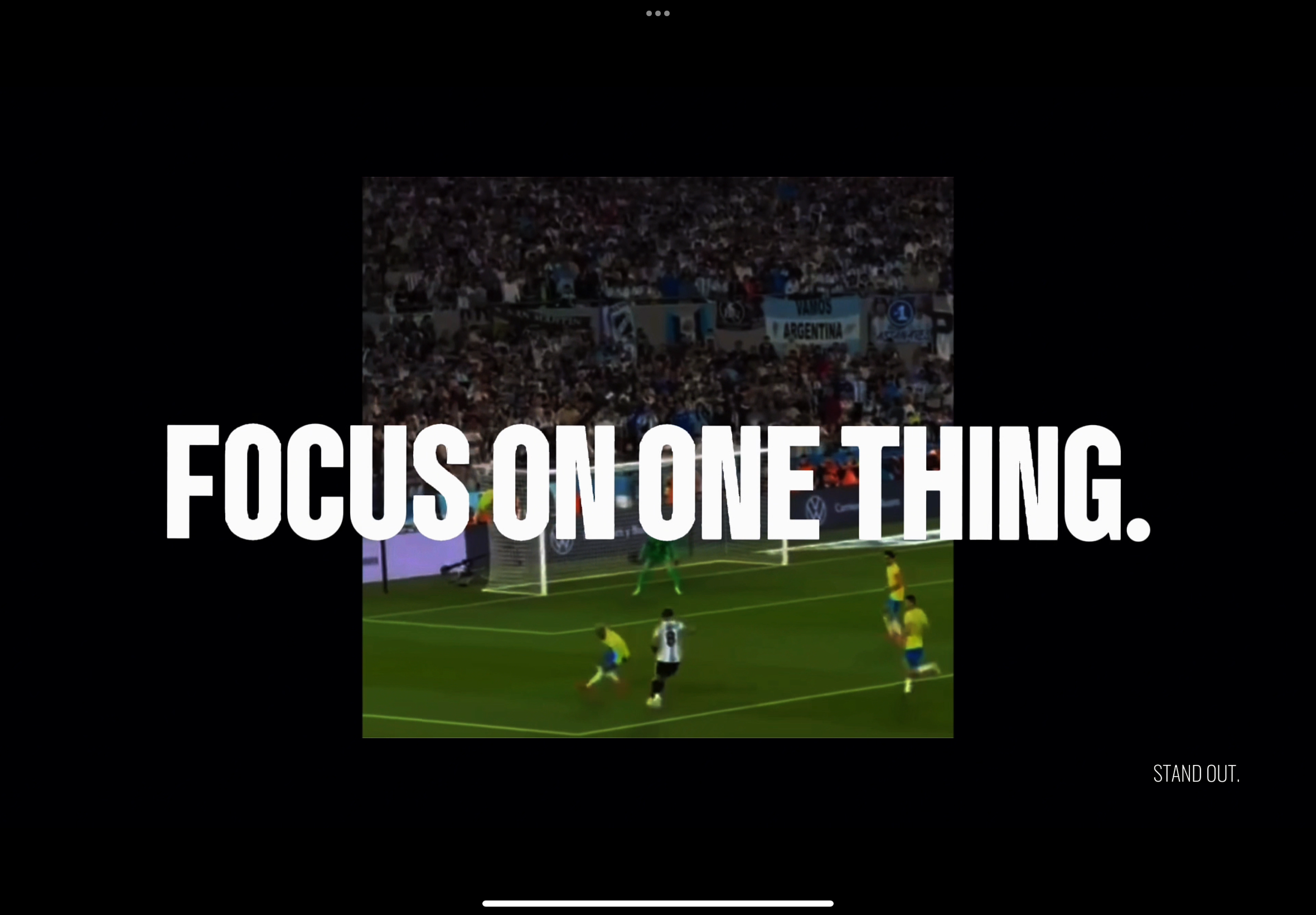
The scan is simple.
Between touches, focus on:
the body shape of the defender
Nothing else.
You are not scanning everything.
You are reading one defender and waiting for the moment they lose control.
The Timing.
Do not play the pass early.
Play the pass at the moment the defender steps or becomes exposed.
Top players carry the ball until that exact moment.
Then they release.
Principle
Ball carrying is not just progression.
It is control.
Carry to force the step.
Read the body shape.
Exploit the blind side.
Play at the moment of imbalance.
That is how midfielders turn carries into decisive actions.
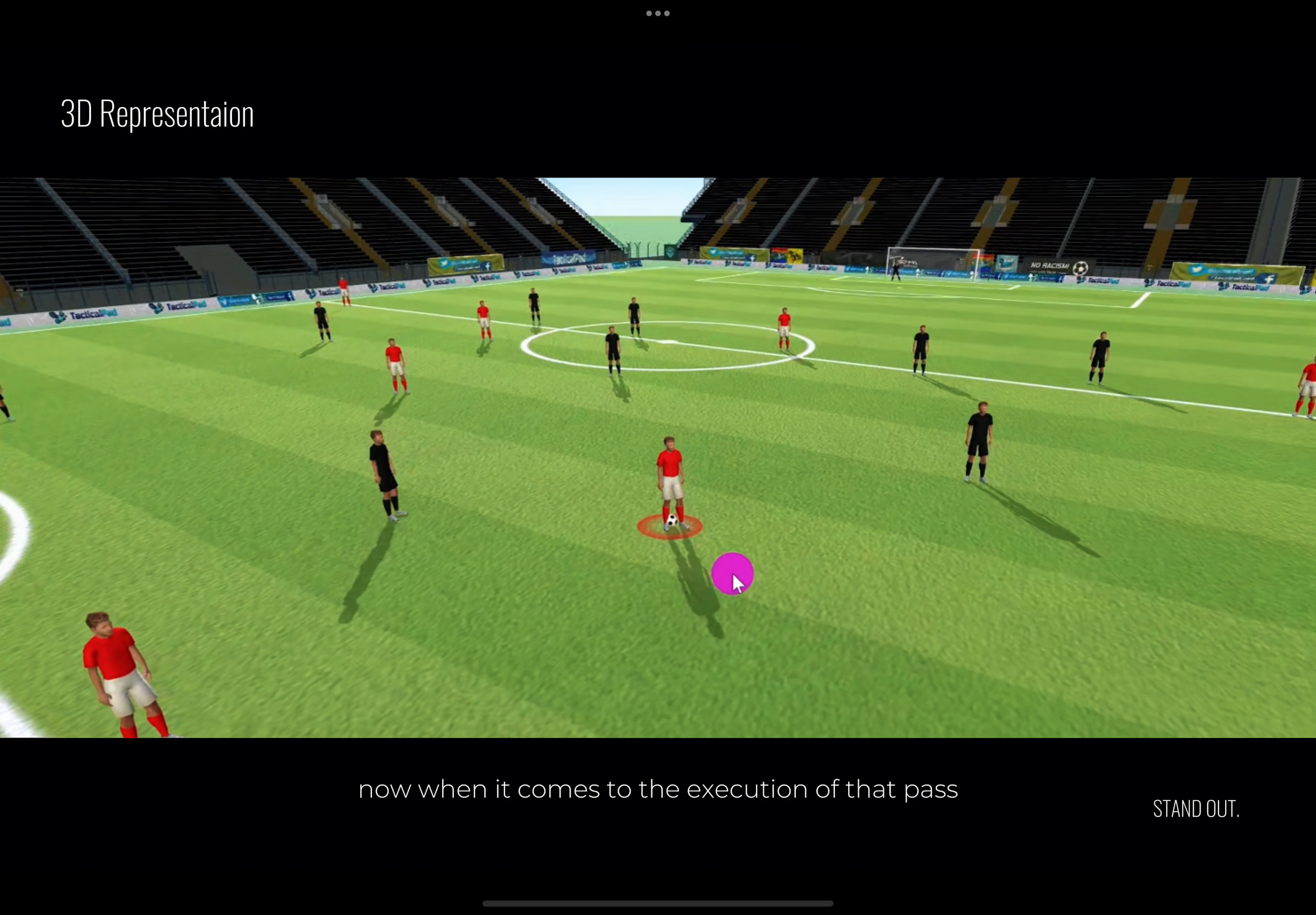
SWITCH.
Midfielders control the game by seeing the far side early.
SCAN DIAGONALLY.
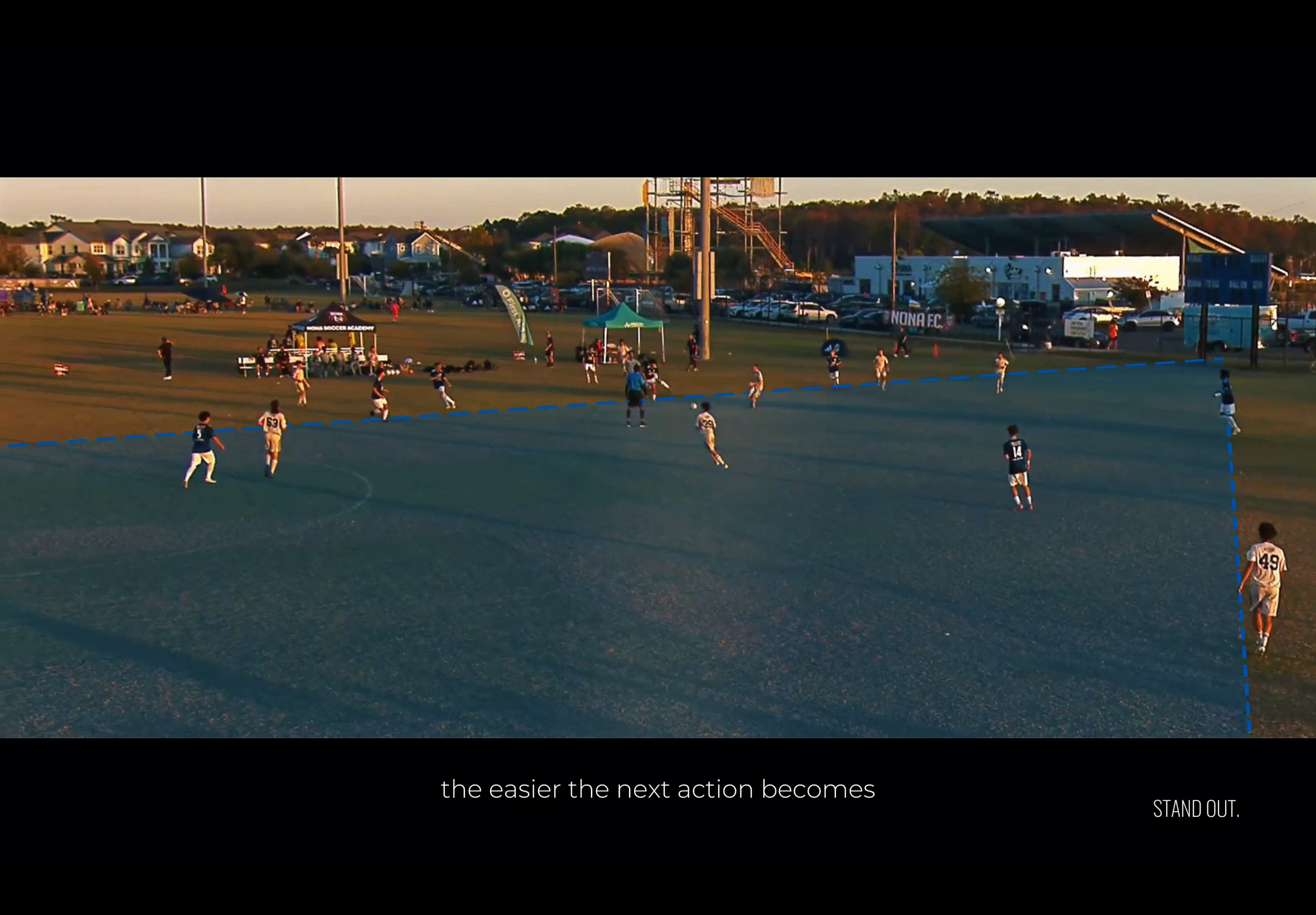
When the ball arrives from the same side as the press, the best midfielders scan diagonally across the field.
This habit becomes instinctive at higher levels.
The scan happens before the ball arrives, not after.
Once the picture is clear, the decision becomes automatic.
The far side rarely changes.
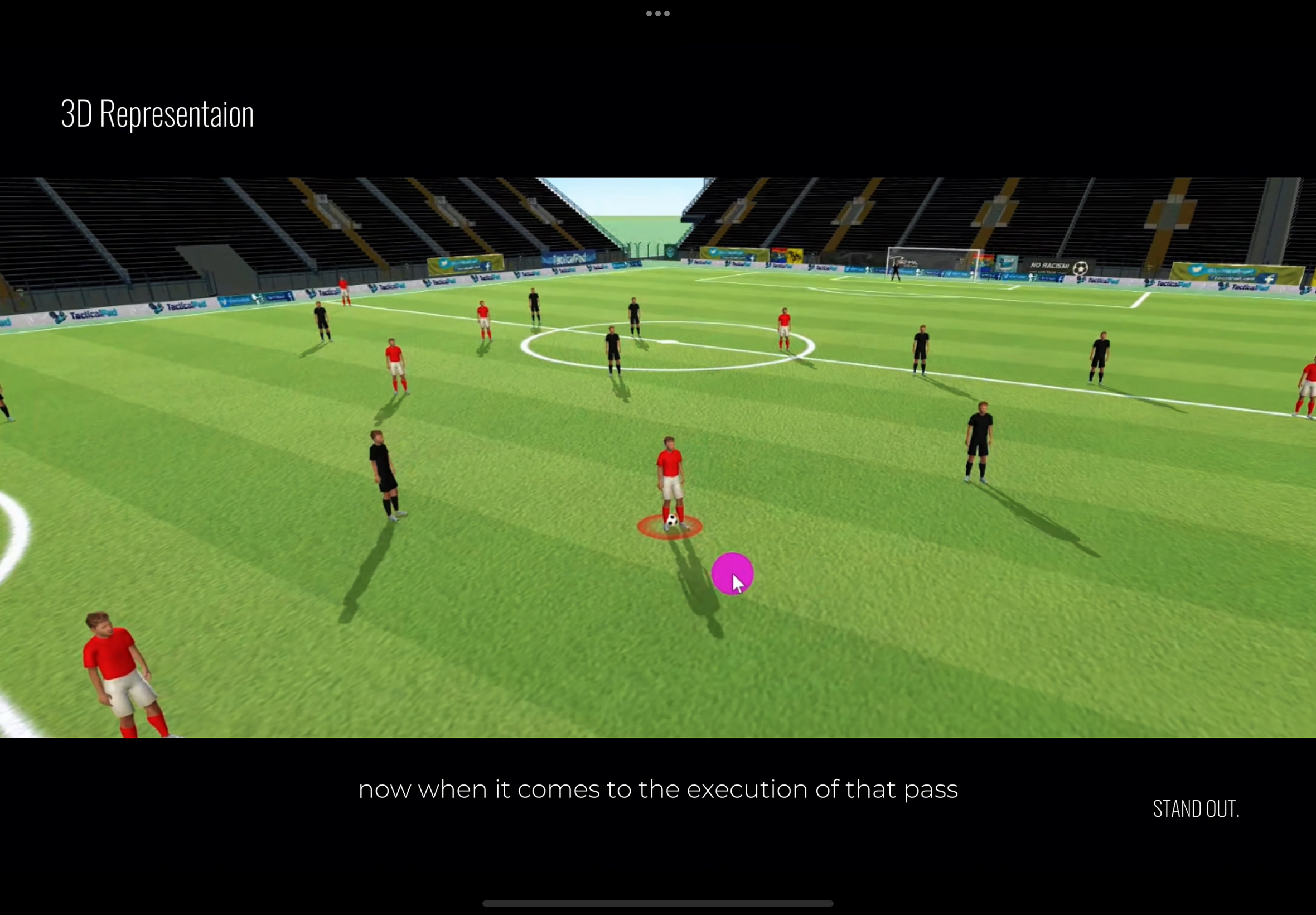
Players close to the ball move constantly.
Players far from the ball often ball watch.
Because of this, the far side usually stays stable for a moment.
One early scan is often enough to know if the switch is available.
The ball flight controls the time.
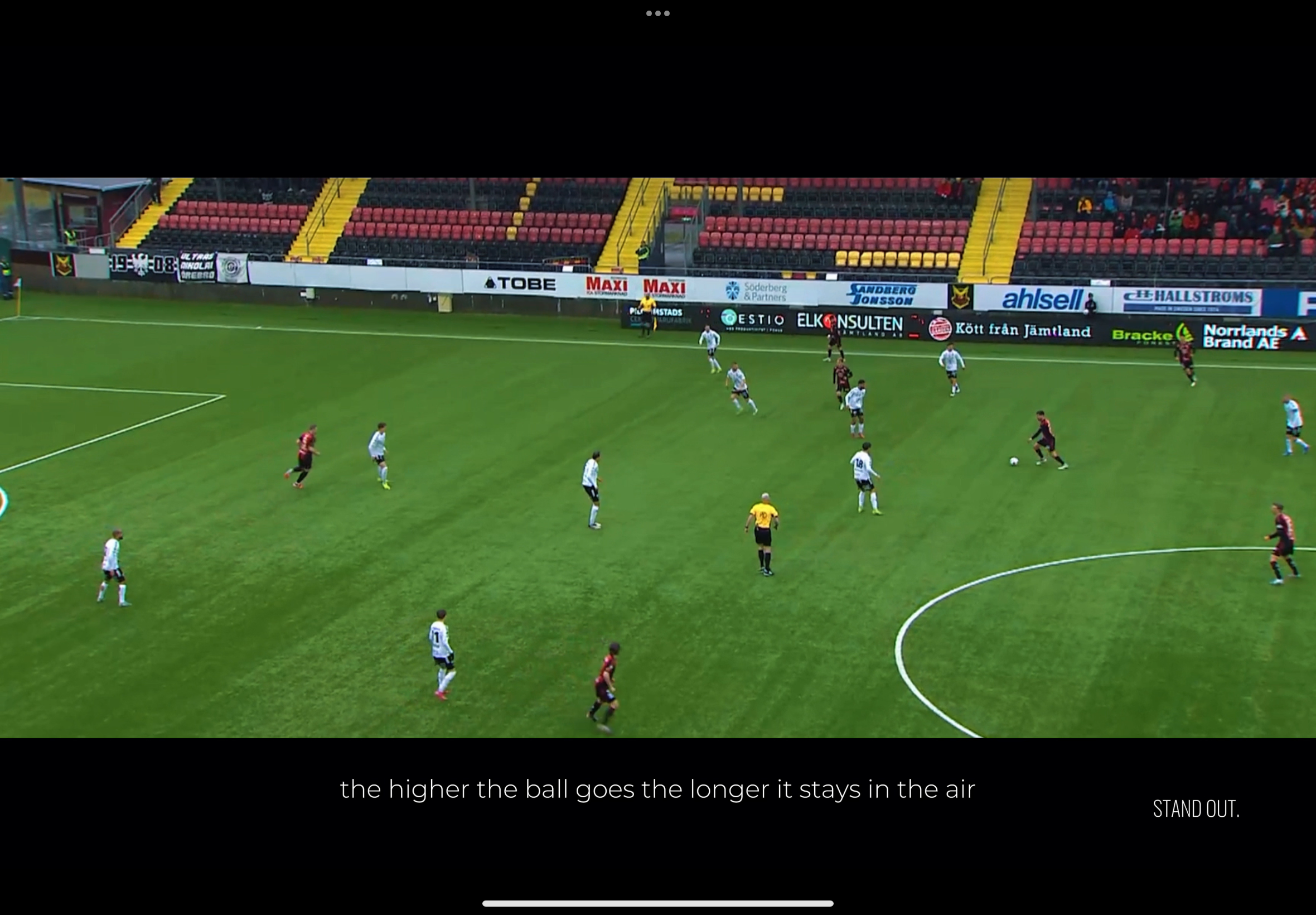
The height of the pass determines how much time your winger receives.
A high ball travels longer.
That gives the fullback time to close the space.
A flatter ball travels faster.
That gives the winger more time.
The isolated fullback.
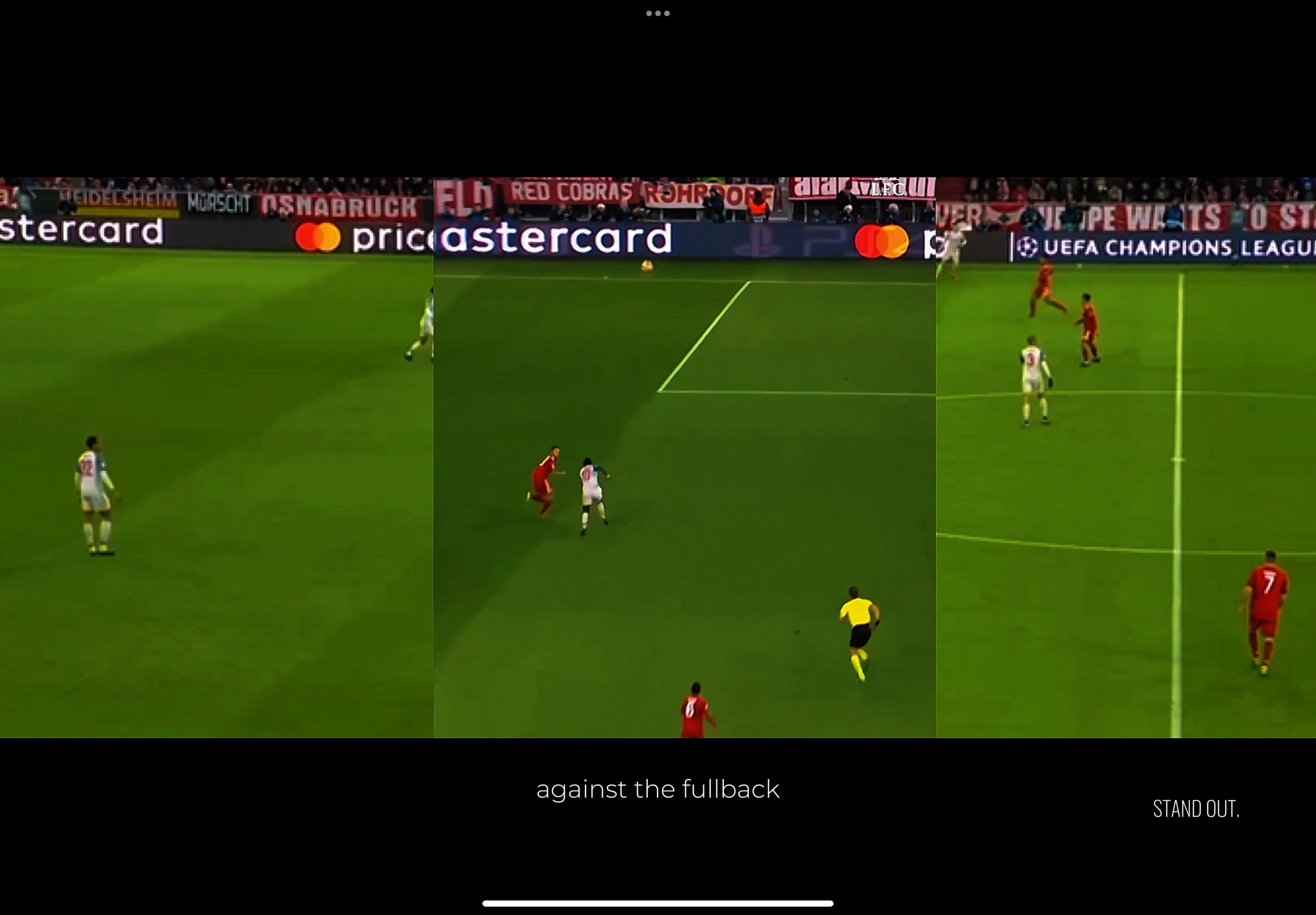
Fullbacks are often the most isolated defender.
Help from teammates usually comes from far away.
The center back cannot leave if the striker is occupying him.
This leaves the fullback alone to defend space behind.
Momentum decides the race.
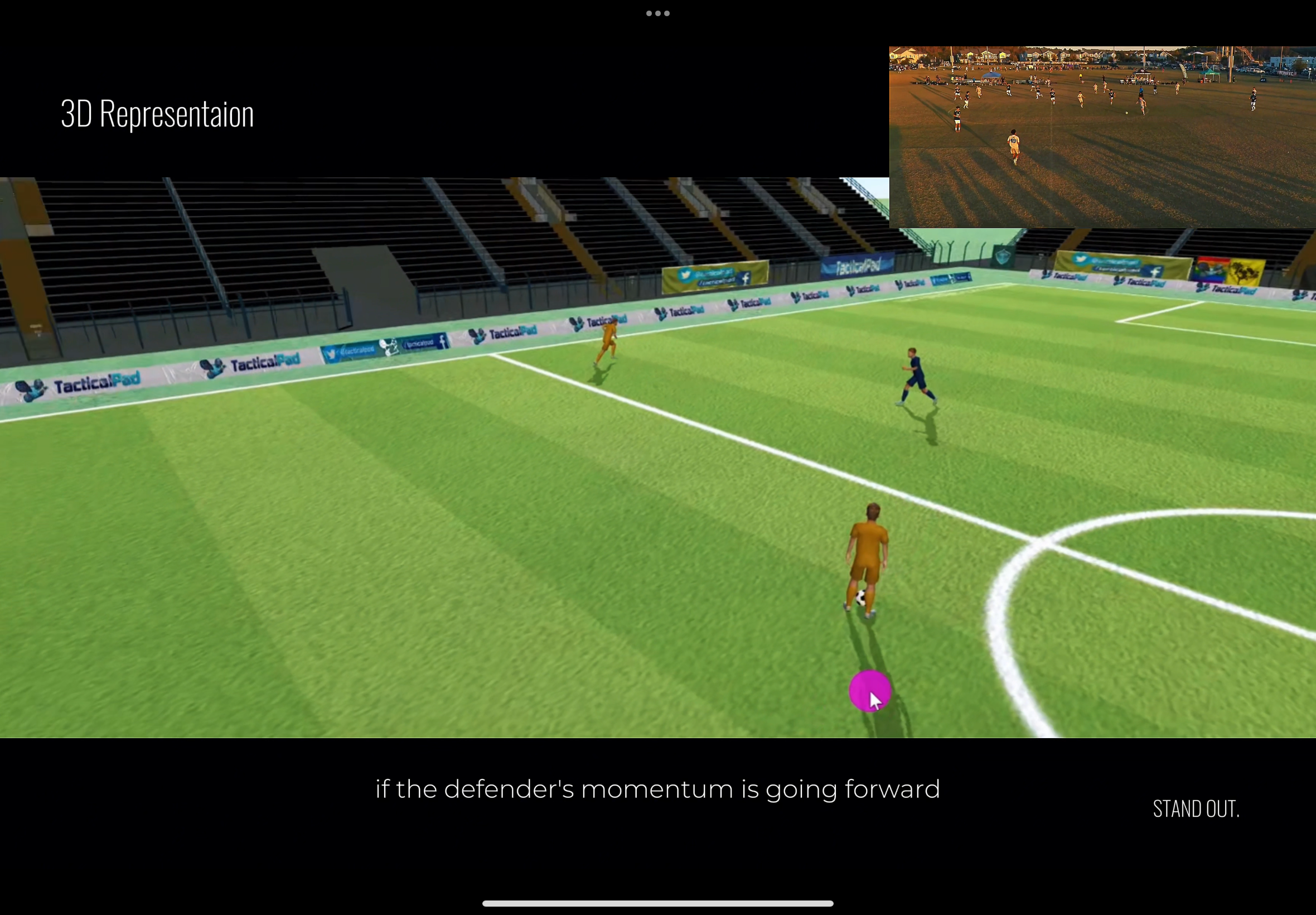
The key detail is not the player's location.
It is the direction of their movement.
If the defender is moving forward and the winger is running toward goal, the defender must turn.
Turning the body takes time.
The attacker continues forward.
This is simple football physics.
Principle
Scan early.
Recognize the far side.
Switch quickly.
And when the fullback is isolated, watch the movement.