CONNOR
-
 • 9/15/26
DRIVE TO ENGAGE.
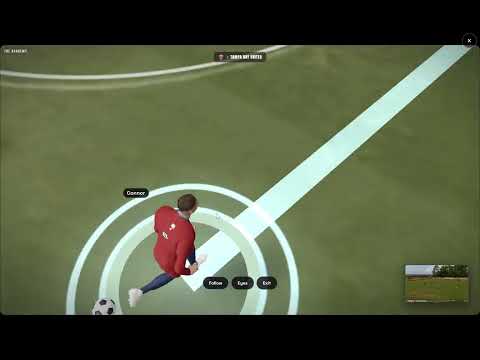
This video is about knowing when to drive at a defender instead of passing early. Playing in advanced areas means you get chances to face the back line with space in front of you. A lot of players think they need to relieve pressure by moving the ball out wide, but sometimes there is no pressure to relieve at all.
When you have the best angle to goal and space in front of you, driving straight at a defender forces them to make a decision. The back four stays flat when you pass early, which makes it easier for them to defend. But when you drive to engage one player, they have to step toward you. That's when gaps open up behind them and your team gets better angles to attack.
The closer you get to goal, the harder those passing options are to close down. You see this in buildup too. When you're central with time and space, you have the best view of the whole pitch. Picking one player and driving at them makes the midfield scramble to coordinate. That hesitation is where you thread the pass between the lines. This habit of taking space to engage beats trying to relieve pressure that was never there.
-
 • 5/1/26
SIDE ON.
This video focuses on a key detail for a number CDM,
how you prepare for long balls and dominate second phases.
At higher levels, it’s not just about the first duel.
It’s about winning the next action.The key moment happens before the ball is even played.
When the opponent is about to go long, your body position determines everything.
Right now, starting square makes it harder to turn and react, which delays your movement into the space where the ball drops.
By adjusting to a side-on position, you:
reduce your turning time
accelerate faster
arrive earlier to second balls
And those small time gains are what allow you to control midfield.
Prepare early.
Set your body.
Win the next phase.That’s how a six takes over the game.
-
 • 4/29/26
LATE TO THE PRESS, WHAT NOW?
This video is about what happens when you’re late to the press, and why that’s where you become vulnerable.
Being late isn’t the problem.
What you do next is.When you’re far from the player and still try to press aggressively, you expose the space behind you.
Space appears where the press starts, and the later you are, the easier that space is to exploit.
The key is understanding the shift:
When you’re late, it’s not about the ball anymore.
It’s about the space.Instead of sprinting to the player, you sprint to the most dangerous space, usually central, and take that away first.
And if you can’t affect the ball at all, then you don’t press.
You delay and steer the play wide, instead of diving in and opening the middle.
Close = press.
Late = protect space.That’s how you stop transitions instead of making them worse.
-
 • 4/23/26
ATTACK THE FIRST TOUCH.
This video breaks down one of the most important defensive details for a midfielder…
when to be aggressive.
You cannot press everything.
You cannot jump at every moment.The key is understanding when the ball is vulnerable.
That moment is the first touch.
When the ball is traveling, the situation is predictable.
If you cannot intercept it, the next opportunity comes immediately after…between the first and second touch.
That is the window.
The detail is your distance.
If you are within the two-meter radius, you can step and win it.
If you are too far, the player gets control and escapes.And timing is everything.
If you go too early, you get turned.
If you go too late, the moment is gone.So you stay controlled…
and you attack the first touch.
Wait.
Recognize.
Step.That’s how you win the ball at higher levels.
-
 • 4/17/26
TRACK YOUR MAN.
This video breaks down how your role as a number six in long ball and transition moments is defined by one thing…
Winning your matchup.
When the ball is played long, it gives you time. But that time is not for watching the ball.
It’s for getting ahead of your marker and protecting the most dangerous space.
Right now, the gap is what you lock your eyes on.
You’re ball-watching, and by the time you react, you’re already late. Not because you’re slow… but because your decision comes too late.
The ball is already predictable when it travels long. It’s not going anywhere else.
So your focus needs to shift from the ball… to the player you’re responsible for.
That’s the difference between being ball-oriented and play-oriented.
When you become play-oriented, you track your man, you get goal side, and you arrive first into the space that matters most, especially at the top of the box.
And when you arrive first, you control the action. You win the knockdowns, and you dictate what happens next.
This is not about speed.
It’s about what you see first.
Track your man.
Get goal side.
Arrive first.That’s the standard for a six…
and that’s what allows you to control the moment instead of chasing it.
-
 • 3/19/26
BLINDSIDE.
This video focuses on how to use ball carrying to control the back line.
After breaking the midfield line, the next step is not to pass early.
It is to keep driving and force a decision from the defense.
The key detail is understanding when the back line breaks and how the defender’s body shape tells you when they are no longer in control.
From there, the focus shifts to the blind side, where even simple passes become dangerous because of the time it takes defenders to turn.
The best midfielders do not rush these moments.
They carry, read, and release at the exact moment the defense is exposed.
That is how you turn progression into end product.
-
 • 3/12/26
SWITCH.
This video focuses on how midfielders unlock the far side of the field.
The key habit is scanning diagonally before the ball arrives. When you check the far side early, you already know whether the switch is available.
From there the next action becomes simple.
You can switch the play quickly, giving your winger more time before the fullback can close the space.
Or you can punish the isolated fullback by playing the ball in behind.
Both actions come from the same detail.
Seeing the far side before you receive the ball.
-
 • 3/7/26
BREAK LINES.
This video explains where breaking lines actually starts.
When people hear the phrase breaking lines, they usually think about the pass. The progressive pass between midfielders. The Rodri or Busquets type of action that splits a defense.
But the reality is much simpler.
You break lines before you even receive the ball.
The first step to breaking lines with the ball is learning how to break lines with your positioning.
When teams defend in a compact block, they defend in layers. A forward pressing line. A midfield line behind them. Then the defensive line.
As a number six, there is one simple rule that changes everything.
If your center backs are not under immediate pressure, you should always position yourself beyond the first line of pressure.
Not next to it.
Not in front of it.Beyond it. Between the first and second line.
This single detail immediately changes the picture for the defense.
When you receive the ball between lines, the midfield line now has a decision to make.
They either allow you to receive freely and turn.
Or one of them has to step forward to press you.
The moment a midfielder steps forward, the defensive block breaks vertically.
And when the block stretches vertically, passing lanes appear everywhere.
Wide players can step inside.
Strikers can receive between defenders.
Your team suddenly has space to play through the structure.The key detail is that all of this happens before you even touch the ball.
Now compare that to receiving the ball in front of the first line of pressure.
When that happens, you are essentially occupying the center back space instead of the midfield space.
The striker can now press both you and the center back at the same time.
And the midfield line behind him can stay compact and organized.
Which means you have effectively taken one midfielder out of the game before the play even starts.
This is a common trap for number sixes.
When players want to dictate the game, they often drop too close to the center backs to get on the ball.
But by doing that, they actually make the next action more difficult, not easier.
So here is the real cheat code.
Your positioning determines which defensive line will press you.
If you stay close to the forwards, you activate the first pressing line.
If you position yourself between the first and second line, you activate the midfield line.
And when the midfield line steps forward to press, they must sprint vertically to reach you.
That movement stretches the block, exposes momentum, and opens the exact spaces you need to break the next line.
Now the forward pass becomes easier.
The dribble becomes easier.
The game opens up in front of you.So the real question for a number six is not just:
How do I break lines with the ball?
The real question is:
Which defensive line do I want to activate?
Because once the midfield line steps out, the structure of the block begins to open.
And that is where the game becomes yours to control.
-
 • 3/30/26
TRANSITION = FURTHEST OPTION FORWARD.
This video breaks down how a number six controls the attack through transition moments.
When possession changes, the opponent is still stretched and unorganized, and that’s the window to punish. This is not about keeping the ball, it’s about playing forward immediately and attacking the most vulnerable space.
The key is your first scan.
You scan the furthest option forward, because that gives you the full picture and allows you to play quickly, often in one or two touches.
If the back line is exposed, you play in behind, in stride, and you commit to it. Even the detail matters, it’s better to overhit than underhit, because hesitation kills the moment.
This is the difference between a six who circulates… and one who breaks the game open in transition.
-
 • 2/27/26
BALL -> PRESSURE.
This video is about one decisive habit.
You are at your best when you play on few touches.
When you move the ball quickly.
When you keep the tempo high.And when we slow the clips down, one pattern becomes clear.
You play fastest when you can see the ball and the pressure in the same frame.
When you are not blind to pressure, you are sharp.
When you are blind to pressure, you slow down.
You take extra touches.
The tempo drops.That is the pattern.
This video introduces the critical scan.
Not scanning early.
Not scanning randomly.Scanning at the exact moment that matters most.
While the ball is traveling to you.
In that moment you scan for only two things
Ball trajectory
Pressure angle and speedNothing else.
That final piece of information determines your first touch.
And your first touch determines everything that follows.
When your first touch is informed, you can
Play forward in two touches
Switch play cleanly
Move the ball before the press arrivesThe issue is not your technique.
It is not your ability.It is whether you have the right information at the right time.
You play in a position where information is the game.
If you scan late and precisely, your first touch becomes proactive instead of reactive.
And when that happens, your tempo rises naturally.
Your influence rises naturally.The takeaway is simple and specific
As the ball travels, perform the critical scan.
Read the pressure.
Then receive.The later and more accurate that scan is, the more relevant the information becomes.
And the more relevant the information is, the cleaner and faster you play.
This is about not being blind in the most critical second of the play.
See early.
Act fast. -
 • 2/18/26
KILL THE PRESSING TRIGGER.
Connor, this video is about one detail that changes everything when it comes to pressure.
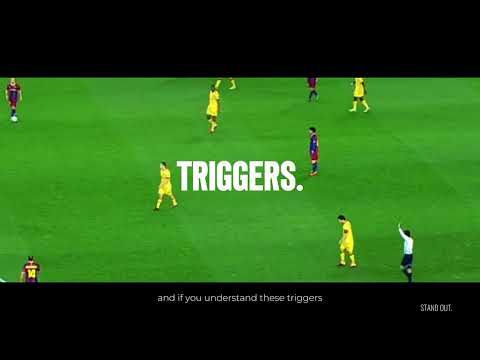
Pressure is triggers.
And the main trigger in your clips is body orientation.
When you receive with your hips facing central, you immediately expand your options. You can go left, right, forward, or break a line. Because of that, defenders hesitate. They cannot step aggressively without exposing space.
That hesitation is time.
And when you combine vision with time, that’s when you are at your best. That’s when you dictate tempo instead of reacting to it.
We see this clearly in your tournament clips. When your first touch keeps you central, the game slows down for you. You need fewer touches. You see progressive passes earlier. You look composed because you’ve already neutralized the pressure.
Now compare that to the moments where you receive facing the line or facing your own goal.
In those situations, you limit your own options. And when you limit your options, you become a pressing trigger. Defenders feel safe attacking you because they know where you cannot go. That’s why the pressure becomes aggressive. That’s why you’re forced backward. That’s why you take extra touches.
The extra touches are not the root problem. The body orientation is.
As you continue playing at higher levels, the pressure will only get faster and more physical. Players won’t hesitate. They will attack any trigger you show.
That’s why this detail matters now.
You don’t neutralize pressure with strength.
You neutralize it with your first touch.When you receive wide, it may feel natural to turn toward the line and protect the ball. But that instinct makes you predictable. Instead, open up first. Face the field. Kill the trigger immediately.
From there, everything becomes easier.
Fewer touches.
More forward options.
More influence.If you ever feel like pressure is overwhelming, go back to this.
Are my hips central on my first touch?
If the answer is yes, you’ve already solved most of the problem.
Control your body orientation.
Kill the trigger early.
Then dictate the game instead of surviving it. -
 • 2/12/26
SPACE APPEARS WHERE THE PRESS STARTS.
Connor, here is the cheat code
Whenever you feel like you cannot find space in buildup remember this:
Space appears where the press starts.
That is not a slogan. It is how the game works.
When you feel removed from the play and you are inside the striker’s shadow it can feel like there is no passing lane. But the moment the striker presses your center back he leaves space somewhere else.
Pressure does not only close space.
It creates it.The question is whether you recognize where it appears.
Most players react to pressure.
More influential players move with it.When the striker steps to press that is your cue. Instead of staying still inside the shadow follow the movement of the press and step into the space he just left. Now you are not trying to escape pressure. You are receiving because of it.
That is the difference.
If you stay connected to your marker you are waiting.
If you move with the press you are arriving.And when you arrive behind the first line you receive with space in front of you. That changes your body orientation. That changes your options. That changes your influence.
If you ever feel like you cannot find space do not look wider.
Do not drop further.Ask yourself one question:
Where did the press start.
Move there.
That is the layer that raises your influence without raising your workload.
-
 • 2/4/26
PRESSURE ONLY WORKS WHEN YOU ARE BLIND TO IT.
Connor, I want to be very clear about what this video is actually showing you, because once you see it properly, a lot of situations in your game start to make sense.
When football feels easy for you, it’s not random.
And when it feels fast or messy, that’s not random either.The difference is whether you see the pressure when the ball arrives.
There are moments in this video where you receive the ball and everything slows down. Your first touch takes you forward, the pressure is late, and you suddenly have options. Those moments aren’t about confidence, form, or risk. They come from one thing: you’re not blind to the pressure.
There are also moments where possession is lost quickly. Not because of poor quality, and not because of the wrong decision. It happens because you receive the ball without seeing who is responsible for pressing you. When that happens, turning becomes a gamble.
That’s what being blind to pressure actually means.
This video isn’t asking you to play faster or slower.
It’s asking you to receive the ball seeing both the ball and the press in the same frame.That’s why the triangle matters:
Ball. Presser. Pitch.When those three are in your view, pressure loses its power. You already know where it’s coming from, how fast it’s arriving, and what angle it’s taking. Your first touch isn’t a guess anymore — it’s a response.
This is also why angle matters more than space.
When you receive beyond the vertical line of the player responsible for pressing you, the pressure becomes diagonal instead of straight. That changes everything.
Straight pressure is aggressive and fast. Players feel comfortable charging because they’re directly in front of you.
Diagonal pressure creates hesitation.Hesitation creates time.
And time is what allows you to play forward, drive, or break lines — exactly like you do in the best moments of this video.This is why losing the ball in some of these clips isn’t a mistake to fix, but a signal to understand. When you turn into pressure, it’s not because you chose wrong — it’s because your angle didn’t allow you to see the pressure in the first place.
Once you understand that, the game simplifies.
You don’t need to force actions.
You don’t need tricks.
You don’t need to rush.You just need to stop receiving the ball blind.
That’s also why this principle works at every level of the game. The best midfielders don’t beat pressure when they receive the ball — they’ve already beaten it with their positioning before it arrives.
When you do this consistently, football doesn’t just look easier — it becomes easier.
The goal of this video isn’t to give you more things to remember.
It’s to give you one reference that cleans everything up.See the ball.
See the press.
Let the game slow down.That’s the habit.
Everything else follows. -
 • 1/5/26
OUTSIDE→ INSIDE.
Connor, your game has a clear strength: you want to play forward.
But the way you scan limits how well you can actually do it.A common pattern midfielders face is pressure coming from the outside toward the inside.
And when the ball travels in that same direction — outside → inside — the space always opens on the opposite side.Top players scan that far side early.
Not because they’re guessing, but because they know how defensive lines behave.
Outside → inside ball = defense narrows = far side opens.In your game, the habit shows up here:
you receive without checking the opposite side, so you end up playing back where the ball came from.That’s not a technical issue.
That’s a scanning‑timing issue.If you scan late, you receive closed.
If you receive closed, you add touches.
If you add touches, the press wins the moment.The cue is simple:
when the ball travels outside → inside, your eyes go diagonally to the far side.
Scan while the ball is moving, not after it arrives.This early scan gives you the picture before your first touch.
And with the picture early, you can play one‑touch or two‑touch across the press.That’s how professionals break pressure.
Not with tricks — with timing.Your next level is not about doing more.
It’s about seeing earlier.
Scan early → shape early → release early.That’s when your forward instinct becomes a weapon instead of a hope.