PREDICTABLE BALL = BE AGRESSIVE.
A predictable phase happens when the ball travels long enough for the defender to clearly read where it is going.
Once the trajectory is clear, the ball no longer needs your attention.
Long ball. Think player first.
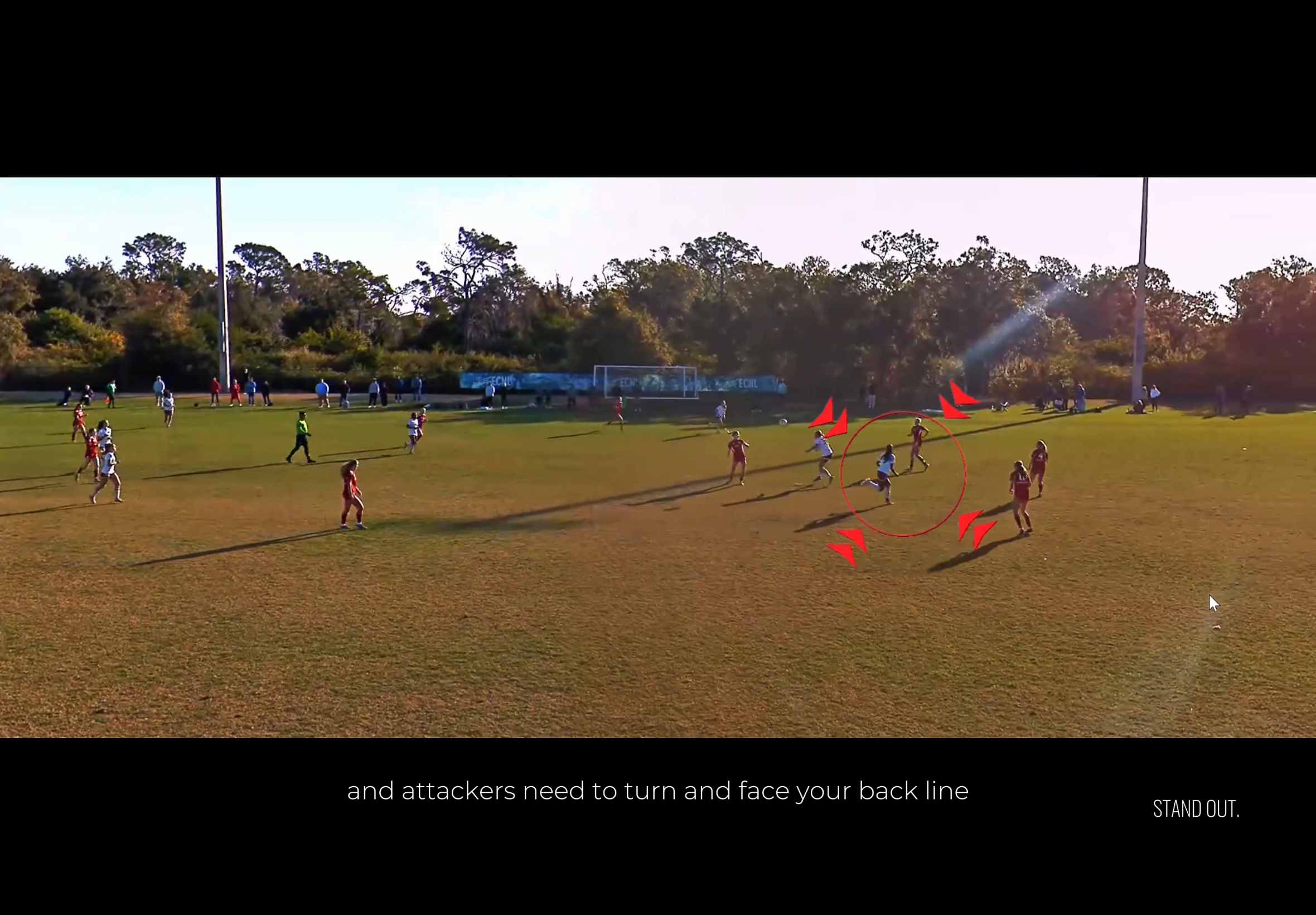
When the ball travels high in the air it takes time to arrive.
That time is the key.
If you read the ball trajectory early, you no longer need to stare at the ball. You already know where it will land.
From that moment your attention shifts to the attacker you are responsible for.
Defenders who read the ball late are forced to split their focus.
Ball.
Player.
Ball again.
This constant switching removes clarity. The defender never fully tracks the attacker.
Reading the trajectory early solves that problem.
Once you understand where the ball is going, your job becomes simple.
Find your player and stay connected.
Long balls create time. Use it.
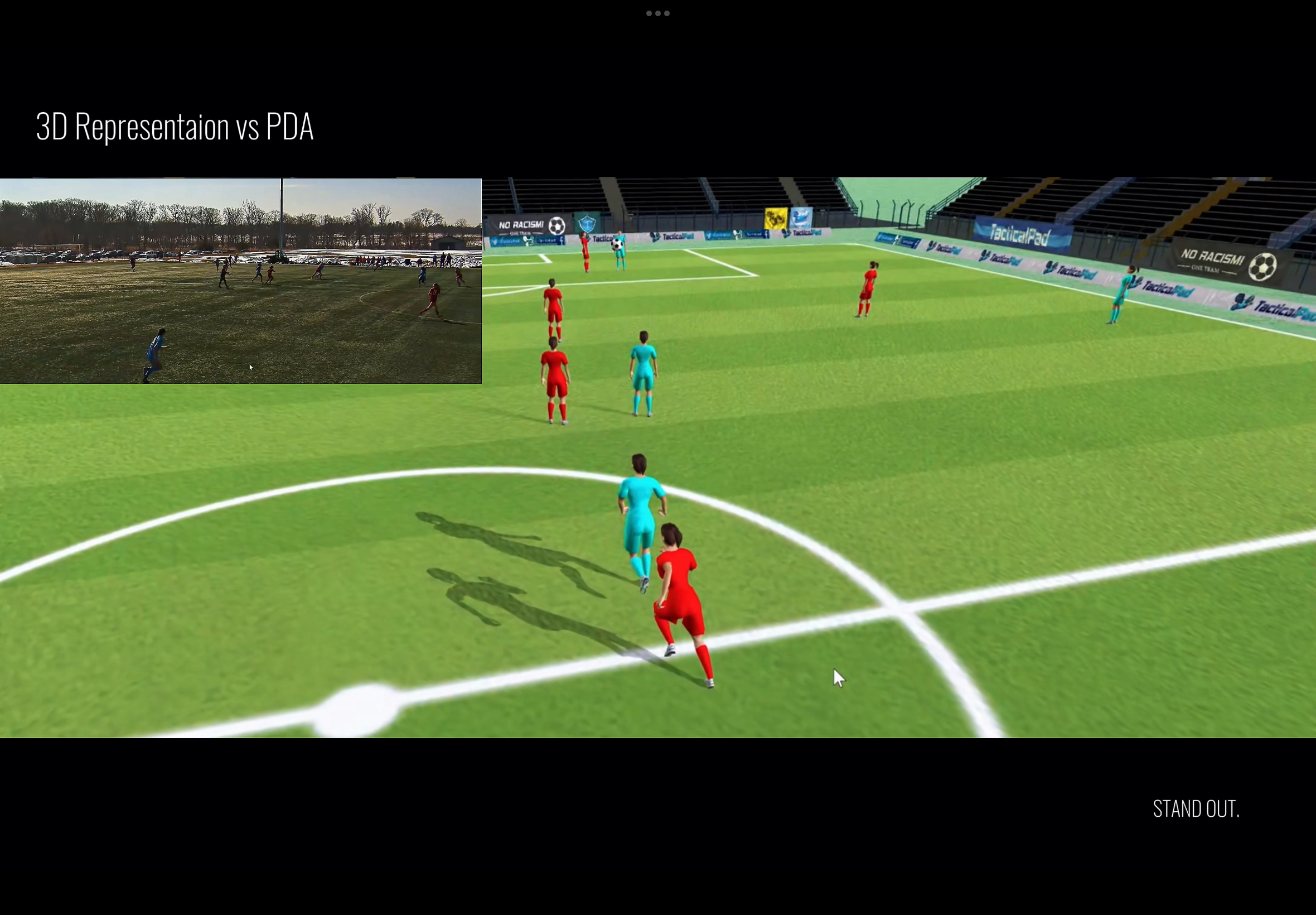
Long balls travel for several seconds.
That time allows defenders to close the distance to their marker before the ball arrives.
The goal is simple.
When the ball arrives, you should already be there.
If the attacker receives with space, they can turn.
But if they receive with pressure, their options disappear.
This moment decides the duel before the first touch even happens.
Predictable phases also happen on the ground.
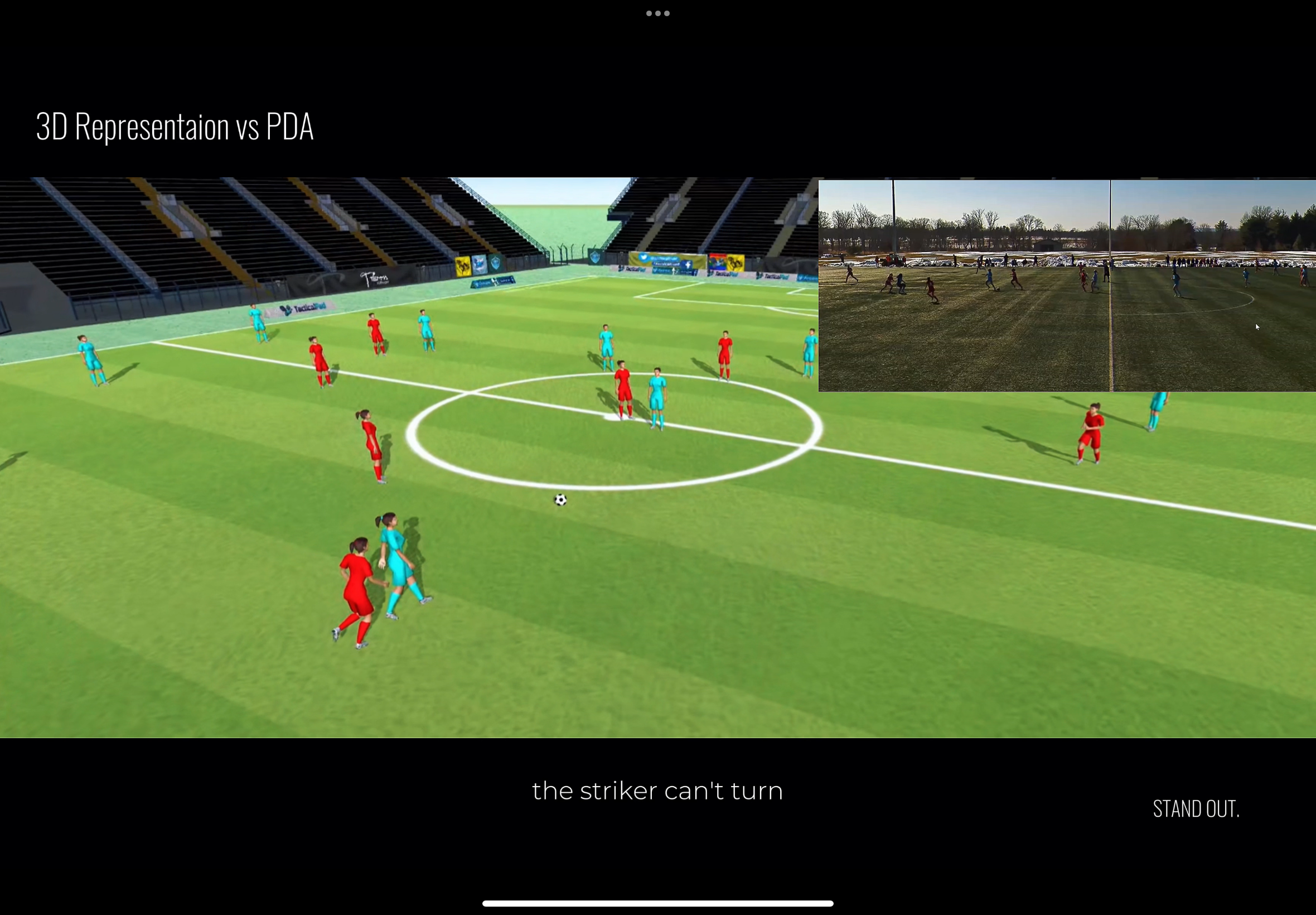
Predictable moments also appear when the ball travels on the ground and you can see both the player and the ball in the same frame.
In these situations the ball is still predictable.
You know where it is going.
Because of that, your focus should stay on the player.
The ball does not need your attention.
Your opponent does.
The turning radius.
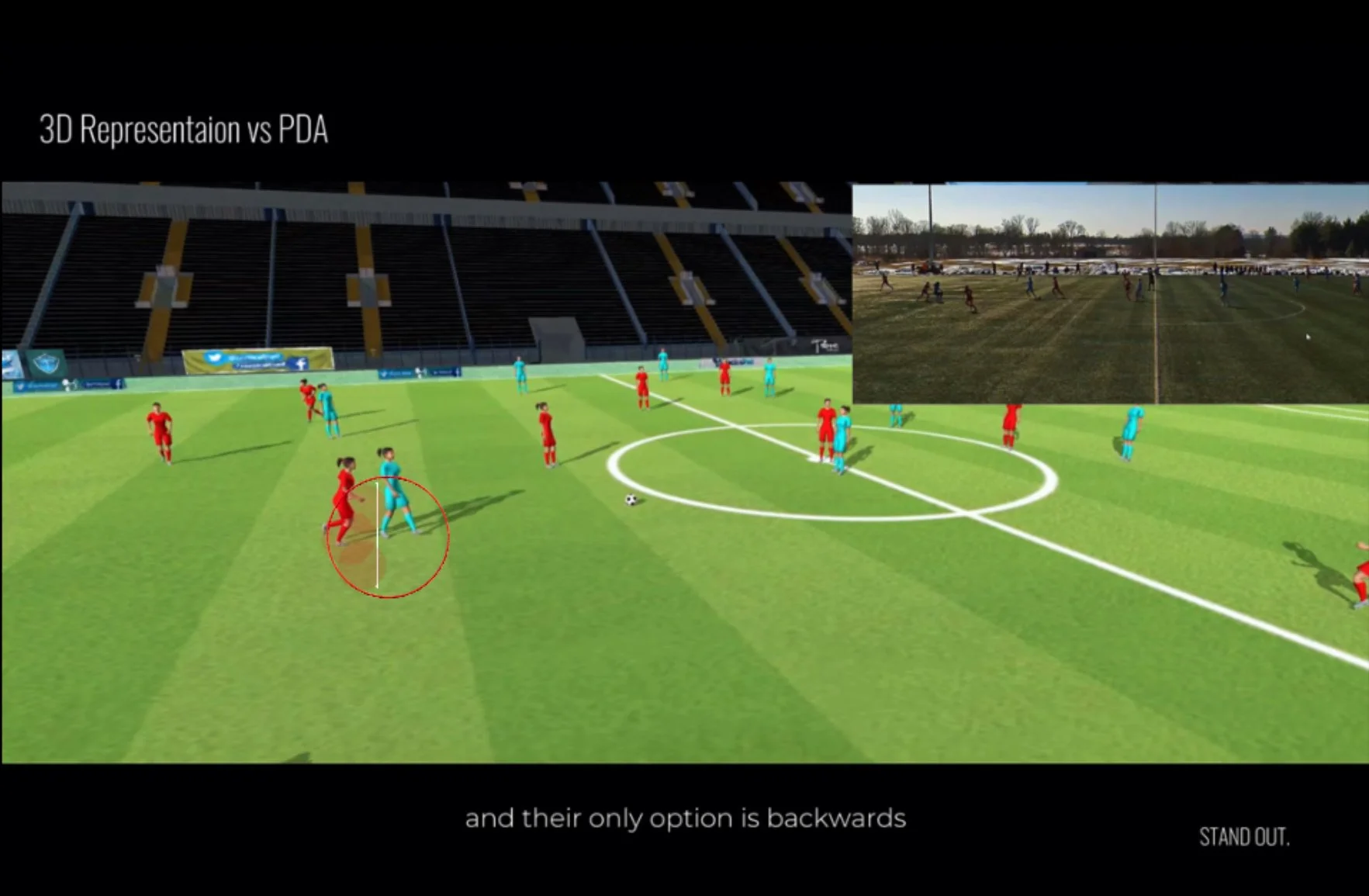
Imagine a circle around the attacker.
That circle represents the space they need to turn.
If you stay outside the circle, the attacker can receive and rotate forward.
If you step into that circle, the attacker loses the ability to turn.
Now their first touch is forced backwards.
And when the first touch goes backwards, the defender controls the duel.
The smaller the circle becomes, the fewer options the attacker has.
The second touch.
At the highest levels, centre backs rarely allow attackers a second touch.
Watch players like Gabriel.
Once the striker receives and the first touch goes backwards, the defender immediately steps through the player.
Sometimes they win the ball.
Sometimes they commit the foul.
But the attacker is never allowed to reset the play.
This creates a psychological effect.
Attackers begin to feel pressure before the ball even arrives.
They know that a second touch will not be comfortable.
And when attackers stop feeling comfortable receiving the ball, defenders gain control of the game.
The principle.
Predictable phases give defenders control.
When you can see both the ball and the player, the duel belongs to you.
Close the space early.
Enter the turning radius.
Do not allow the second touch.
That is how defenders turn small moments into dominance.