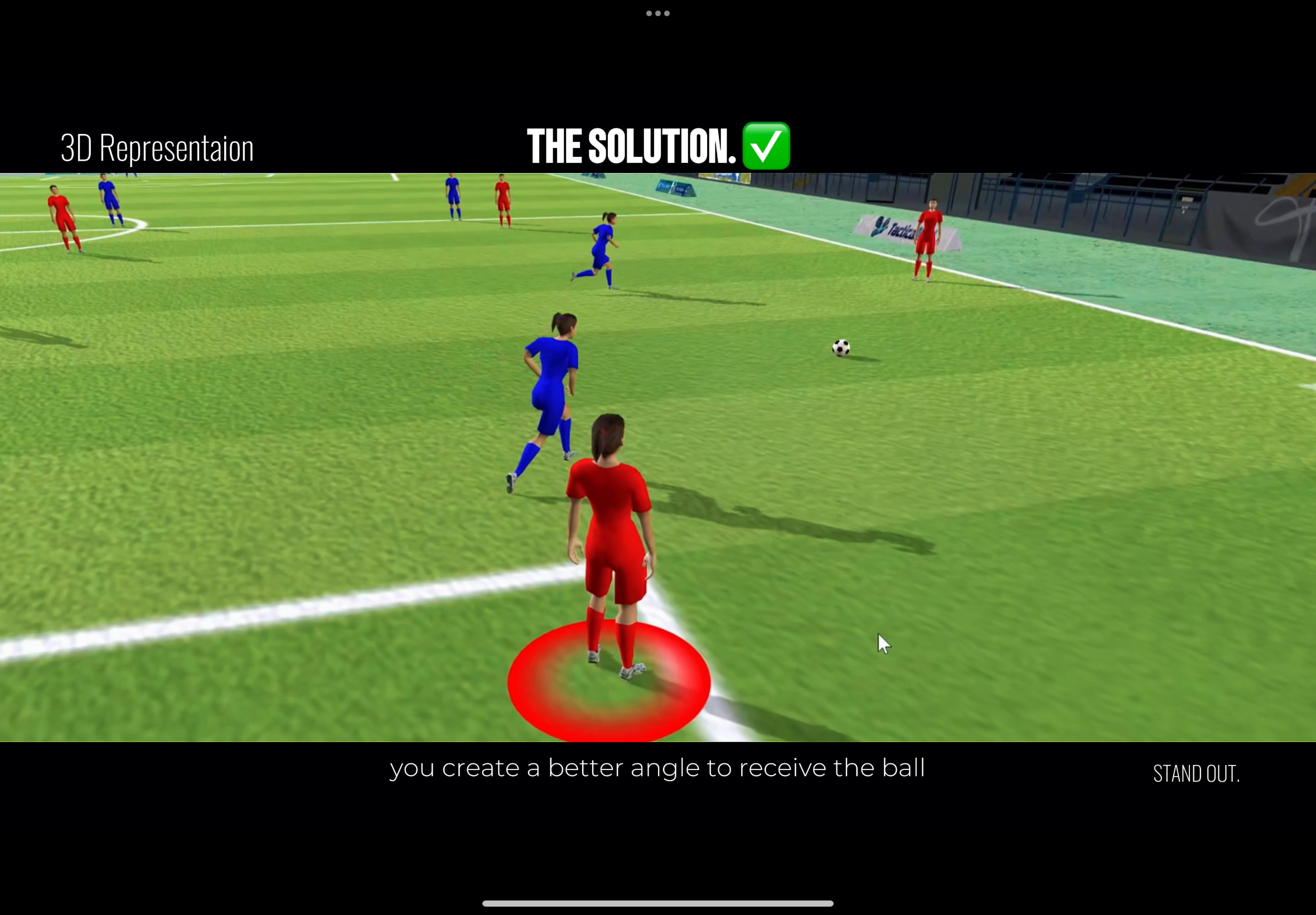
CREATE AN ANGLE.
After you play the fullback the action is not over.
Right now you follow your pass and end up in the shadow.
That makes you reactive instead of available.
MOVE AWAY FROM THE PLAY.
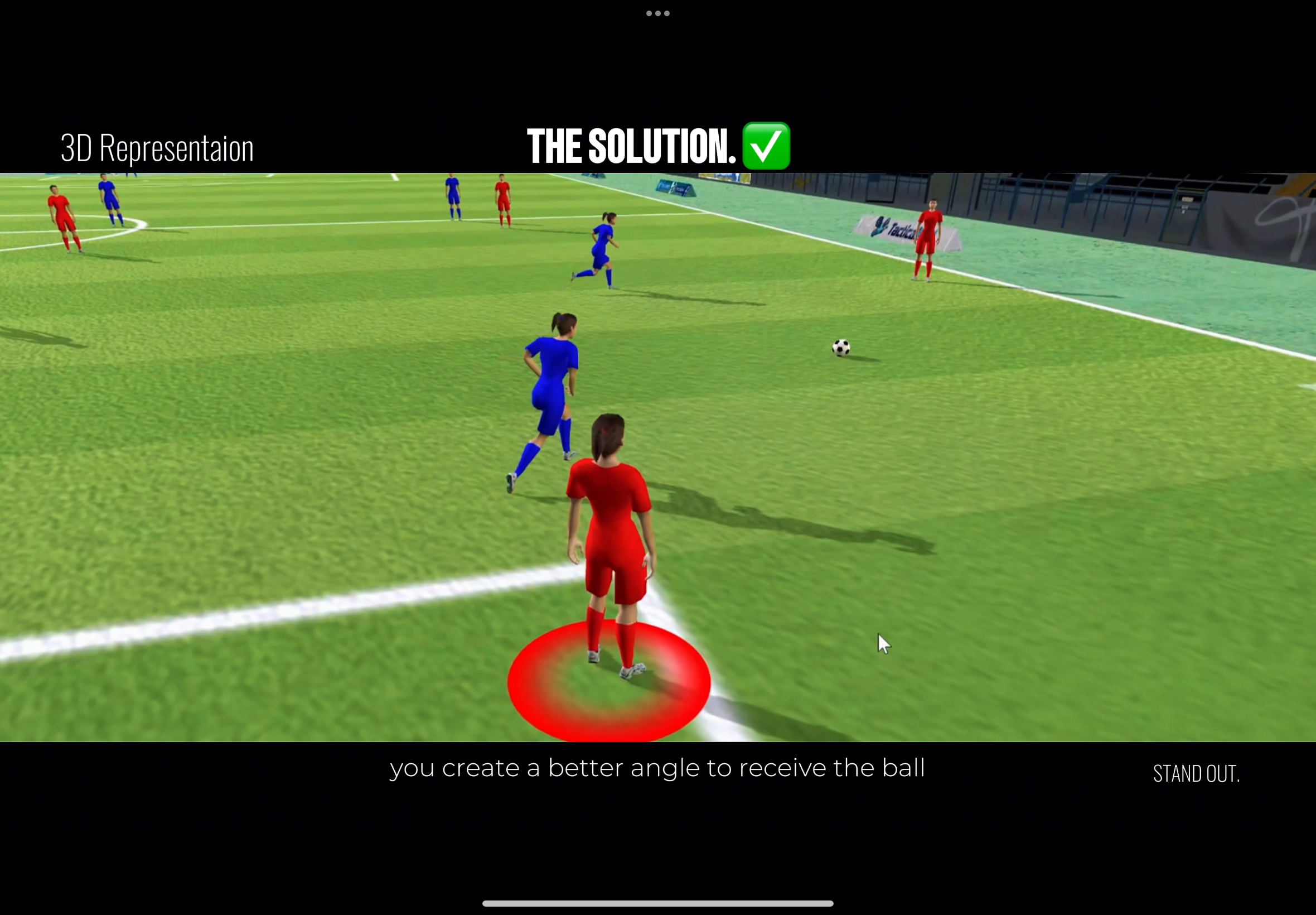
When you play the fullback your next movement should be backwards.
Move away from the play.
That creates more space and a much better angle to receive again.
DISTANCE CREATES TIME.
When the fullback has the ball the forward is responsible for pressing you.
If you stay in the same channel you are easy to press.
But when you move backwards and out of that lane you create distance.
And distance gives you time.
THE PRINCIPLE.
Do not follow the ball after your pass.
Create space for yourself early.
Better angles create more time and more time allows you to switch the play cleanly.
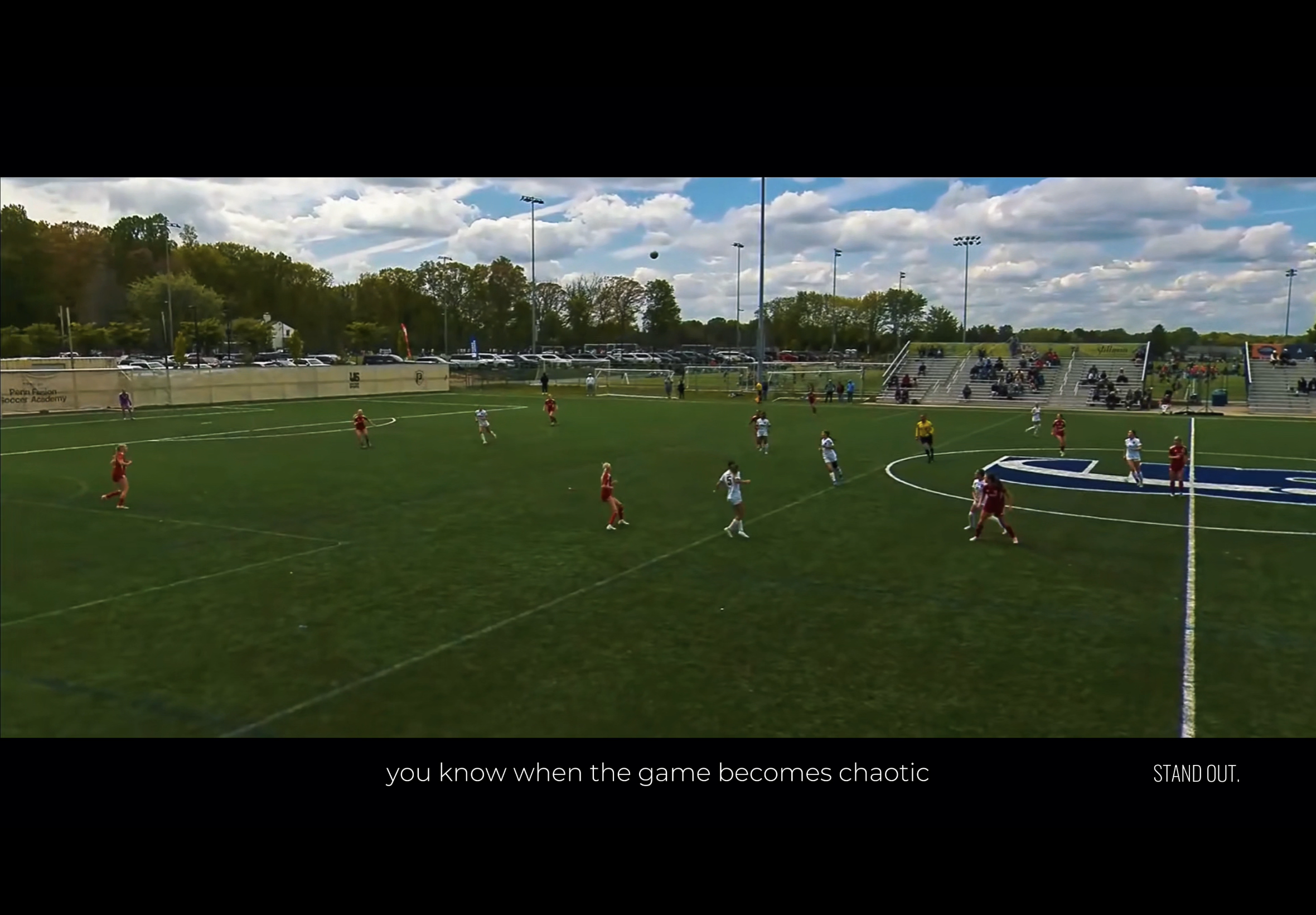
SETTLE THE PLAY.
The best center backs stay calm in unstable moments.
When the game becomes chaotic your job is to bring control back into the play.
UNSTABLE MOMENTS.
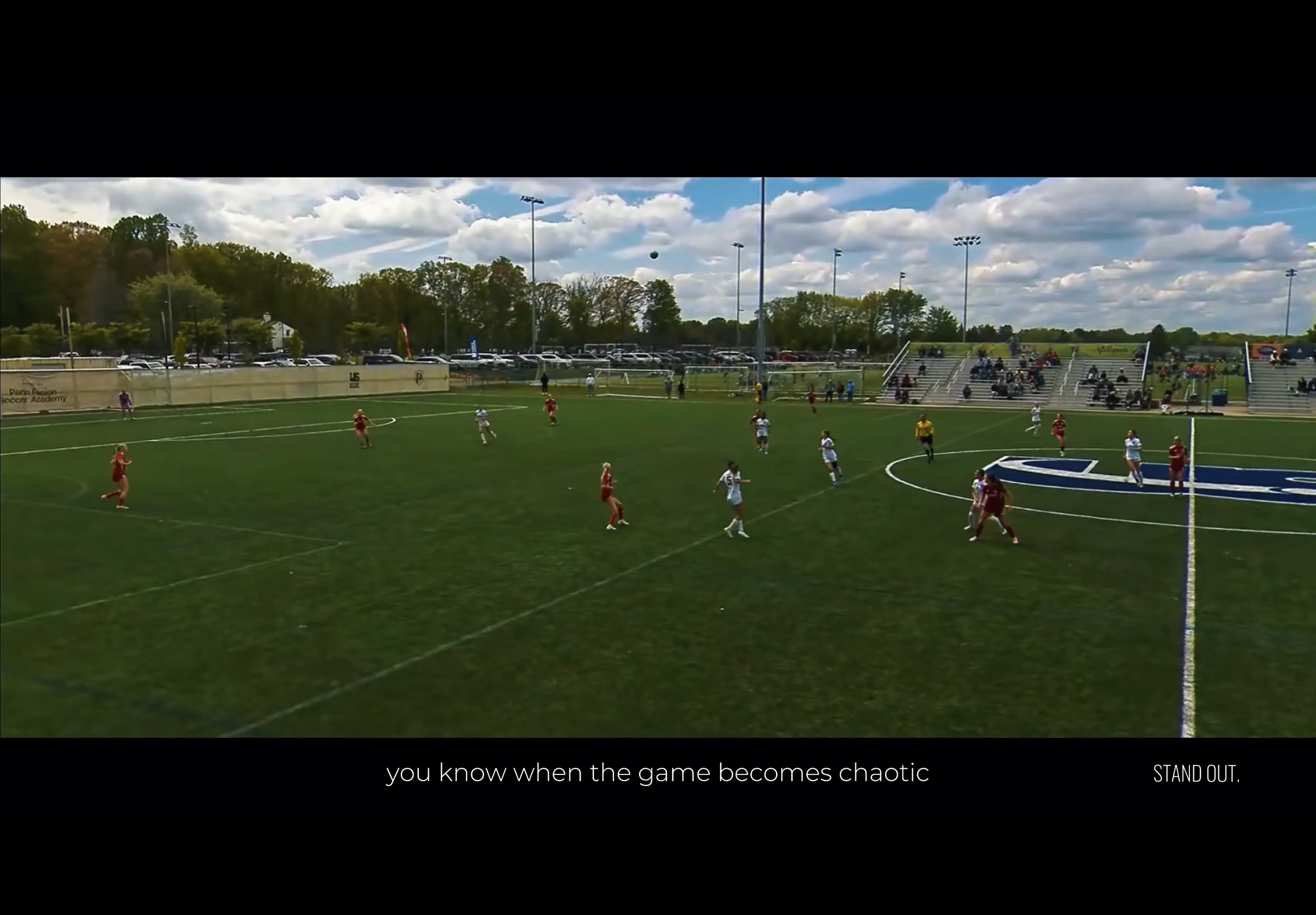
Loose balls bouncing balls and aerial duels are where center backs earn trust.
Especially in college football where the game is more vertical and transitional.
USE THE BALL TRAVEL TIME.
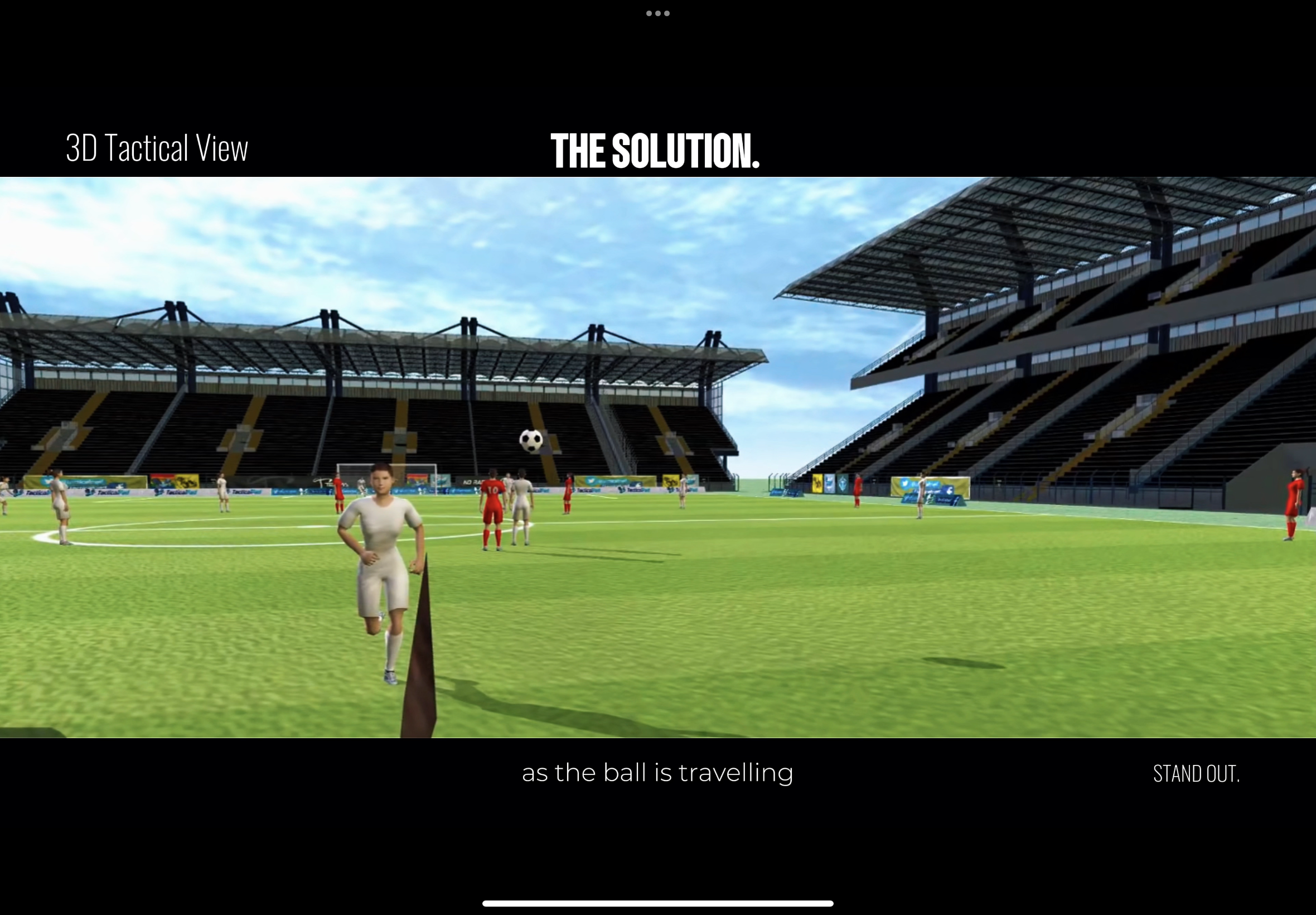
When the ball is traveling toward you use that time to scan.
Find the teammate with the most time and the least pressure before the ball arrives.
PRIORITIZE POSSESSION.
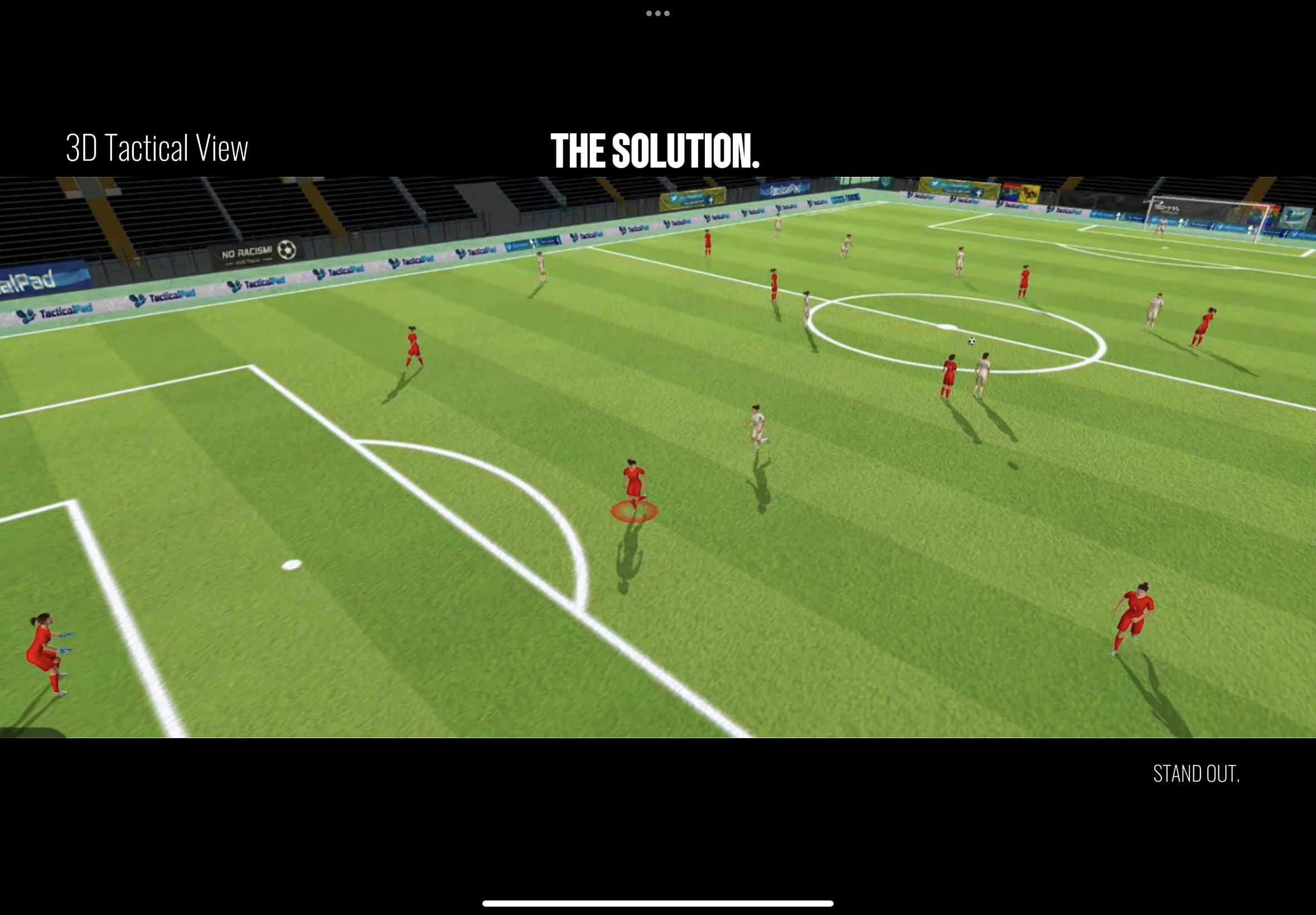
Do not force difficult passes into pressure.
In unstable moments the first priority is settling the play and regaining control for your team.
KEEP YOUR COOL.
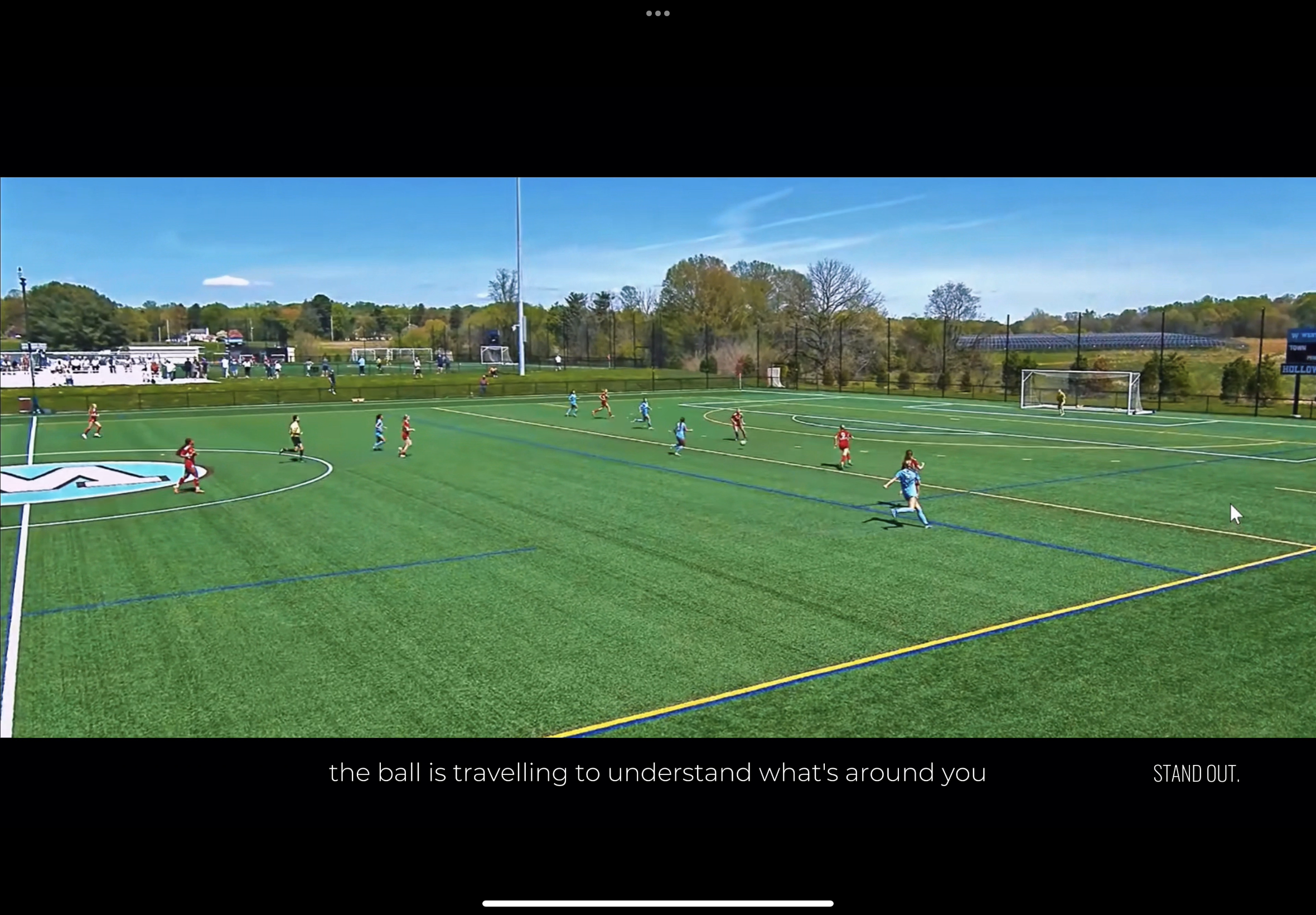
You actually do this really well.
Instead of panicking and clearing the ball immediately you stay calm and assess the situation before acting.
THE PRINCIPLE.
Use the time while the ball travels to understand the situation around you.
That calmness is what settles chaotic moments and gives your team control again.
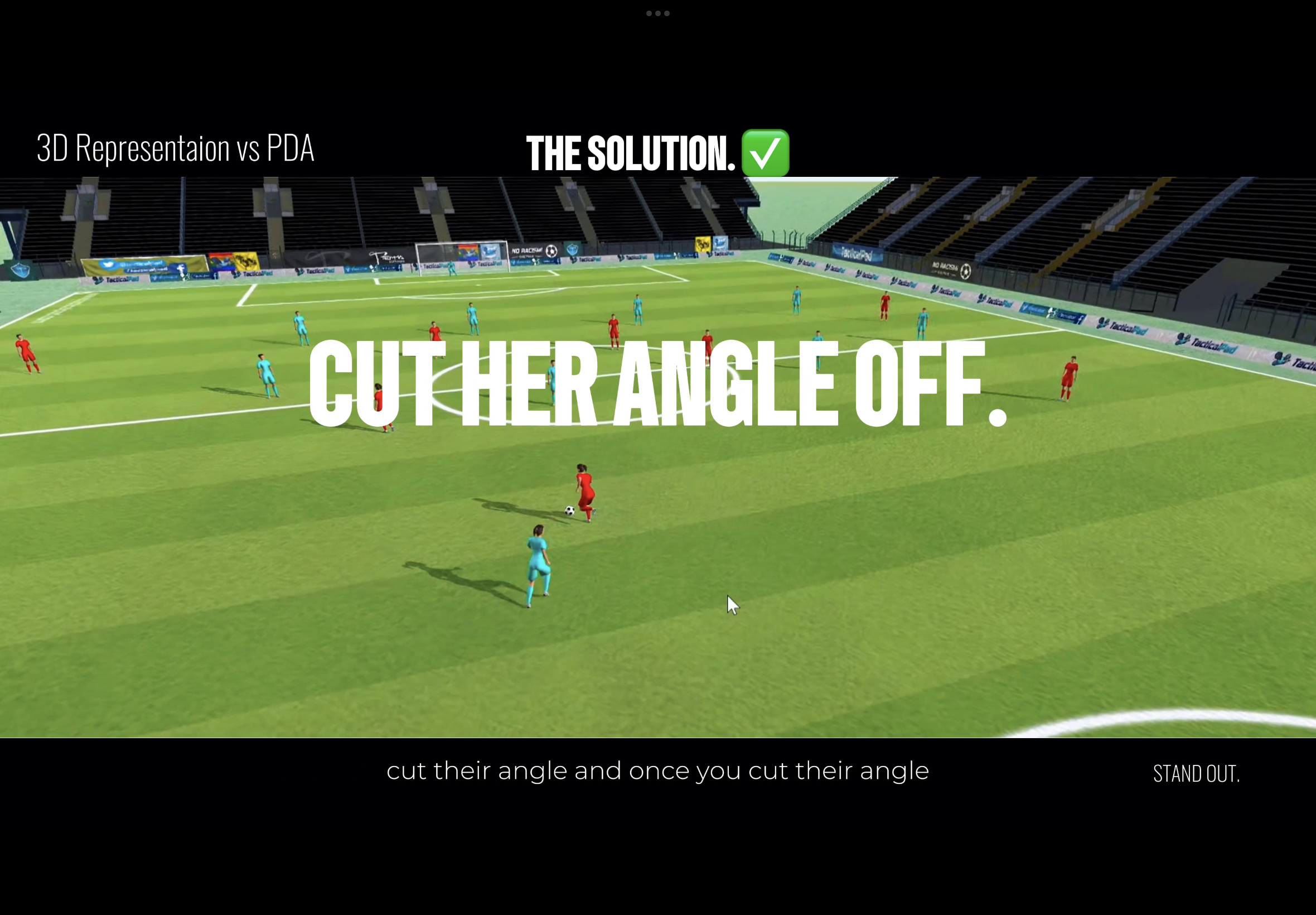
CUT HER ANGLE OFF.
At higher levels, breaking lines is not only done through passing.
It is done by carrying the ball through pressure.
The key is recognizing when the opportunity is there.
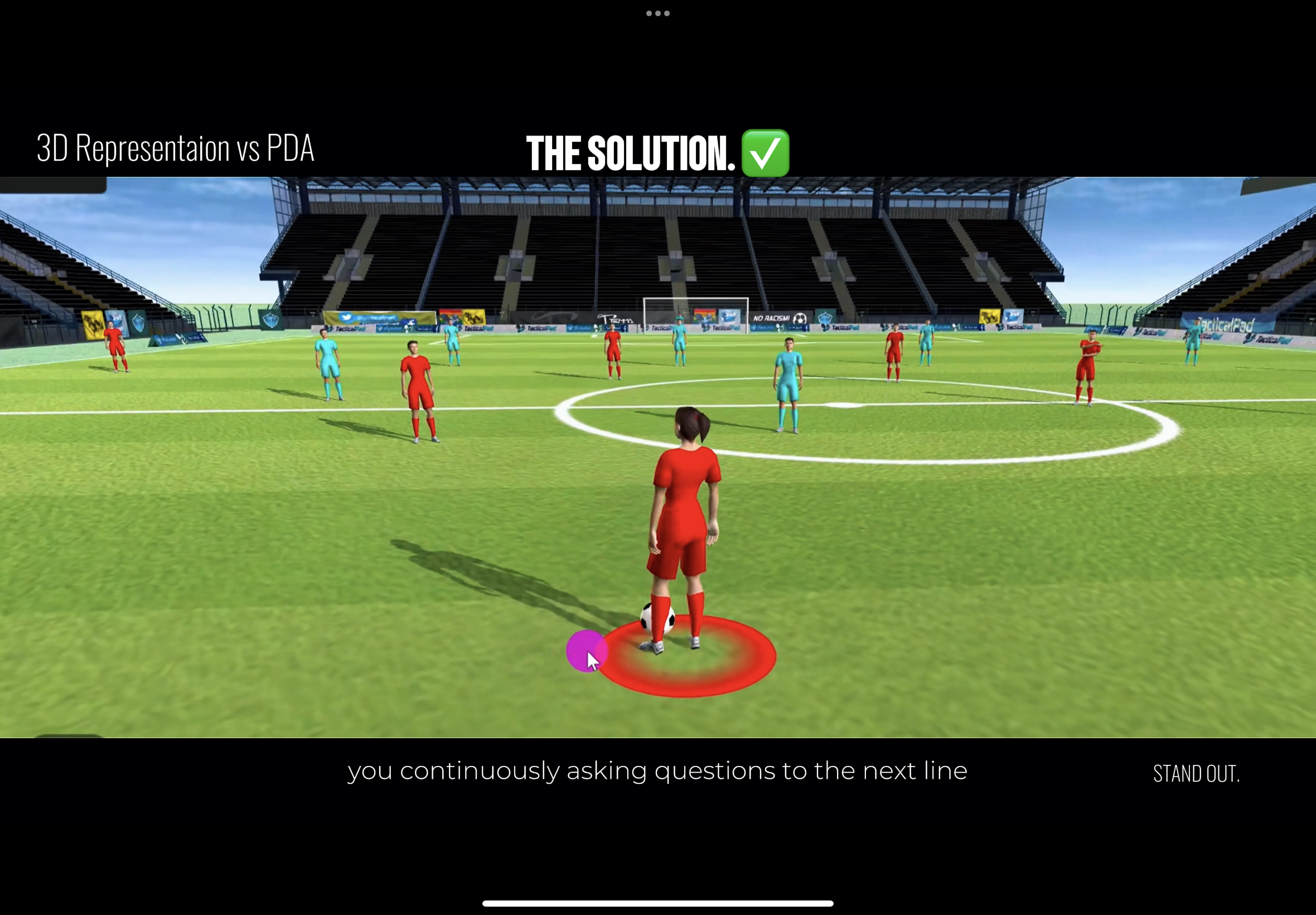
THE TRIGGER.
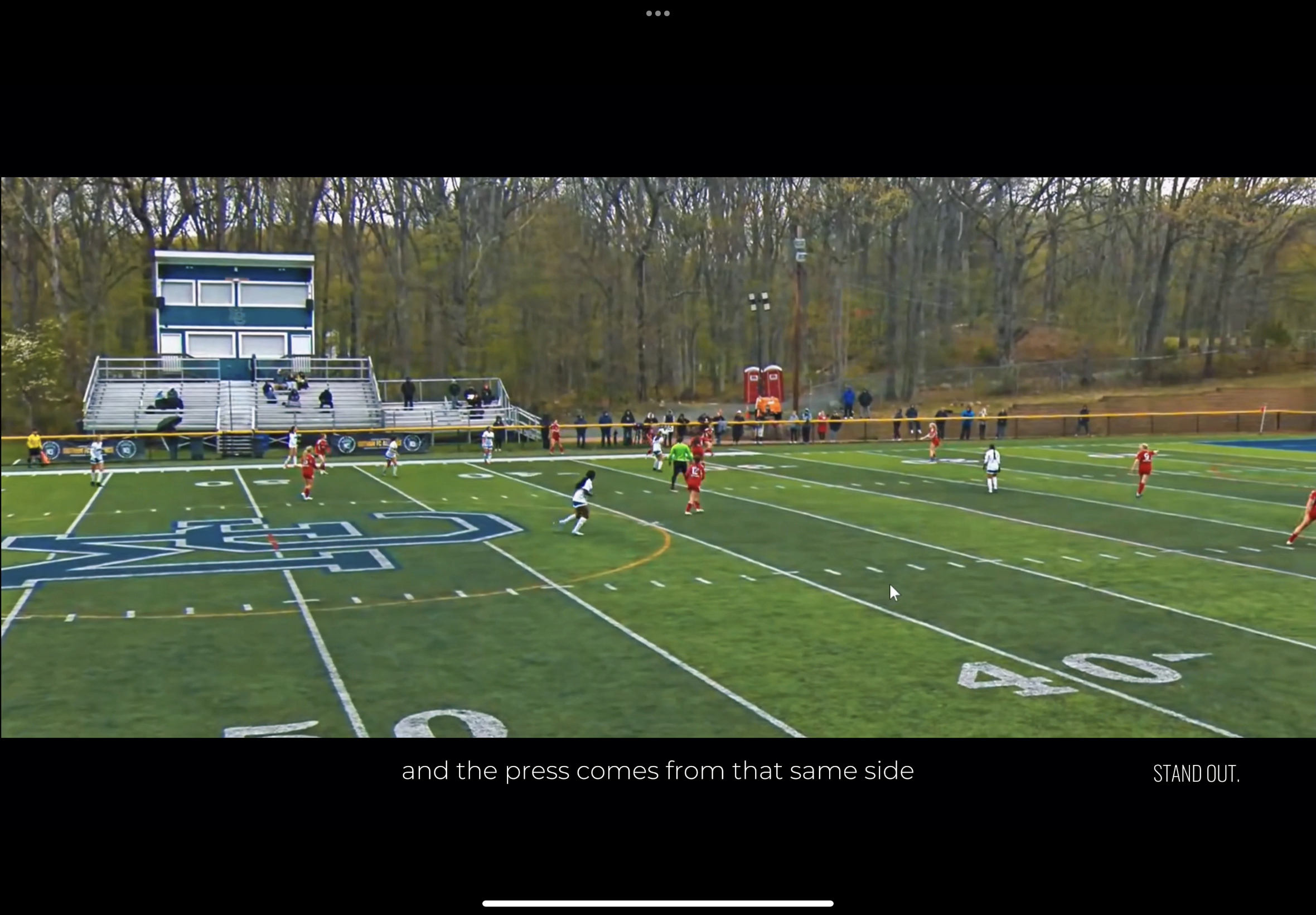
When the ball and the press come from the same side,
you see both in the same frame.
That is the cue.
That is when you can dribble forward.
MOMENTUM.
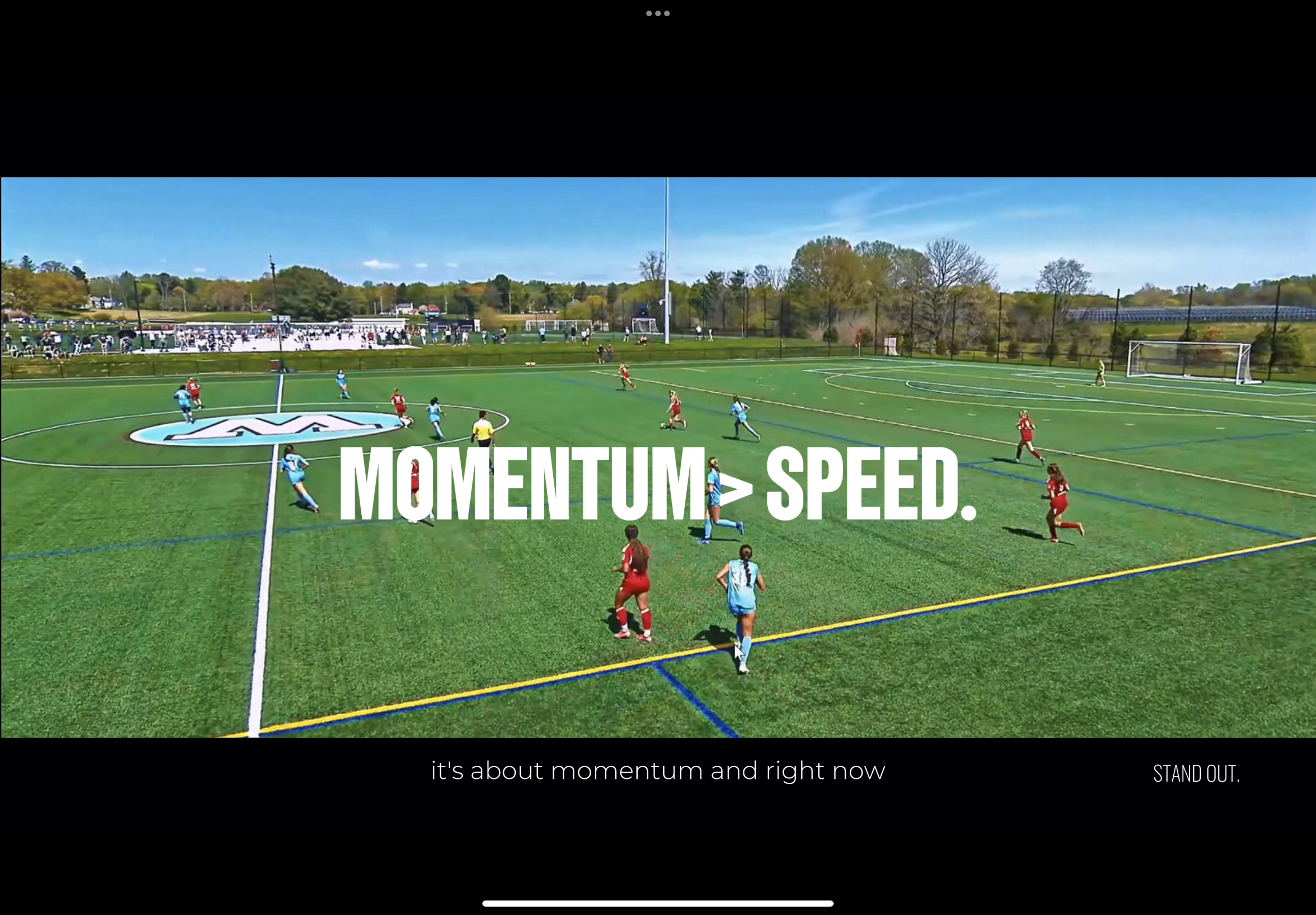
Defenders are already moving in one direction.
If you move with that direction, you help them.
If you move across it, you beat them.
Changing direction takes time.
Forward movement does not.
CUTTING THE ANGLE.
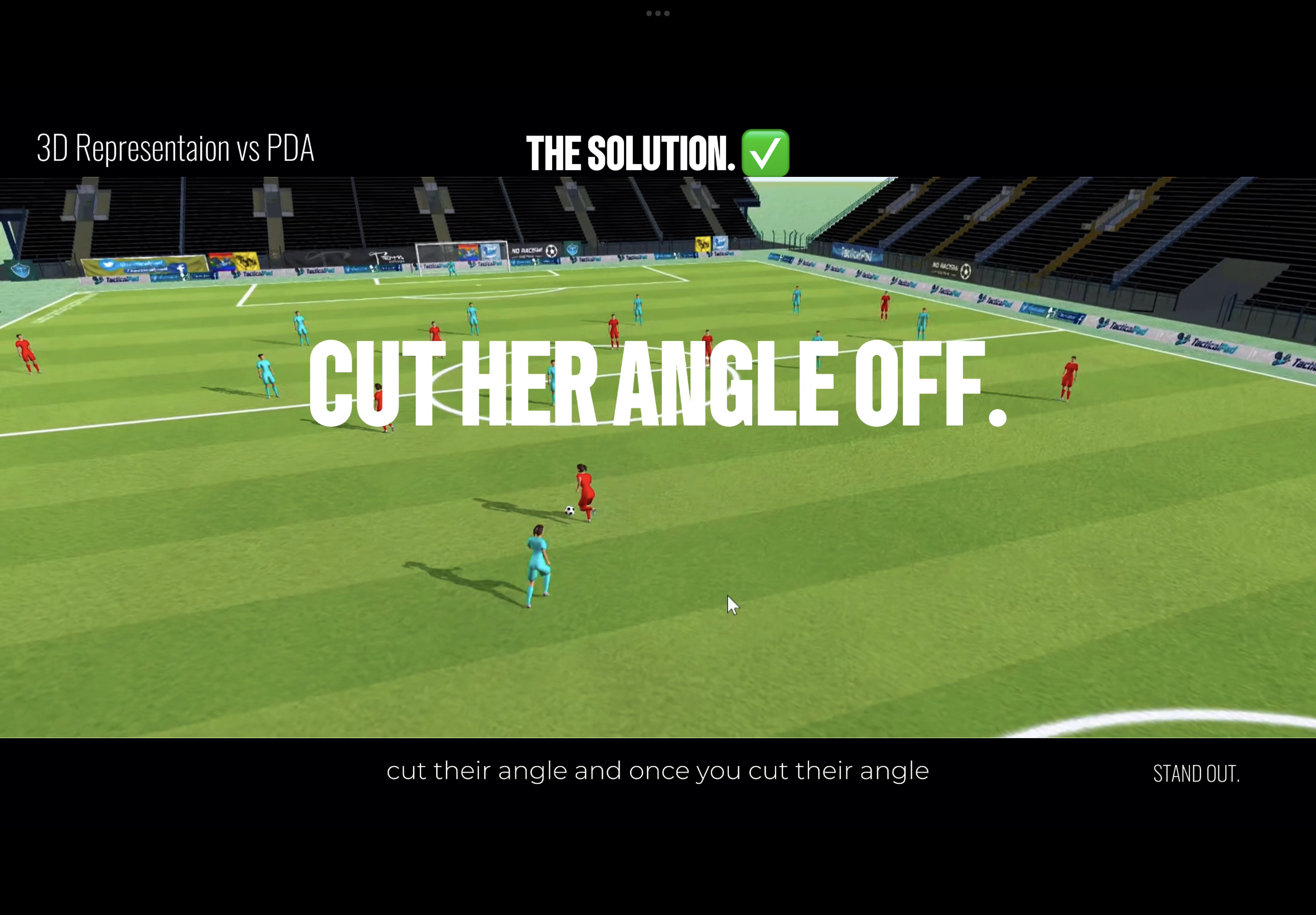
You do not need to outrun the defender.
You take your first touch across their path.
You cut their angle.
Now they cannot continue their run.
They either stop or chase.
ELIMINATING THE LINE.
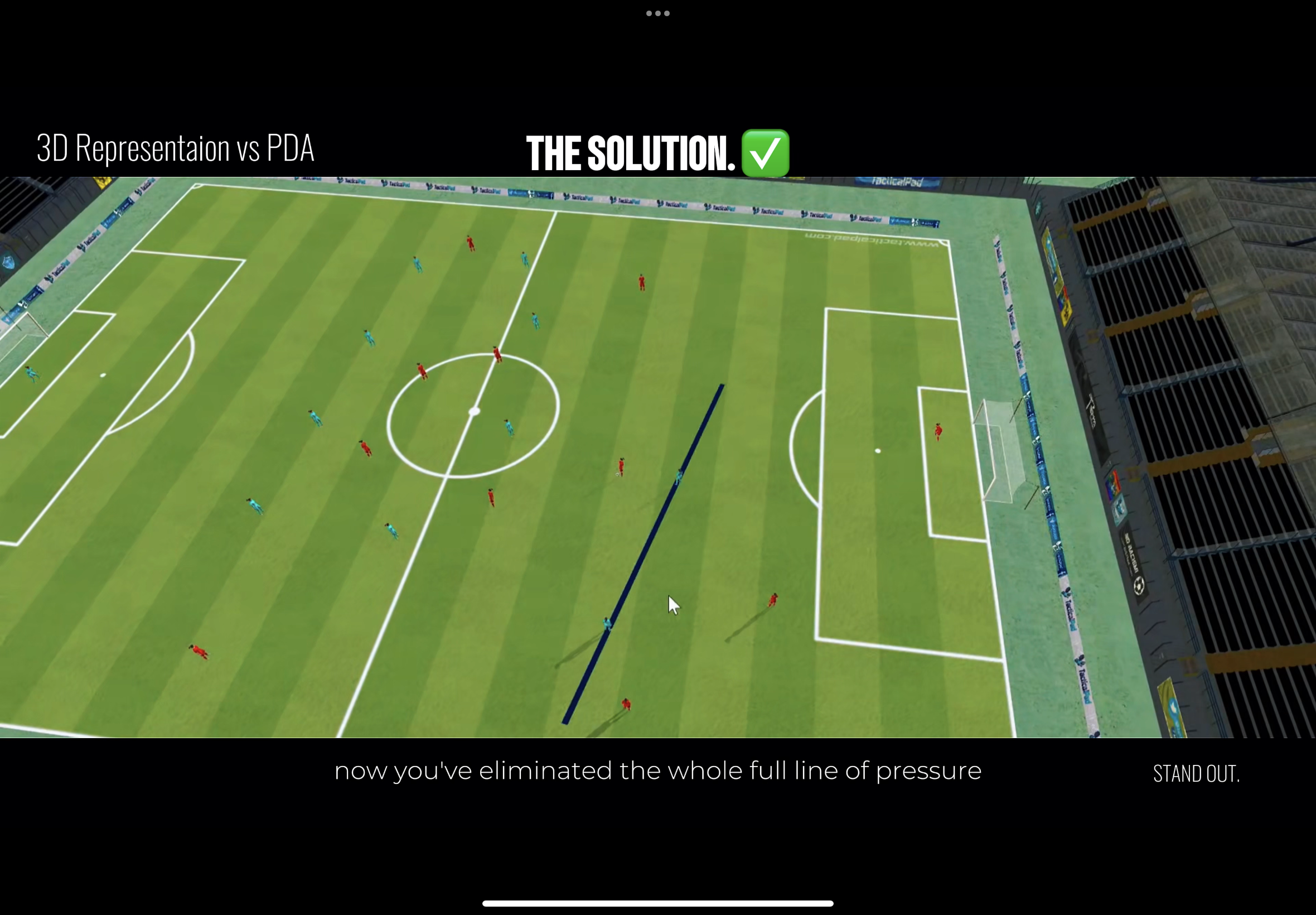
Once you beat the first defender,
you eliminate an entire line of pressure.
Now the next line has to react.
That creates new space behind it.
FORCING DECISIONS.
The next line must choose.
Step forward or hold position.
Both create openings.
You are now controlling the situation.
PRINCIPLE.
Do not dribble away from pressure.
Dribble through it.
Use angles.
Use momentum.
Break the first line.
Attack the next.
That is how you carry the game forward.
SWITCH.
At higher levels, playing forward is not only about breaking lines.
It is about recognizing when the game gives you space somewhere else.
One of those moments is when the ball comes from outside into you.
WHEN THE BALL COMES INSIDE.
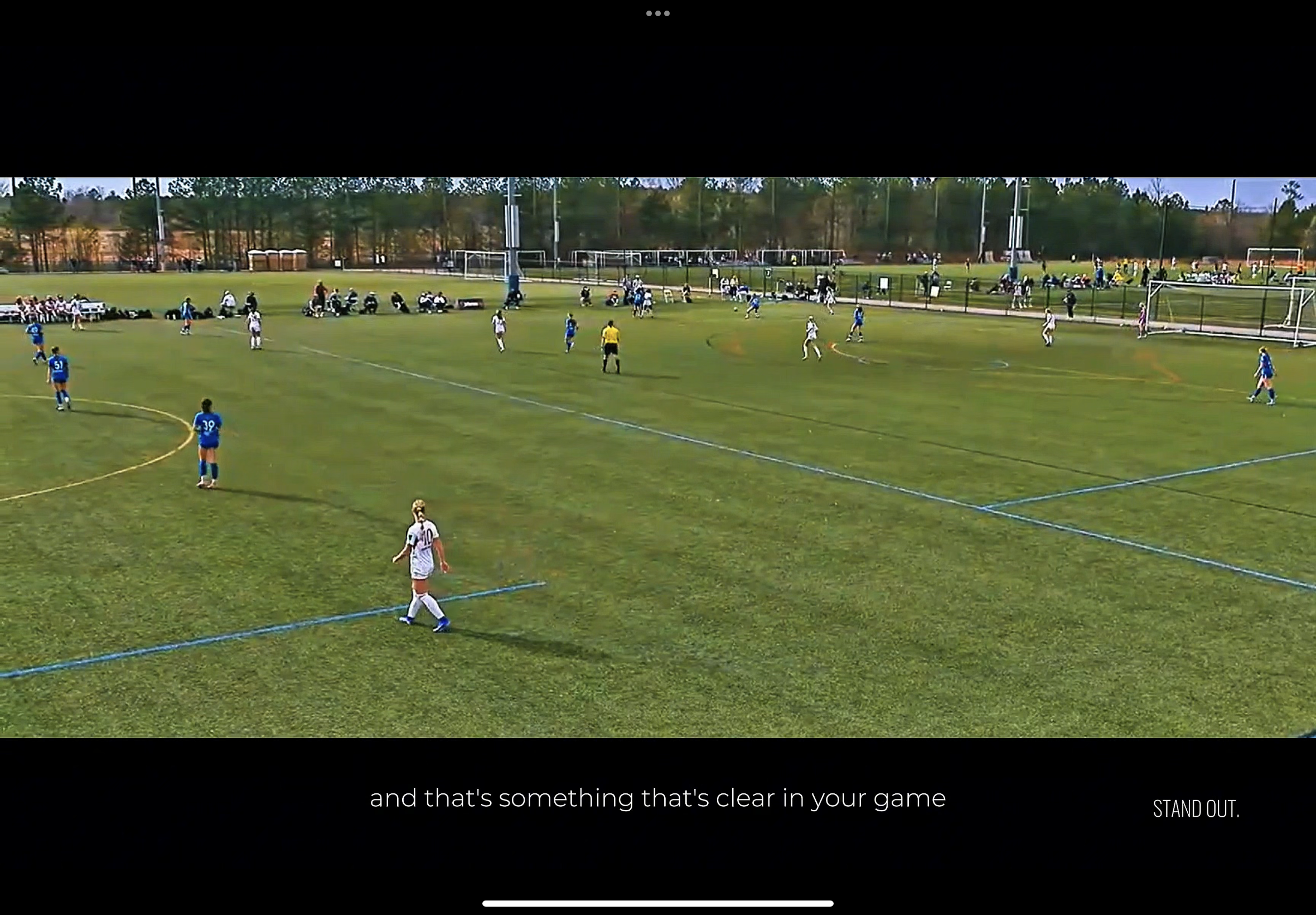
When you receive from a winger or fullback into midfield,
the whole defensive structure shifts toward the ball.
Players get drawn to that side.
They narrow.
That leaves space on the far side.
THE OPPORTUNITY.
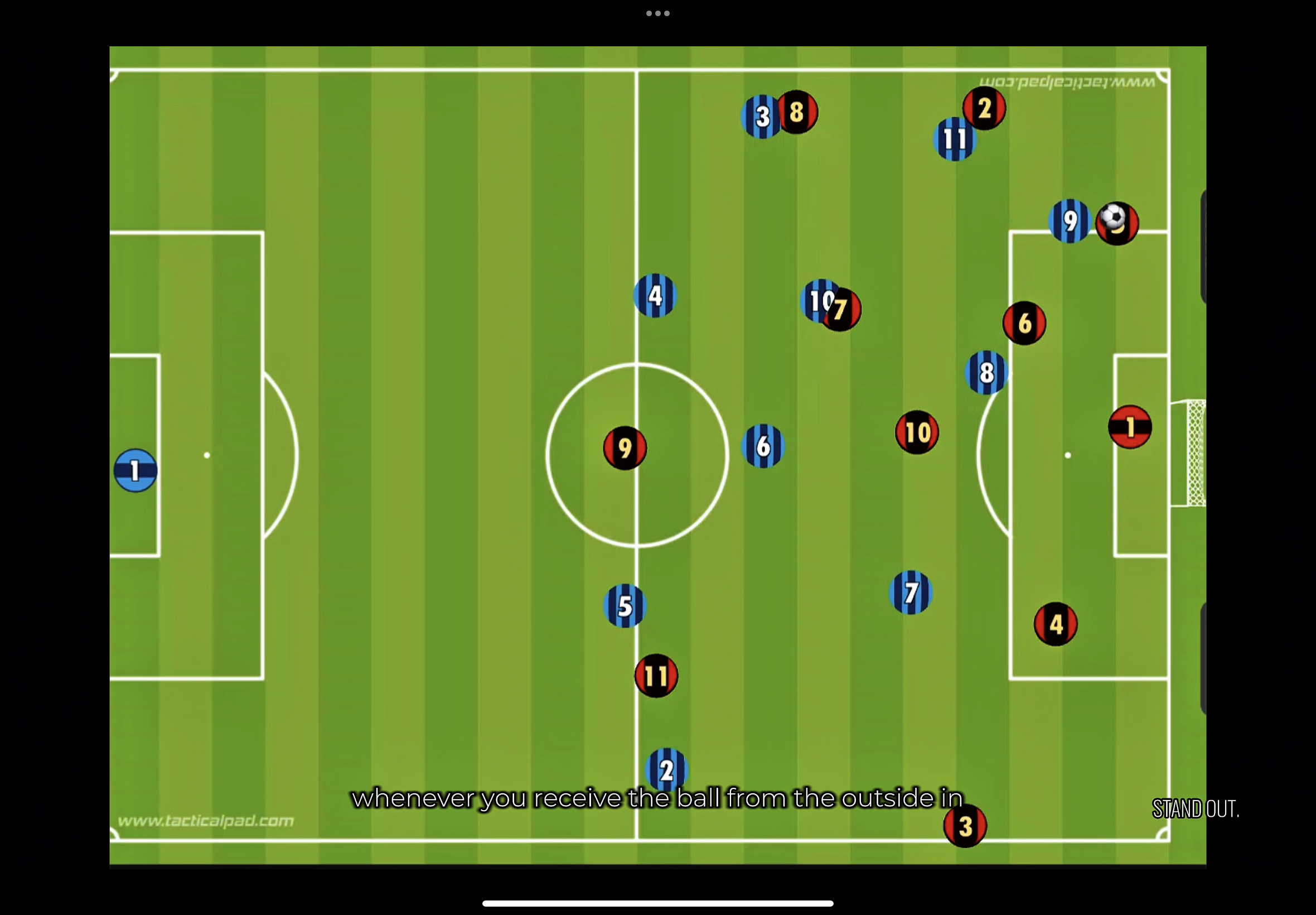
This is where the switch is available.
Less players on that side means more space.
More time.
More attacking potential.
This is not instead of line-breaking.
It is the better option when the space is there.
THE GAP.
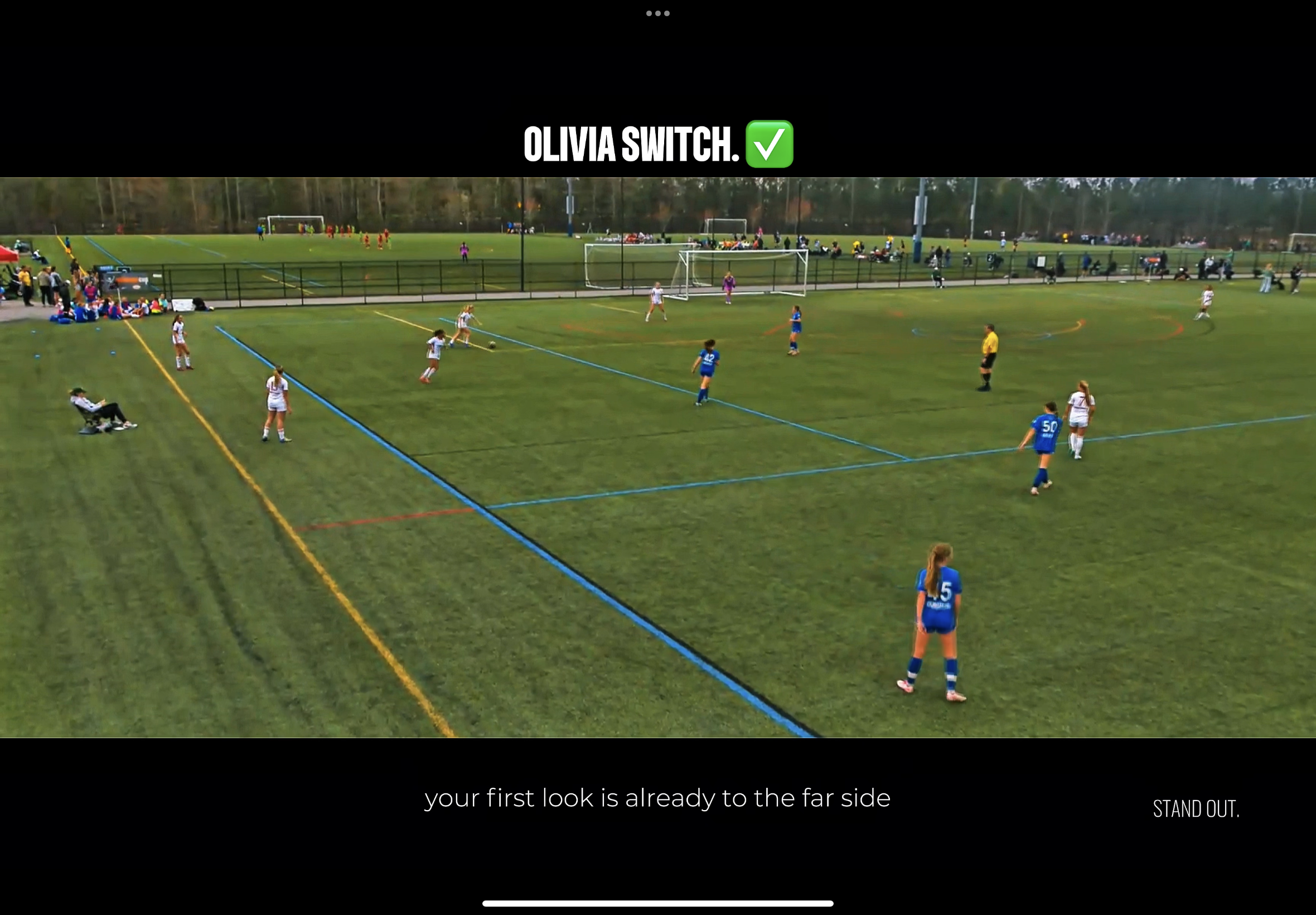
Right now, the issue is not that you don’t see it.
It’s that you see it too late.
So you take extra touches.
The game slows down.
The defense shifts over.
And the space disappears.
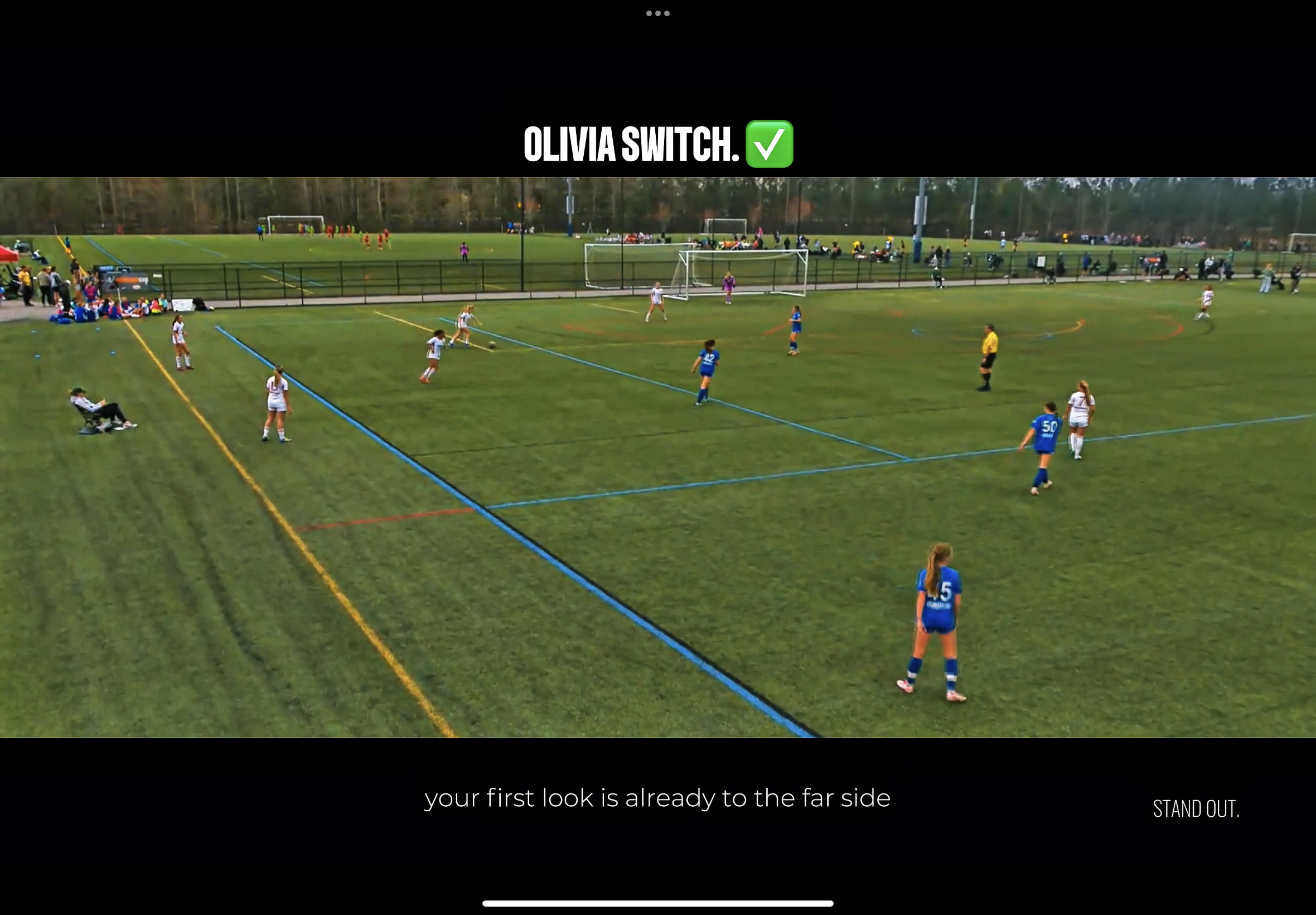
FIRST SCAN.
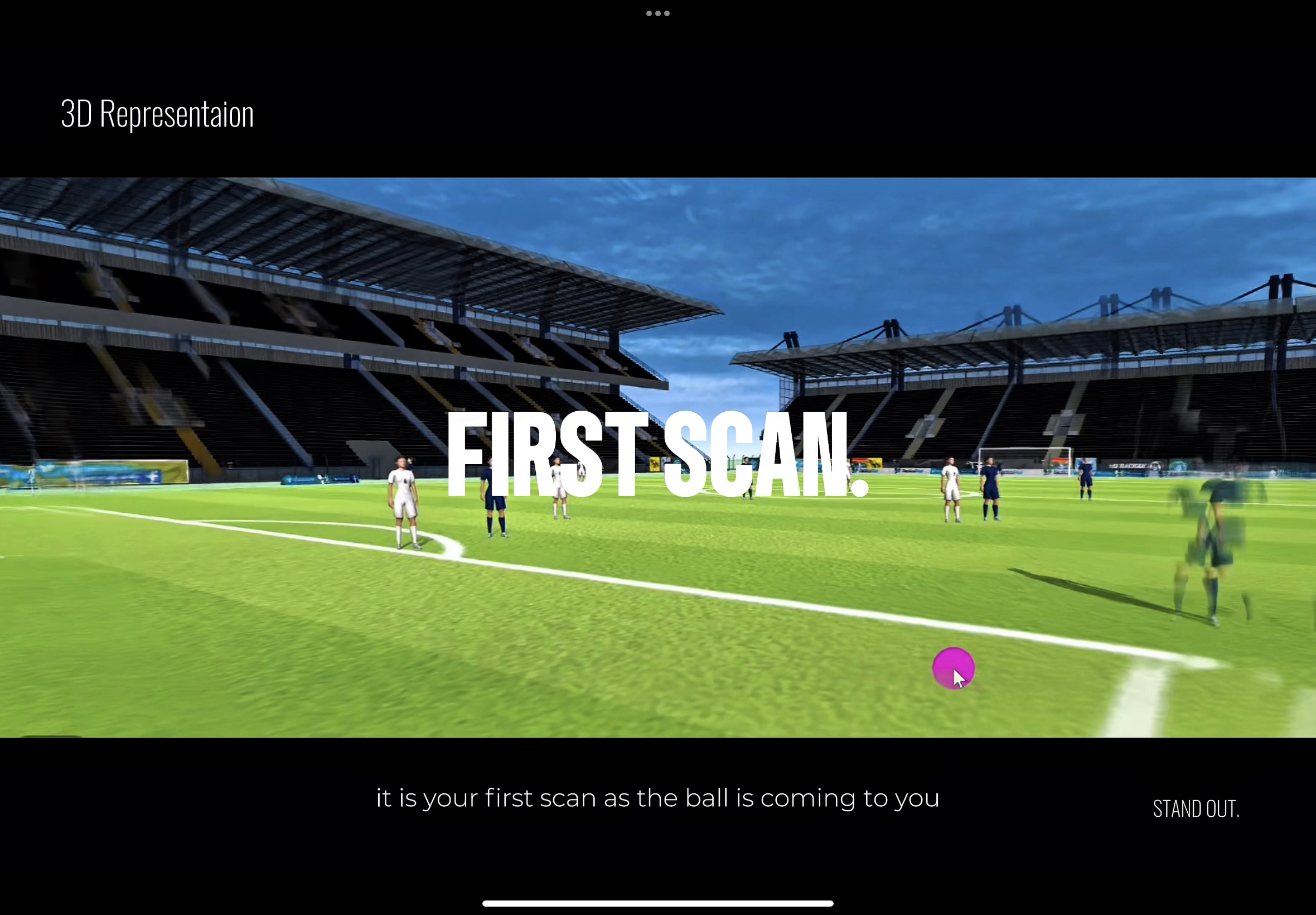
The difference is your first look.
As the ball is traveling to you,
your eyes should already go to the far side.
Before your first touch.
That is what allows you to play quickly.
WHY IT WORKS.
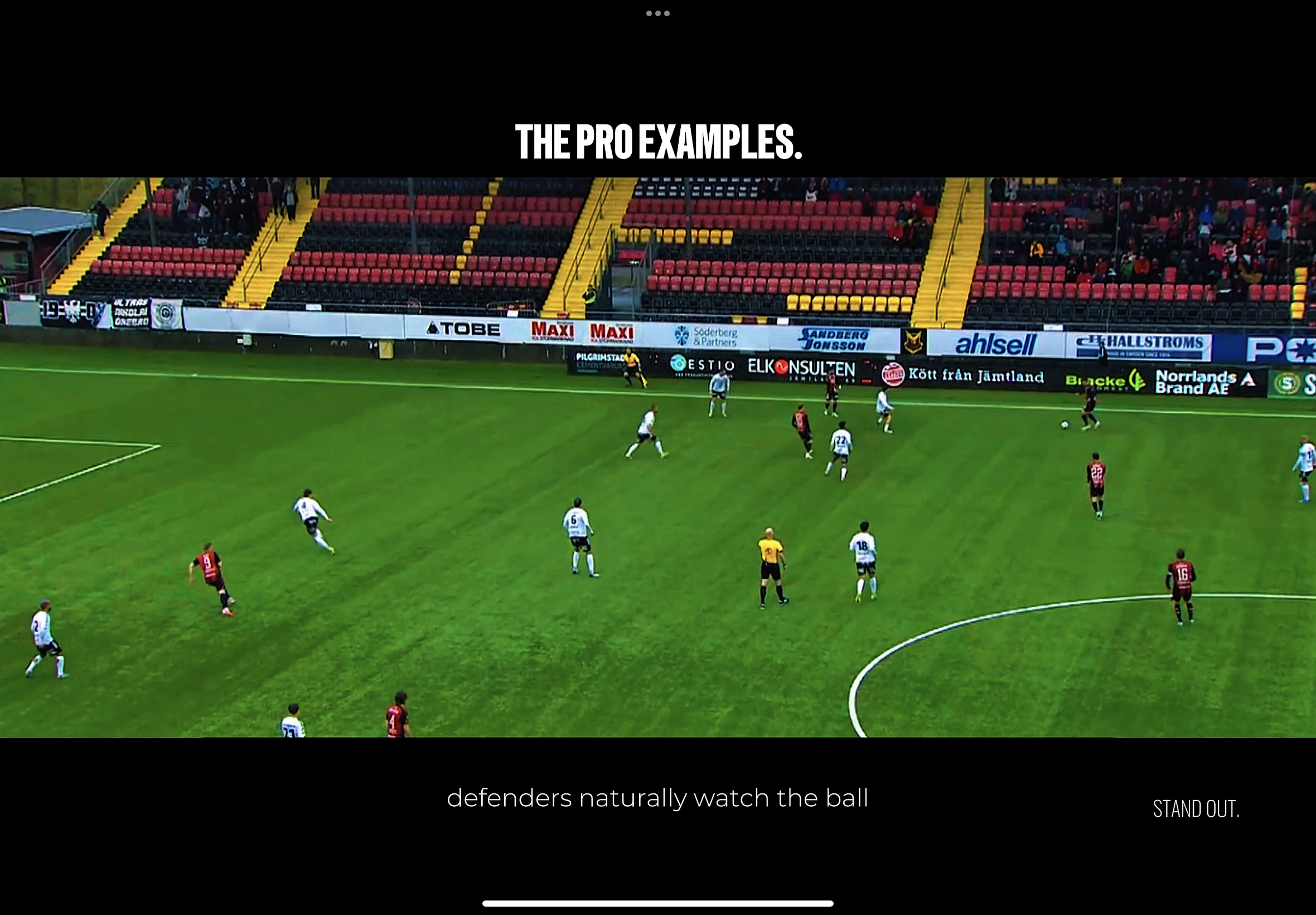
When the ball comes inside,
defenders become ball-oriented.
They watch the ball.
They move toward it.
They narrow the field.
That automatically opens the opposite side.
THE ACTION.
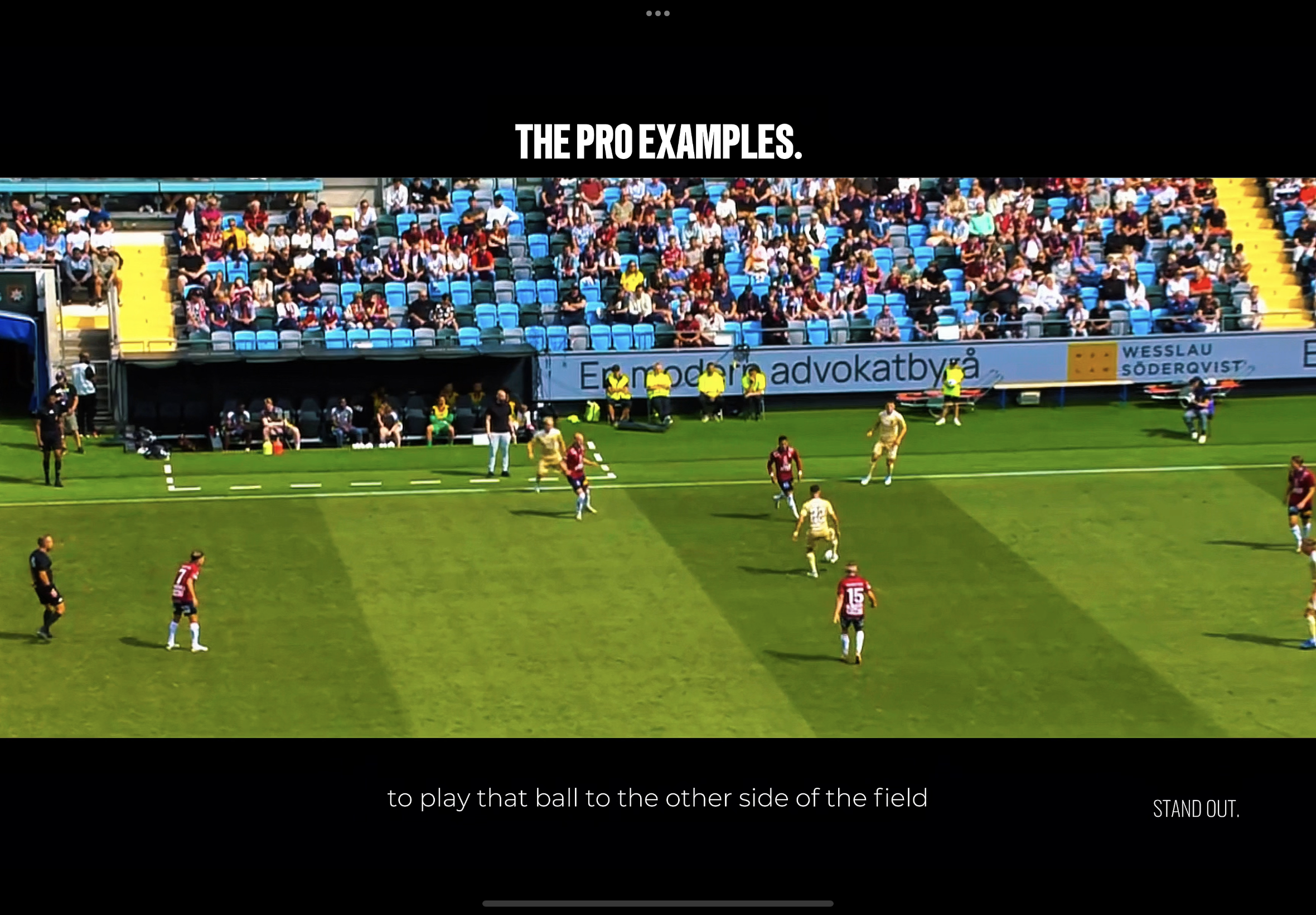
If you see it early,
the action becomes simple.
One touch.
Two touches at most.
Switch the play.
Before the defense can recover.
YOU ALREADY DO IT.
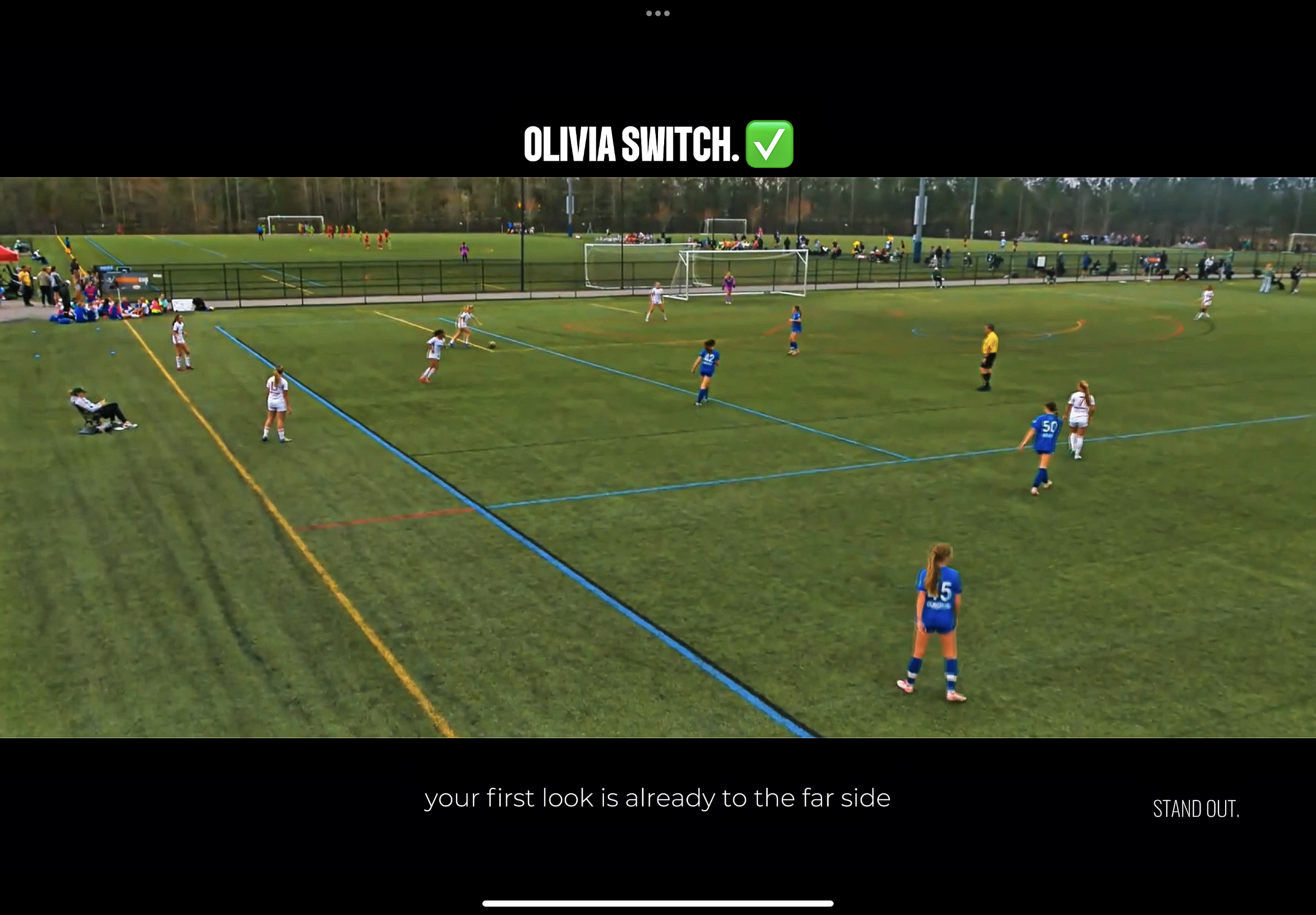
There are moments where you do this well.
You scan early.
You see the space.
You play it quickly.
And your team attacks with space on the far side.
PRINCIPLE.
When the ball comes from outside in,
look far side first.
See it early.
Play it early.
That is how you create space for your team.
SIDE ON.
A lot of defensive principles you’re taught early are about positioning without the ball.
But at your level, the difference comes from the small details inside those moments.
The Problem Starts Inside the Moment.
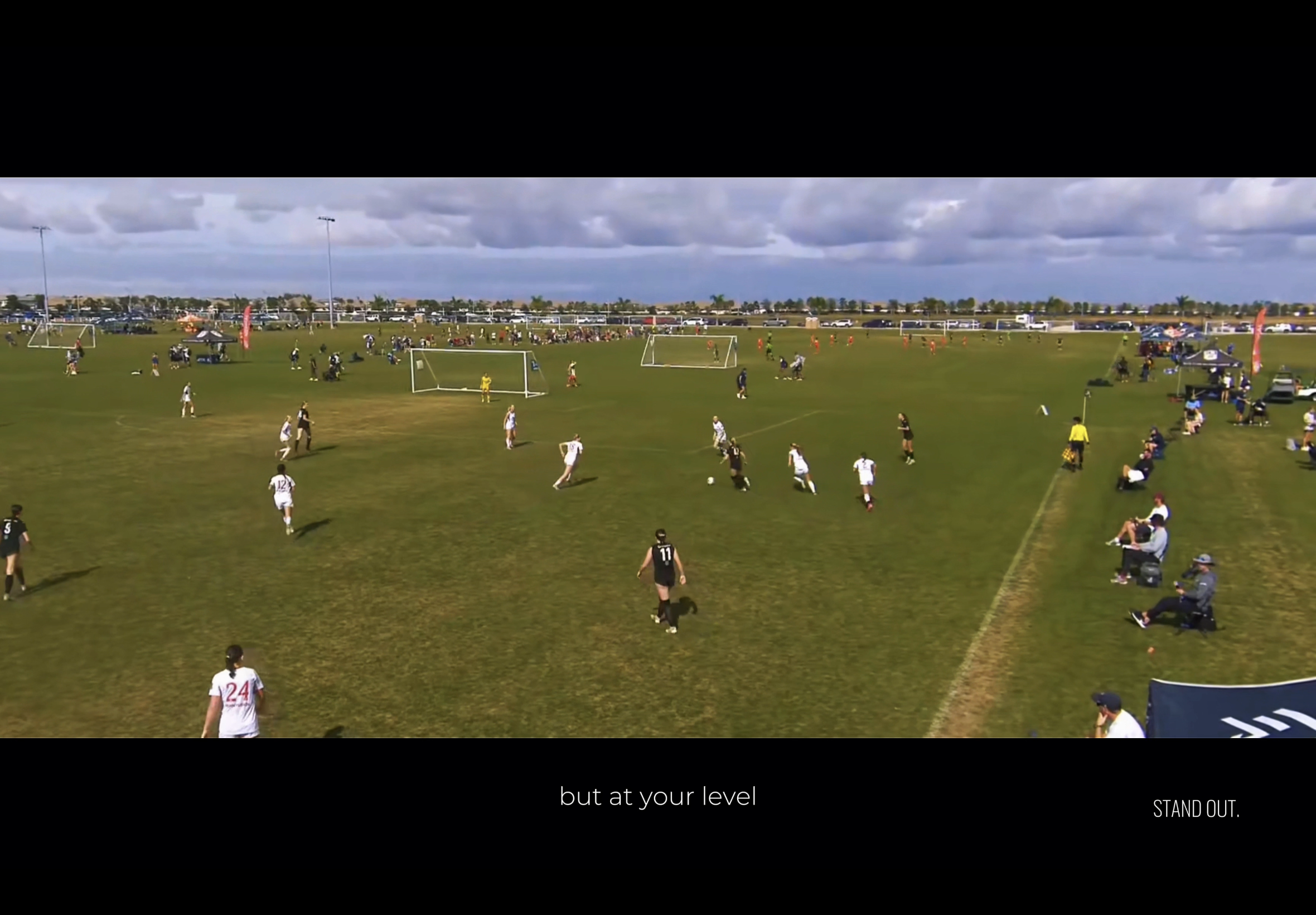
You can be in the correct position relative to the ball and the line.
And still lose the situation.
Because positioning tells you where to be.
But body shape determines what you can do from that position.
Why Defenders Become Square.
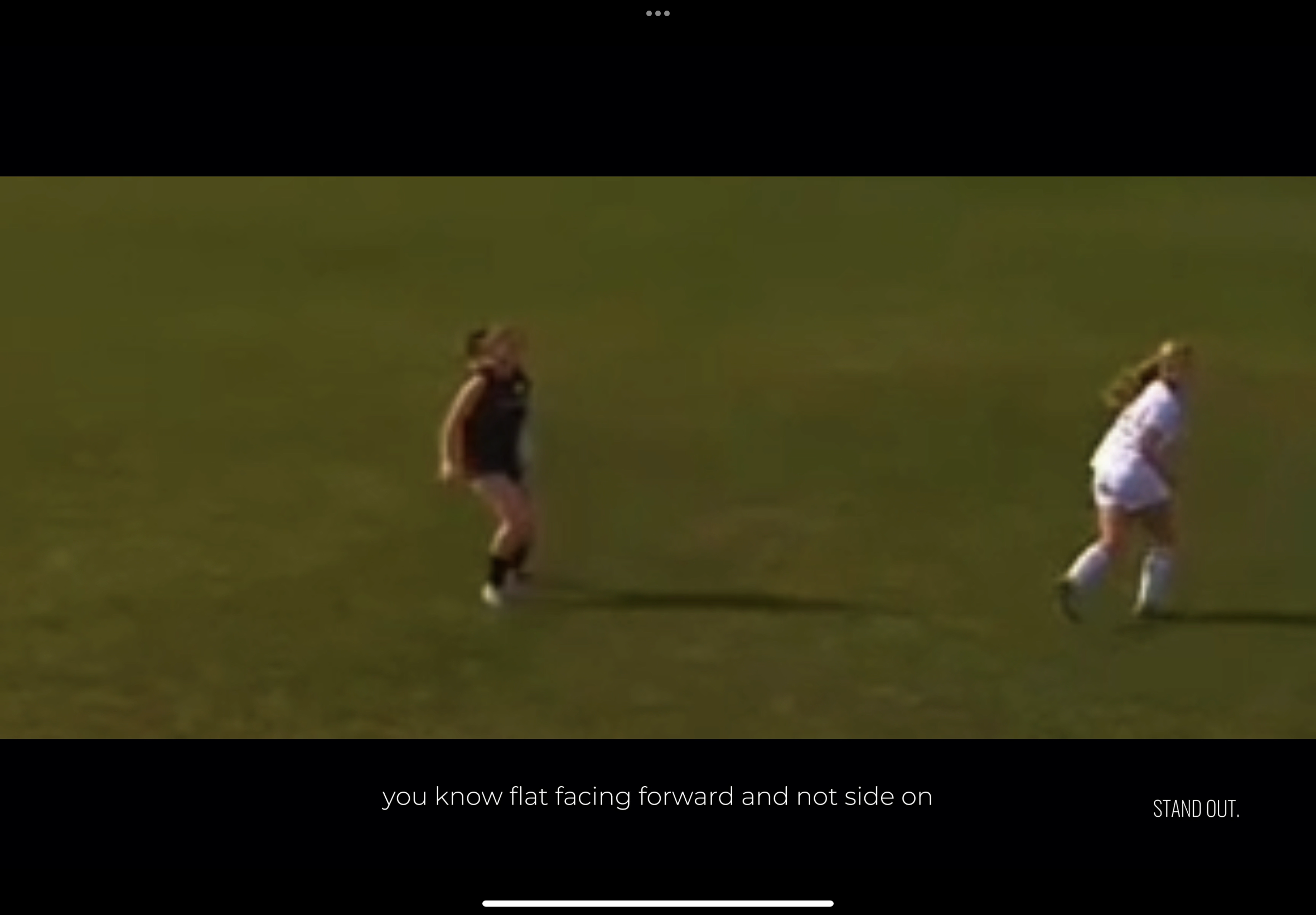
A lot of defenders start from a square body position.
Flat.
Facing the ball.
Not side on.
This happens naturally.
When players watch the ball, their eyes lock onto it.
And the body follows the eyes.
So without realizing it, they become square.
Why Square Gets Punished.
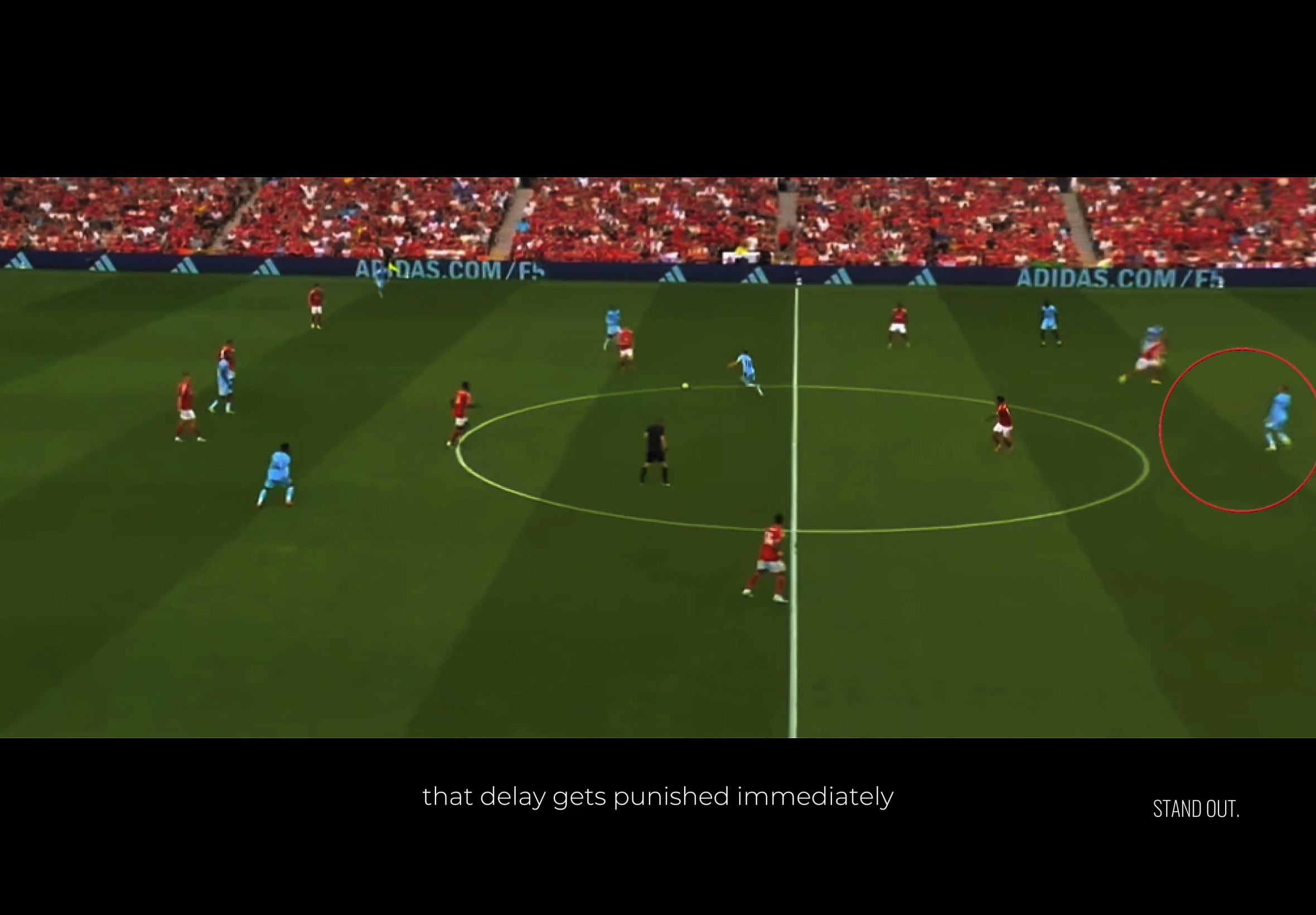
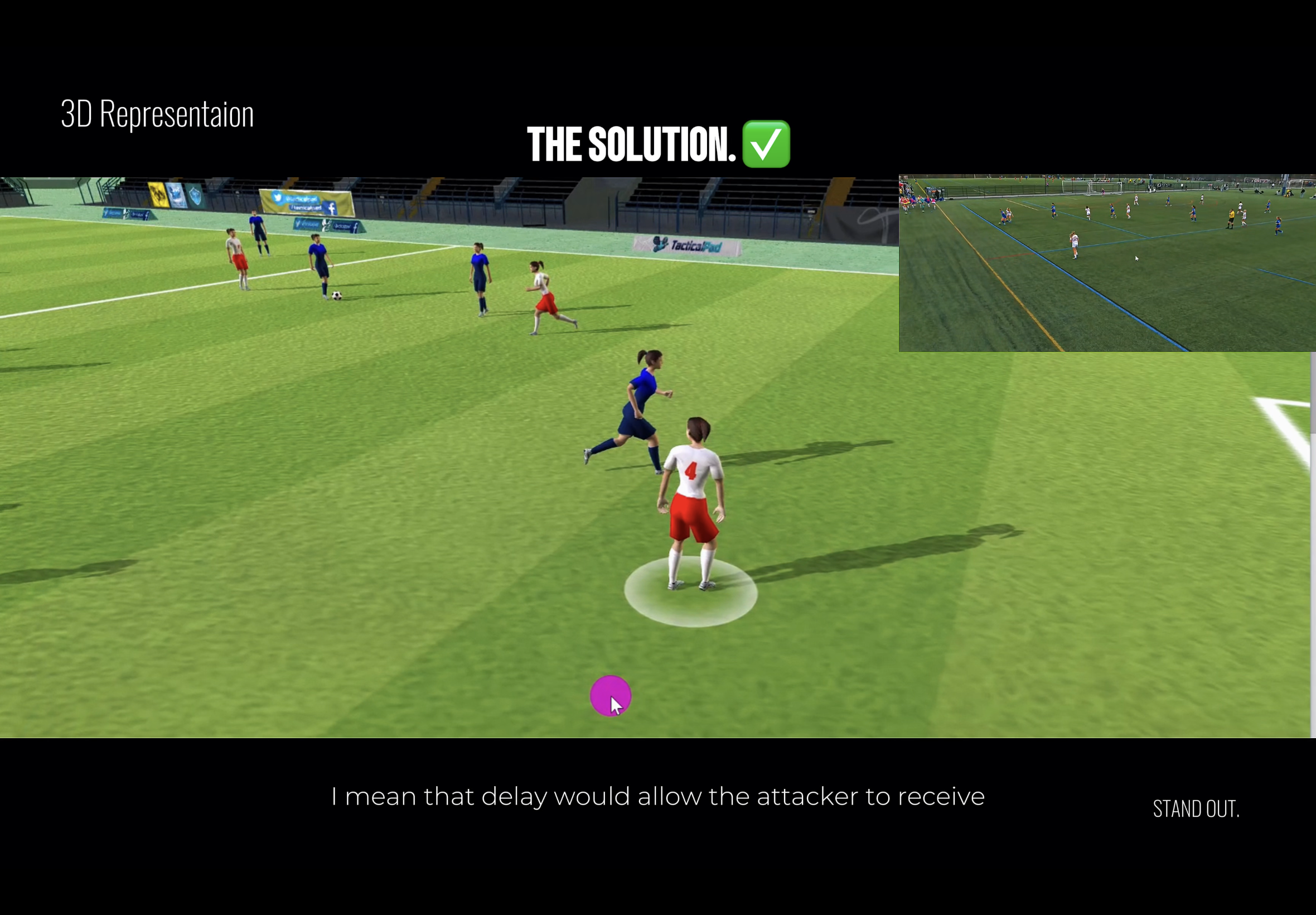
When your body is square, your reaction is delayed.
Because when the ball is played in behind, you have to rotate first.
That rotation takes time.
More time than it takes the attacker to run.
That small delay is enough.
And at higher levels, that delay gets punished immediately.
Why It Becomes Easy to Play Against.
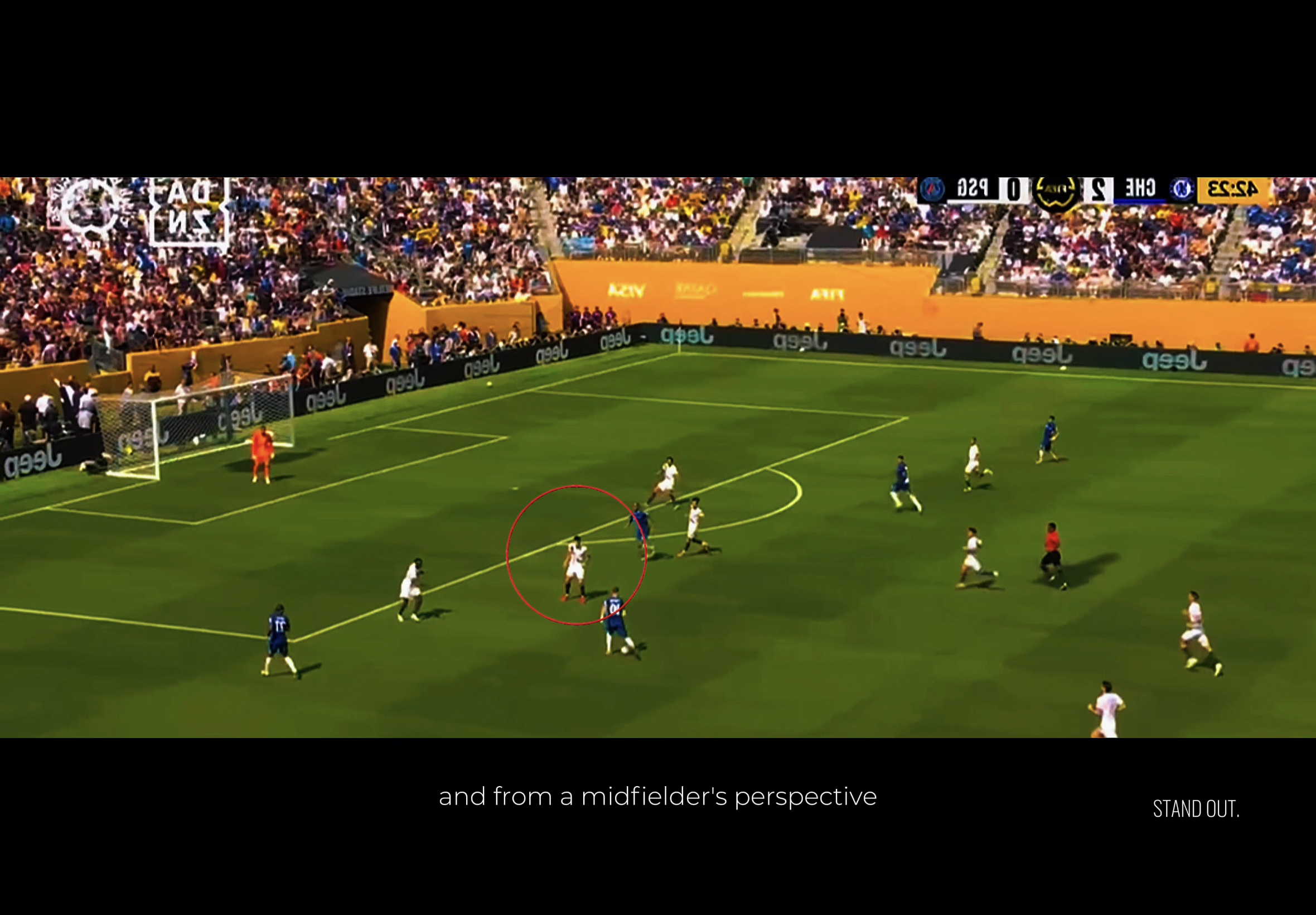
From a midfielder’s perspective, this is the easiest pass in football.
You don’t need to calculate space.
You don’t need the perfect angle.
You read the defender’s body.
If the body is square, you play it.
Because both sides are open.
The Solution Is Side On Early.
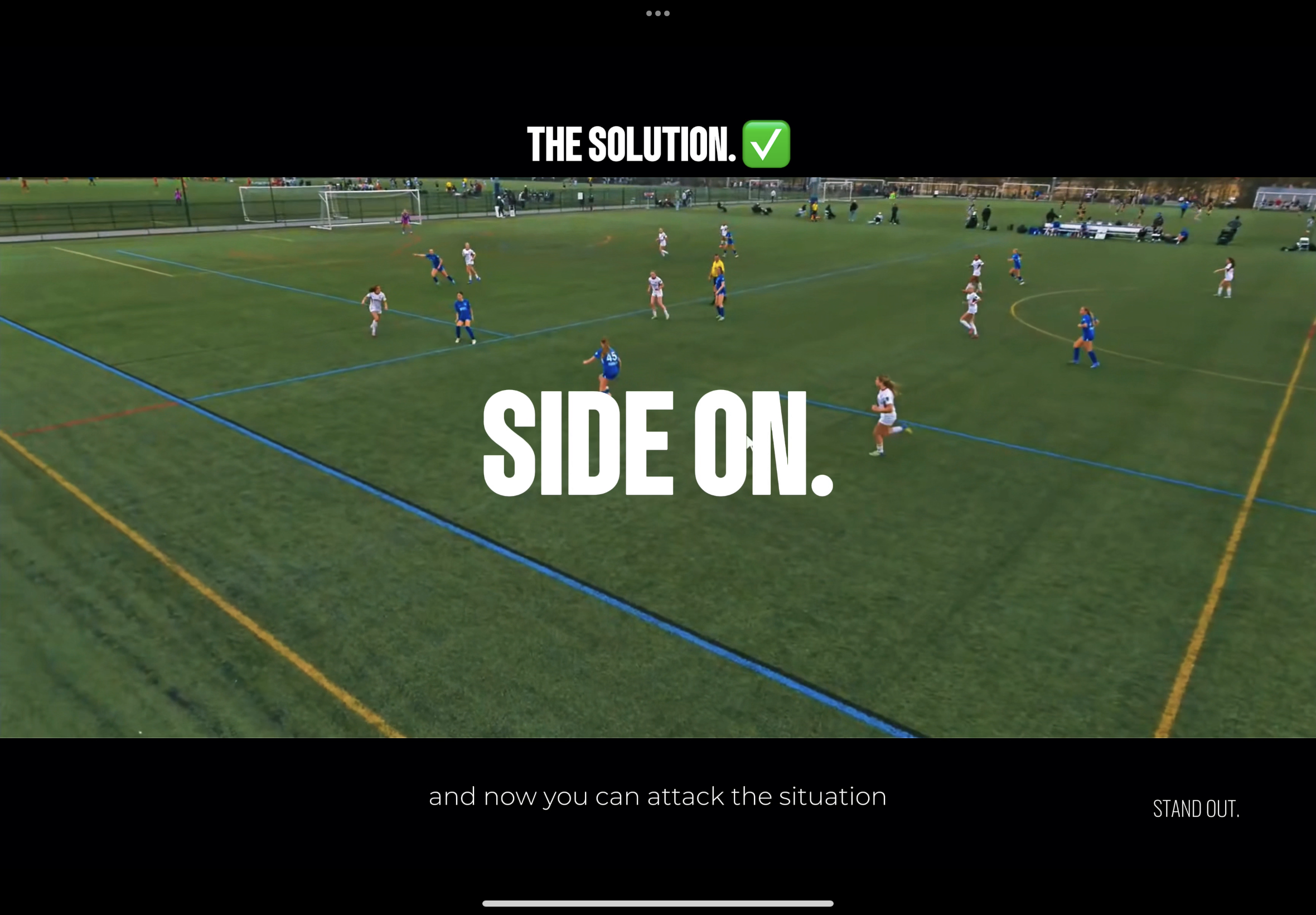
There are two key moments where this matters most.
When the ball breaks a line.
When your team loses possession.
In those moments, you go side on immediately.
Now you can see both the ball and the player you are responsible for.
And you remove the delay.
What Changes When You Fix It.
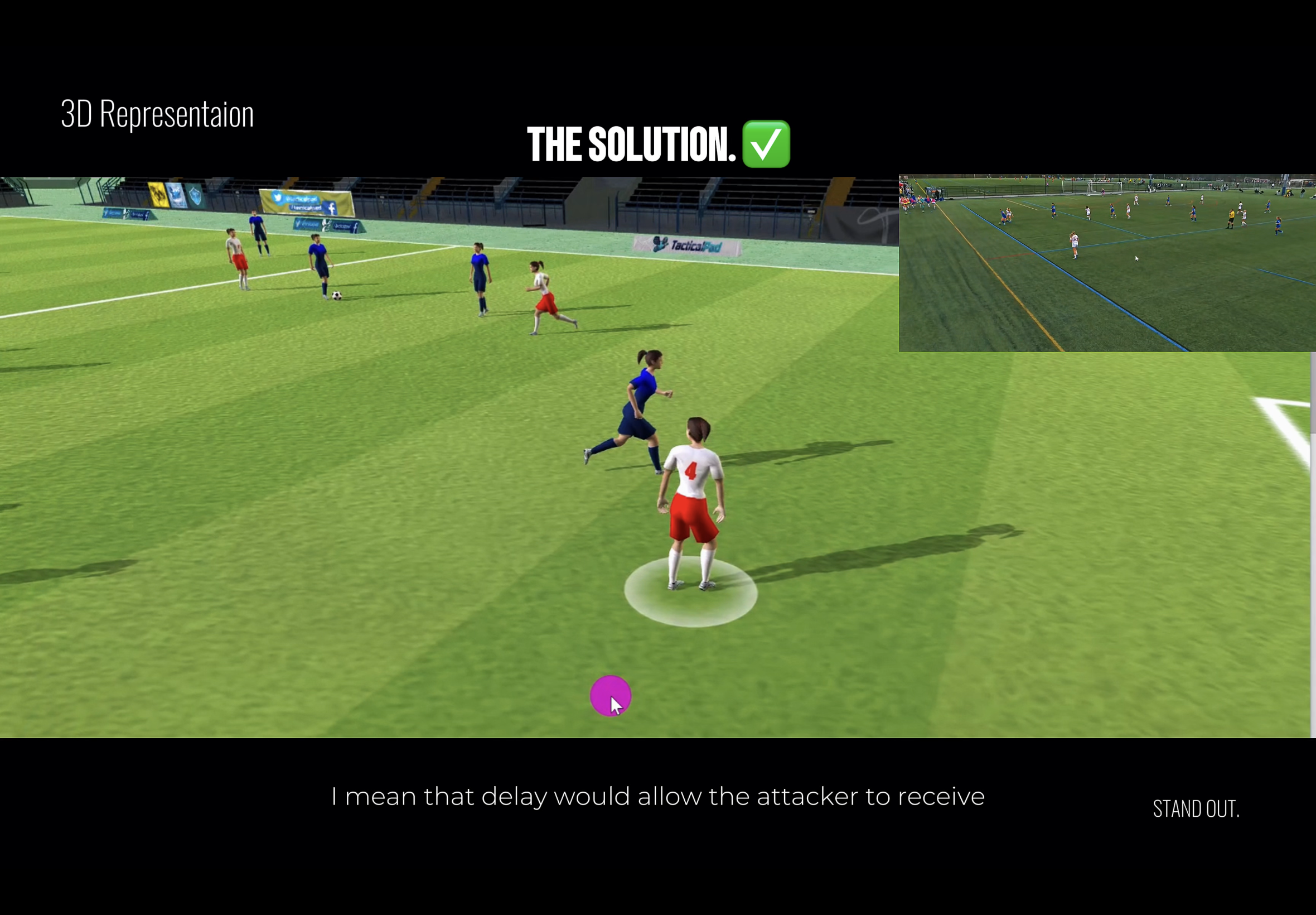
When you are side on, you react as the ball travels.
You arrive early.
Now you are close enough to control the attacker.
You can slow them down.
You can steer them.
You can force them away from goal.
Instead of reacting late and letting them turn.
The Principle.
Positioning puts you in the right place.
Body shape decides if you win the moment.
Go side on early.
See both the ball and the player.
React as the ball travels.
That is how you remove the through ball before it even happens.
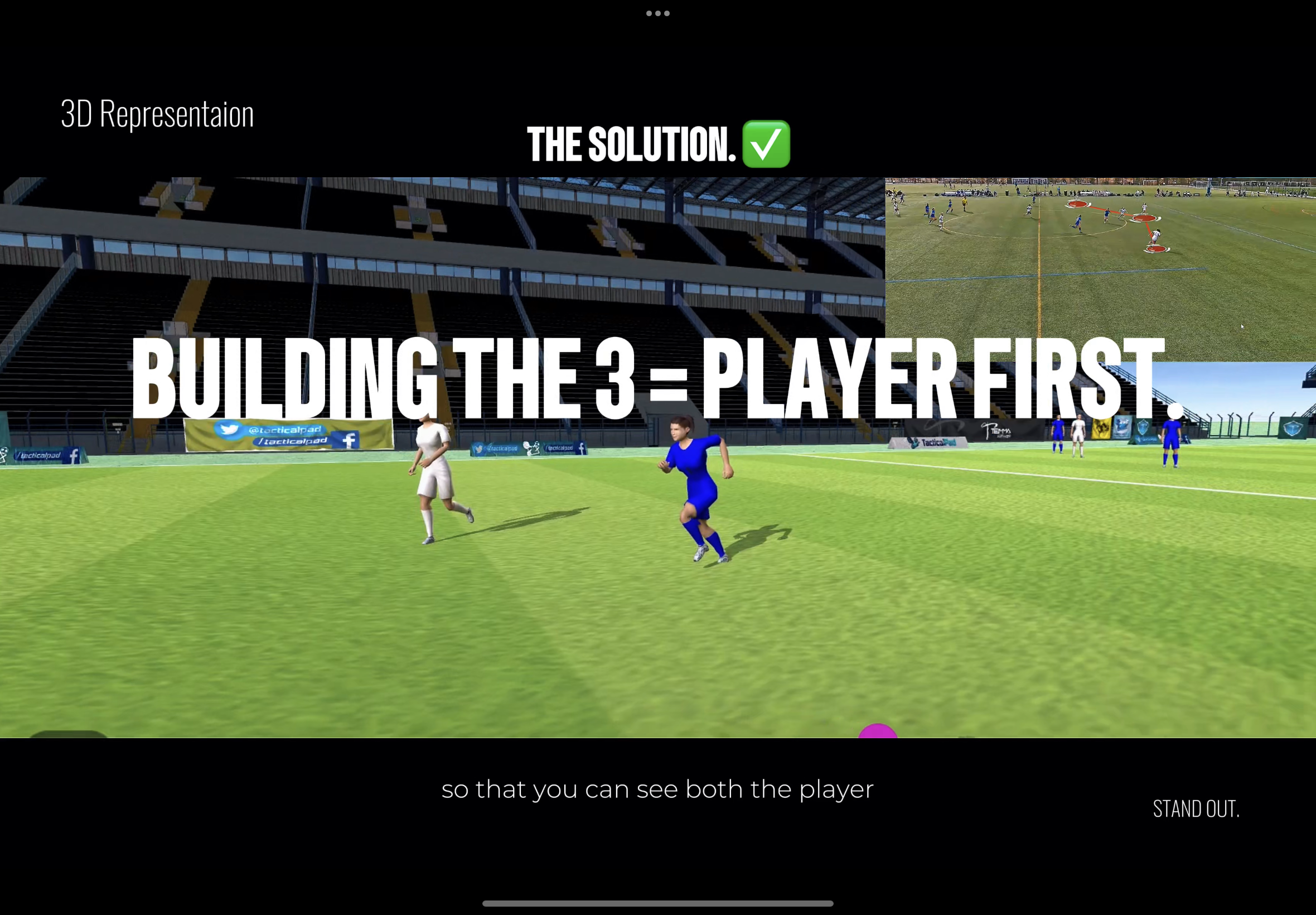
BUILDING THE 3 = PLAYER FIRST.
As a centre-back, your impact is not just positioning or physical ability.
It is what you choose to look at in critical moments.
One of the most important of those moments is when the back line becomes the three behind the challenge.
When a teammate steps out to duel, your role is to control what happens next.
And that starts with your reference.
The Three Behind The Challenge.
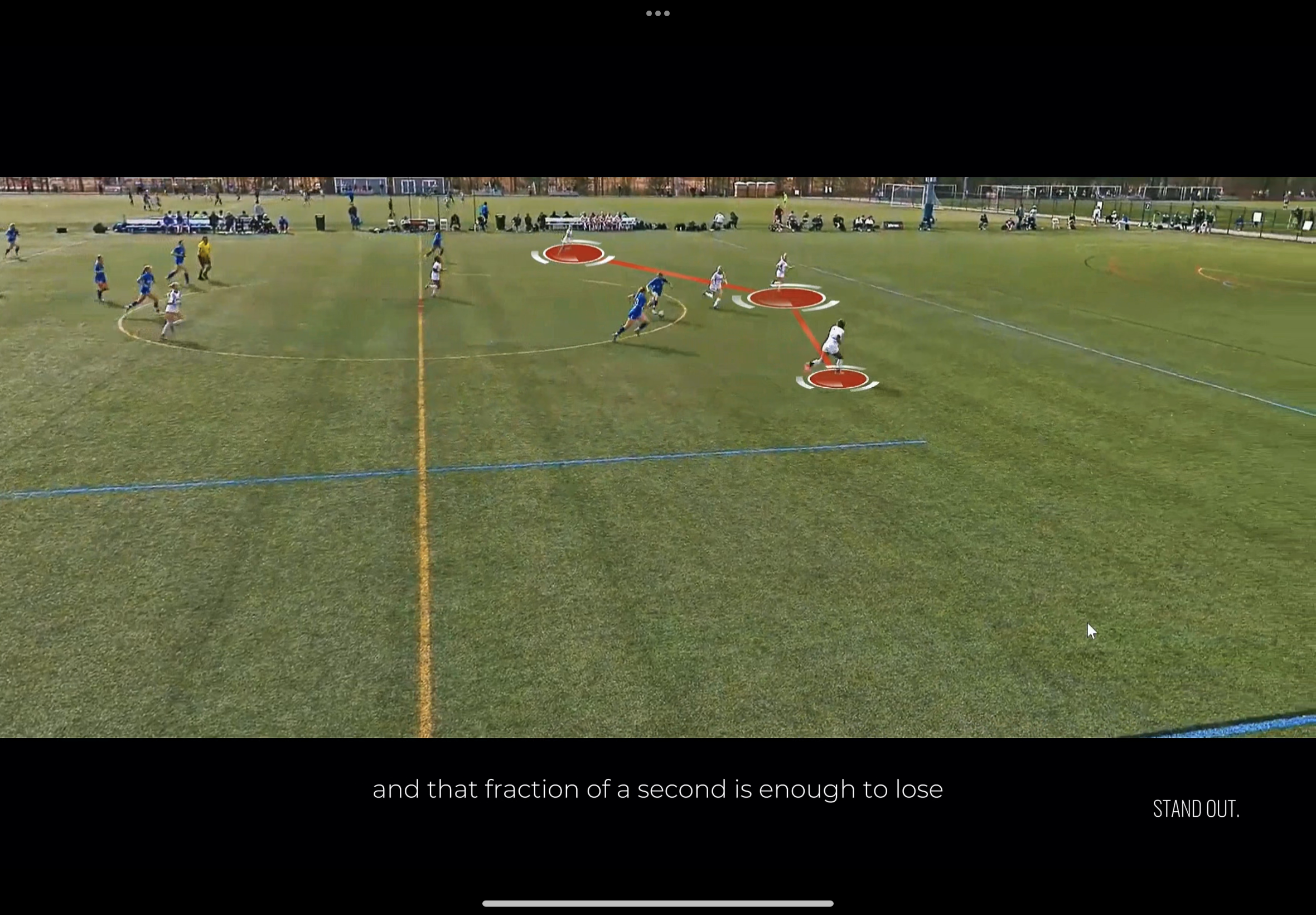
When a defender steps forward, the back four becomes a three behind.
Your job is to deal with whatever comes out of the duel.
Second balls. Flick-ons. Loose touches.
You are protecting what happens next.
The Wrong Reference.
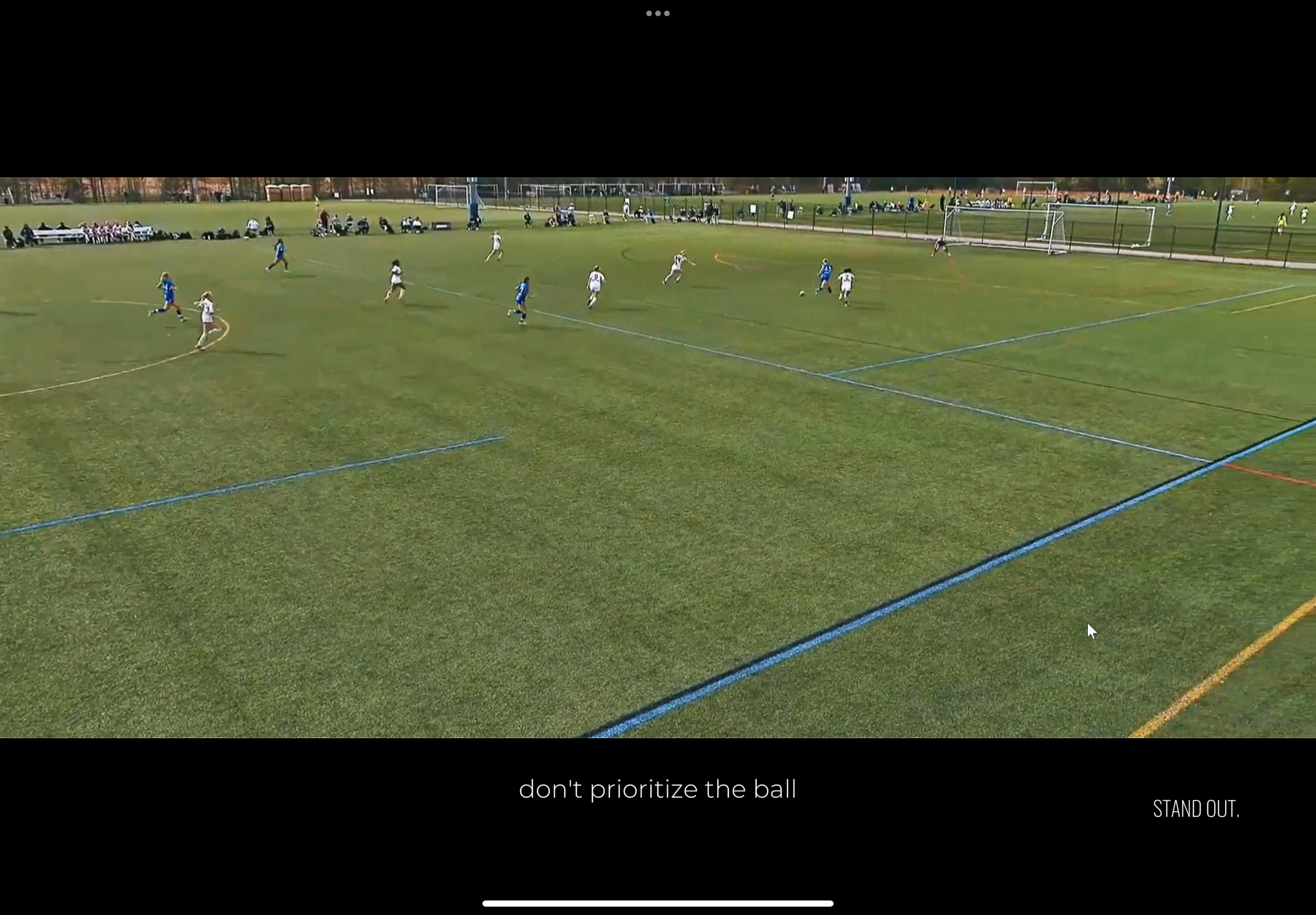
The instinct is to watch the ball.
But when you watch the ball, you become reactive.
You shift from ball to player, and that delay makes you late.
Late to runs. Late to reactions. Late to danger.
Player Over Ball.
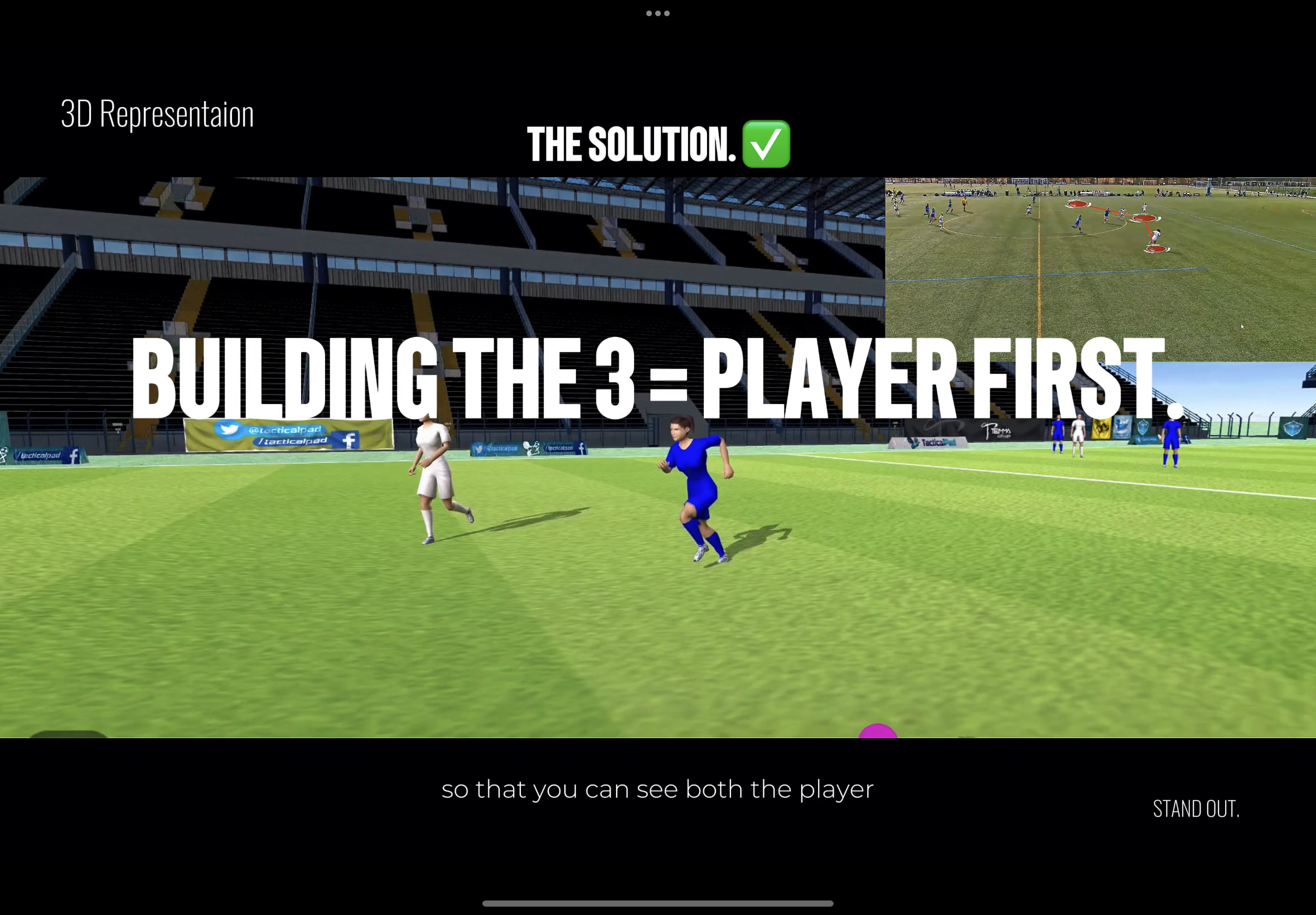
In these moments, the reference changes.
You lock onto the most dangerous player first.
Because the player is the threat.
Now you position yourself to see both the player and the ball in the same frame.
Now you anticipate instead of react.
How Vision Shapes Positioning.
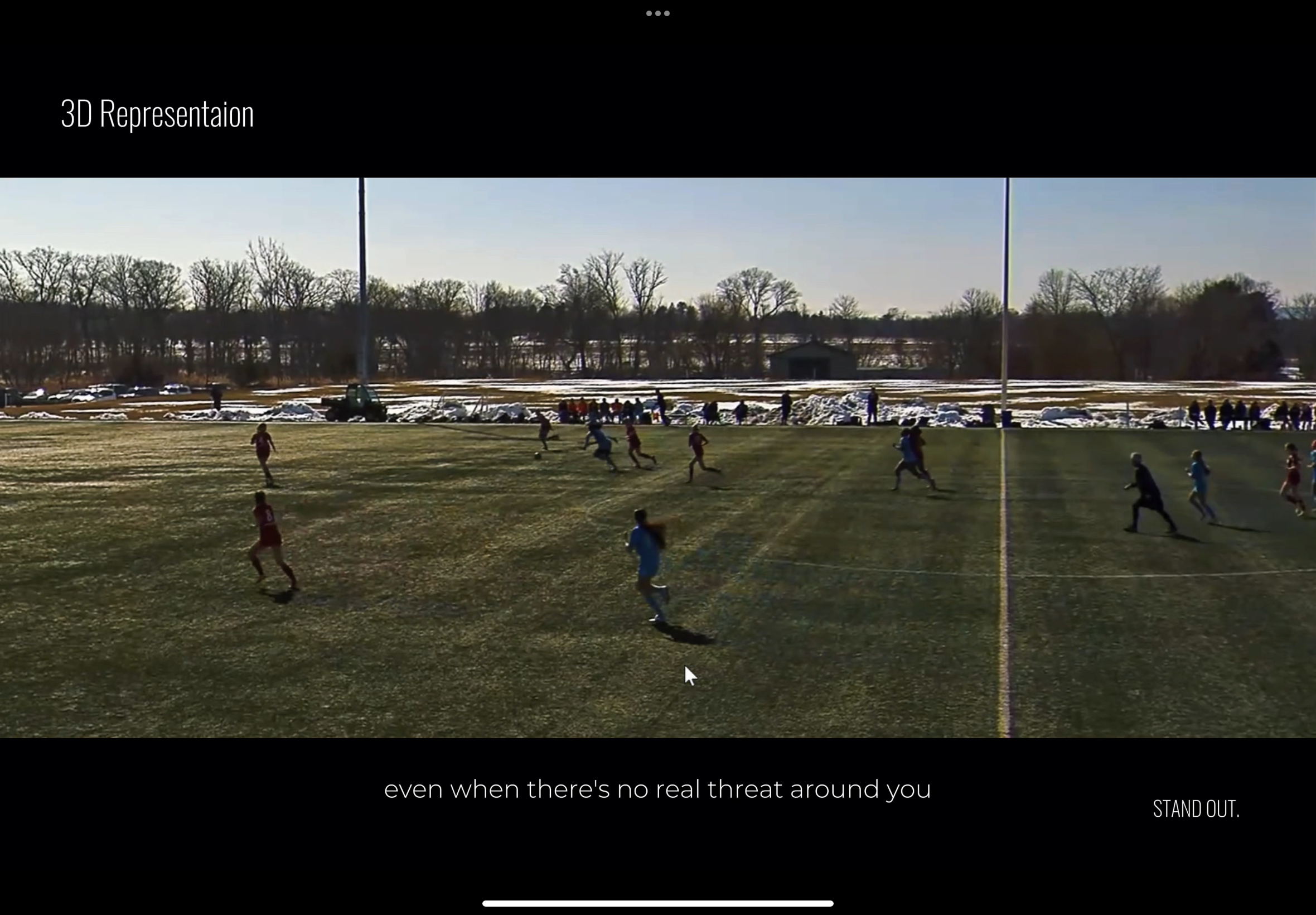
If you follow the ball, you drop automatically.
Even when there is no threat behind.
This creates unnecessary space between you and the challenge.
If the duel is lost, that space becomes dangerous.
Close When There Is No Threat.
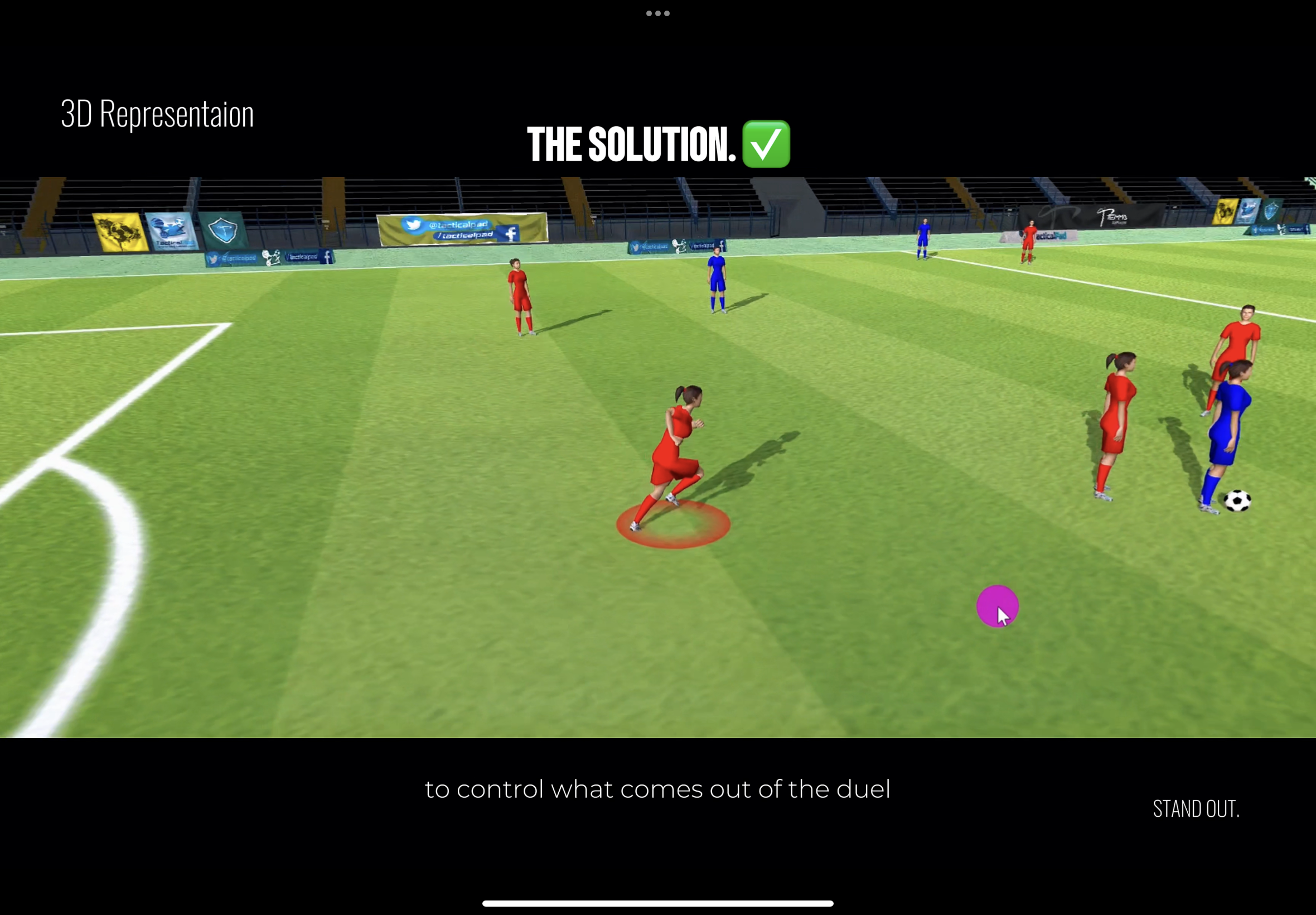
When you identify the player first, you read the situation earlier.
If there is no run in behind, you step closer.
You compress the space around the duel.
You are now in position to deal with the second ball.
That is control.
Key Principle
In unstable moments, when the line is broken:
Player first. Then ball.
That is what allows you to control the situation instead of reacting to it.
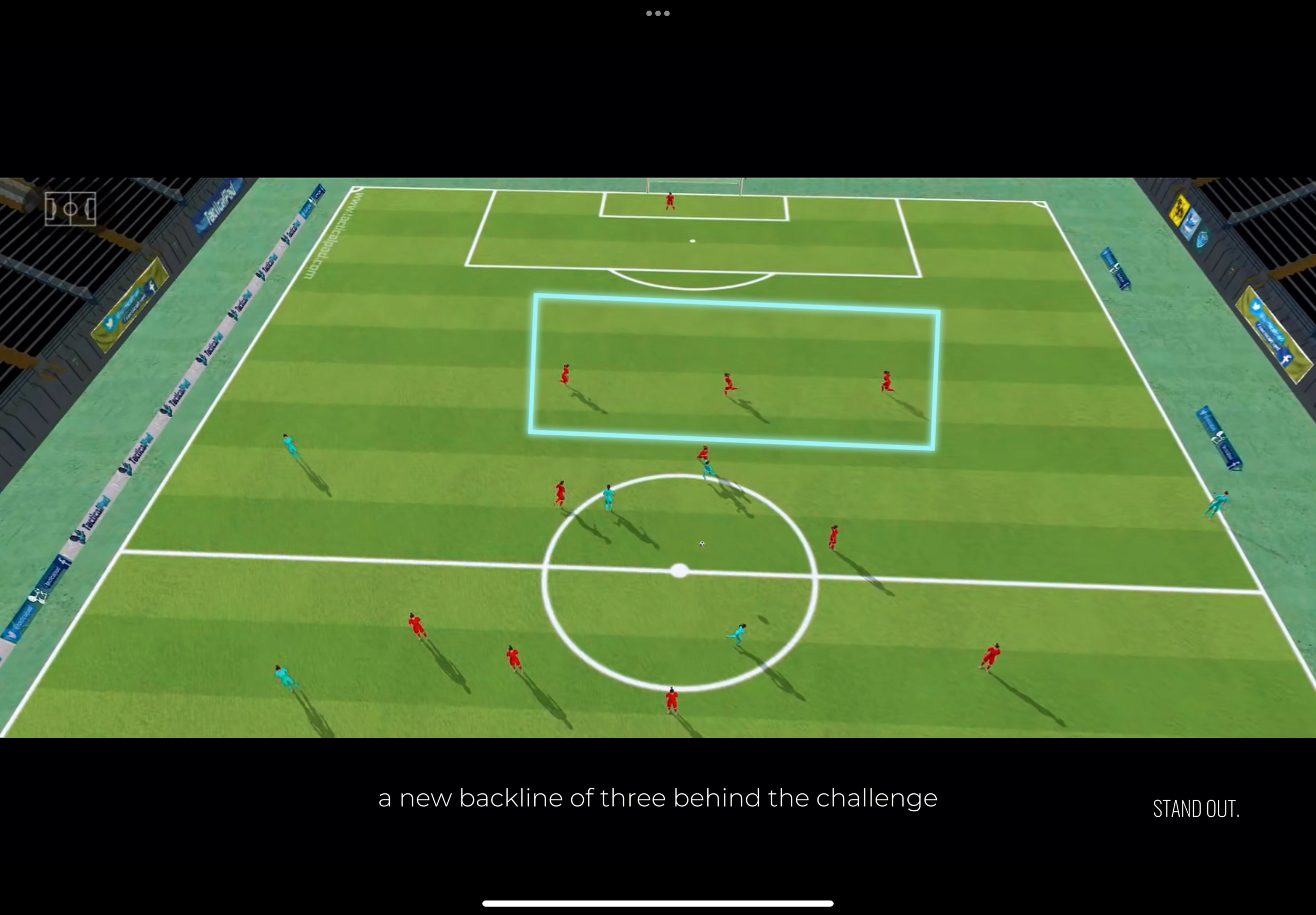
THE 3.
In almost every game there will be moments where the ball is played centrally. When that happens, one of the centre backs must step forward to challenge the striker.
The moment you step forward, the back line is no longer four.
It becomes three behind the challenge.
The purpose of the three is simple.
It protects the most dangerous space on the field while the duel happens in front.
When the ball is challenged in the air, the outcome is often unpredictable. The ball can be flicked on, drop behind the duel, or bounce into space. The three exists to collect those second balls and protect the central channel.
Because you cannot defend every space on the field.
So the defensive line prioritizes the most dangerous one.
The central space behind the duel.
Wide space is left open on purpose because it is further from goal and less dangerous.
This rotation happens constantly at the professional level. It is one of the most common patterns in defensive structure.
The only difference between good back lines and great ones is how quickly they recognize the moment to build the three.
The Challenge Breaks the Line.
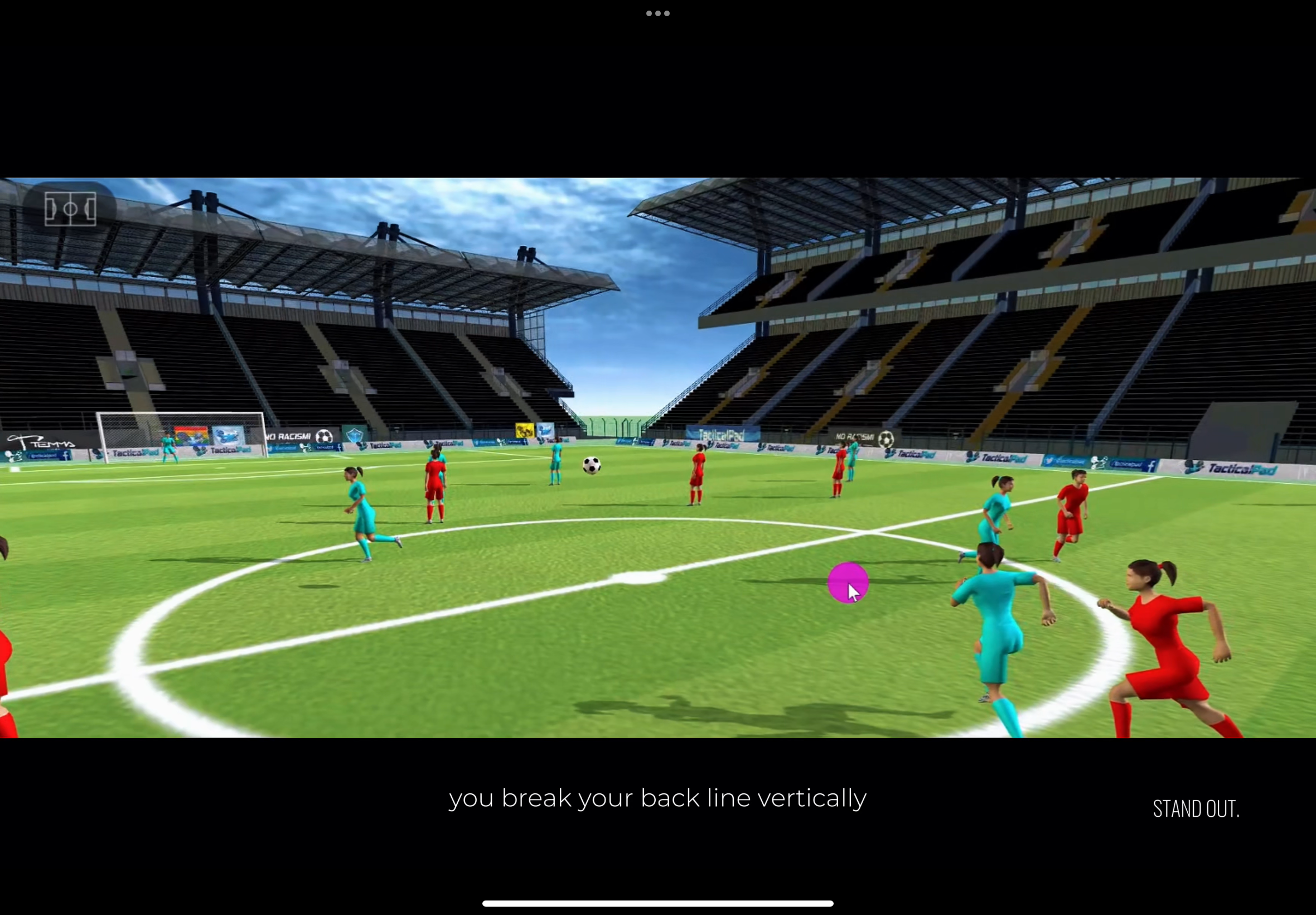
When the ball is played long and centrally, one defender must step forward to challenge.
The moment that defender steps forward, the defensive line is broken vertically.
Now the other three defenders must immediately shift into a covering structure behind the duel.
That structure is the three.
Their job is to protect the space where the ball will land if the duel is lost or flicked on.
Why The Three Protects the Center.
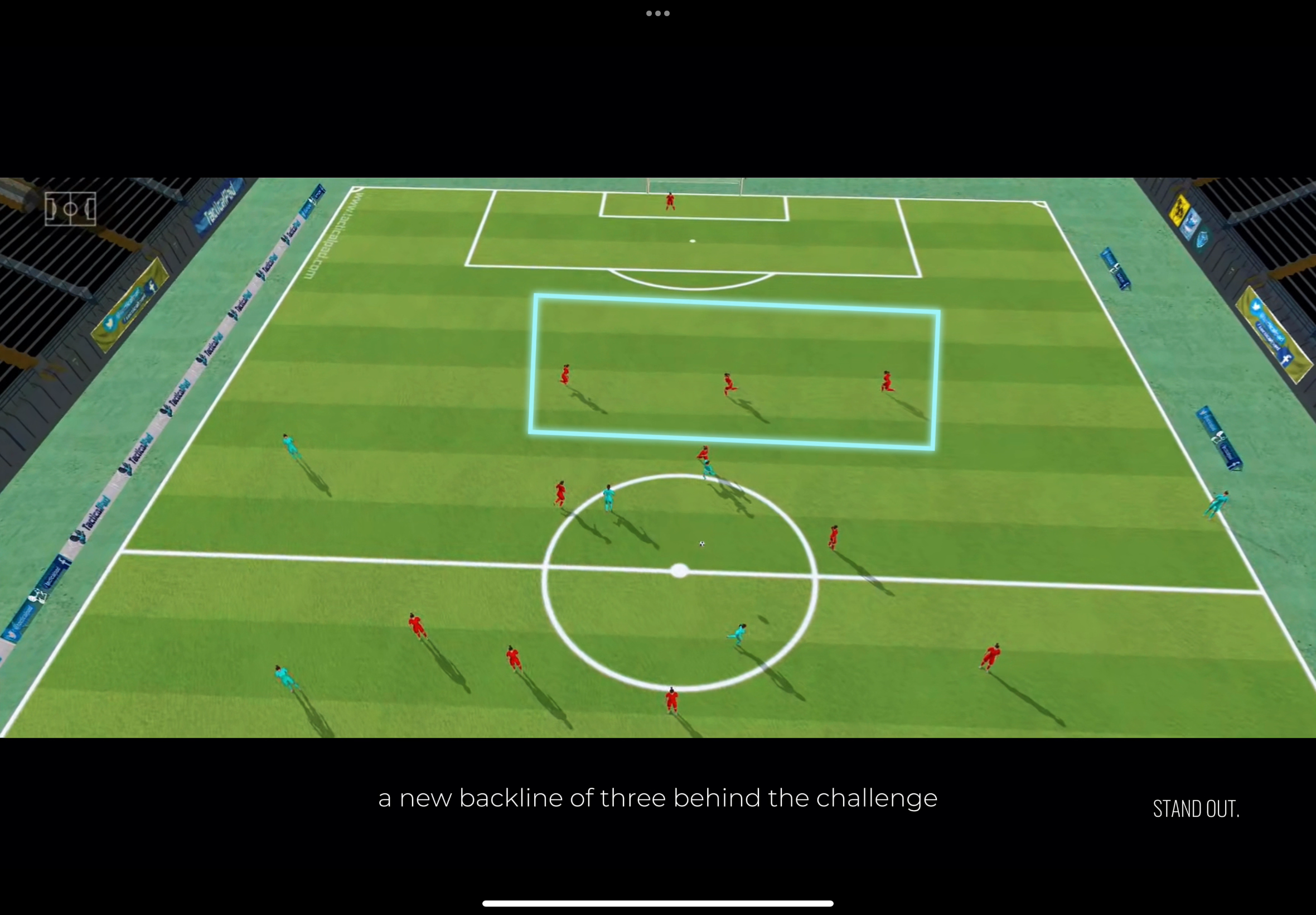
The three does not try to cover the entire field.
Instead, it protects the central corridor behind the challenge.
That is the most dangerous space because it leads directly toward goal.
Wide space is intentionally left open.
It is further away from goal and gives the defense more time to recover.
Defending is always about prioritizing danger, not covering everything.
Recognition Speed
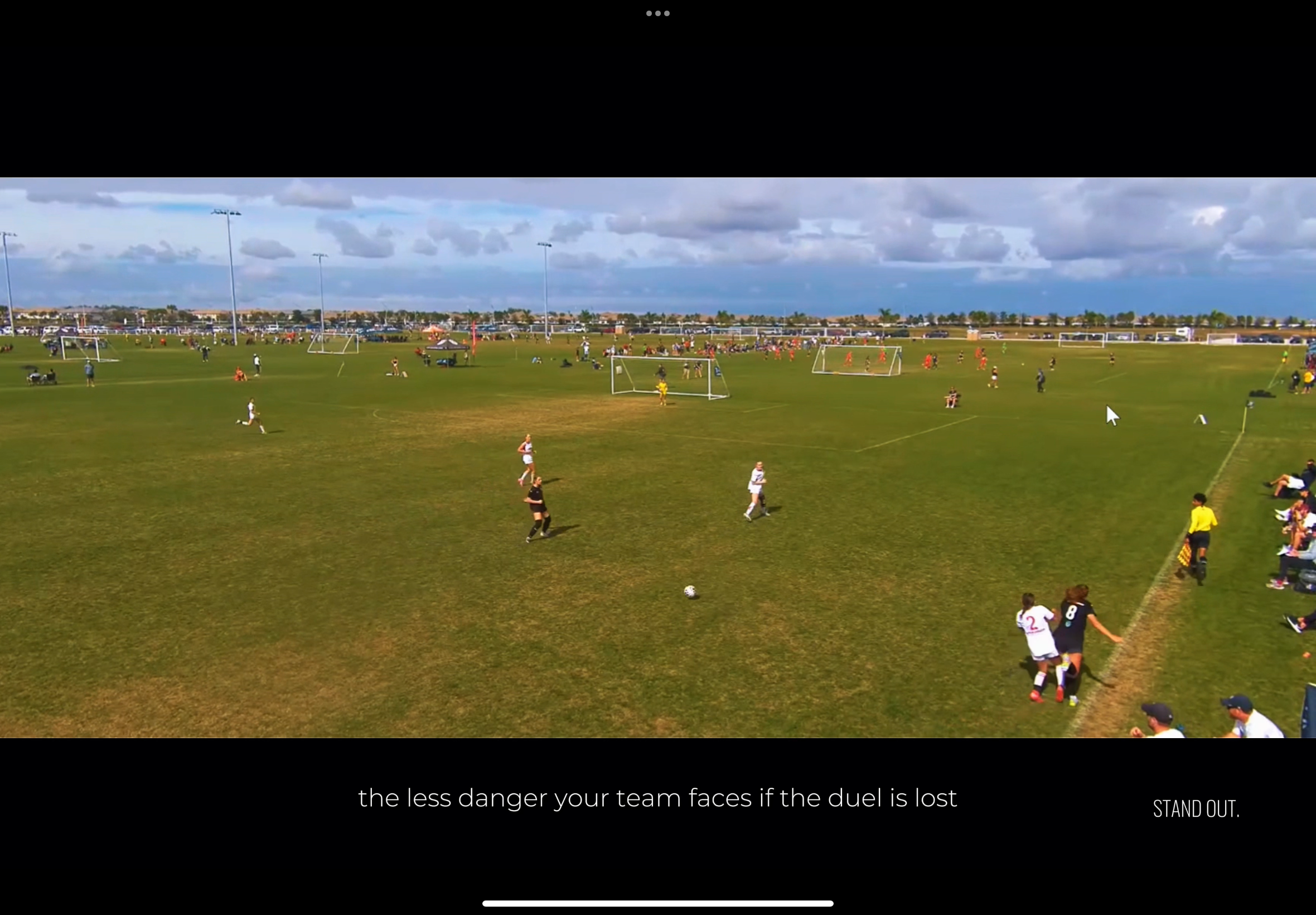
The key difference between defenders is not the idea.
It is recognition speed.
The earlier the challenge is recognized, the earlier the back line can begin forming the three.
And the earlier the three forms, the fewer gaps exist between defenders.
Late reactions create space between players.
Those gaps are exactly what attackers look for when the ball drops from the duel.
Predictable Ball.
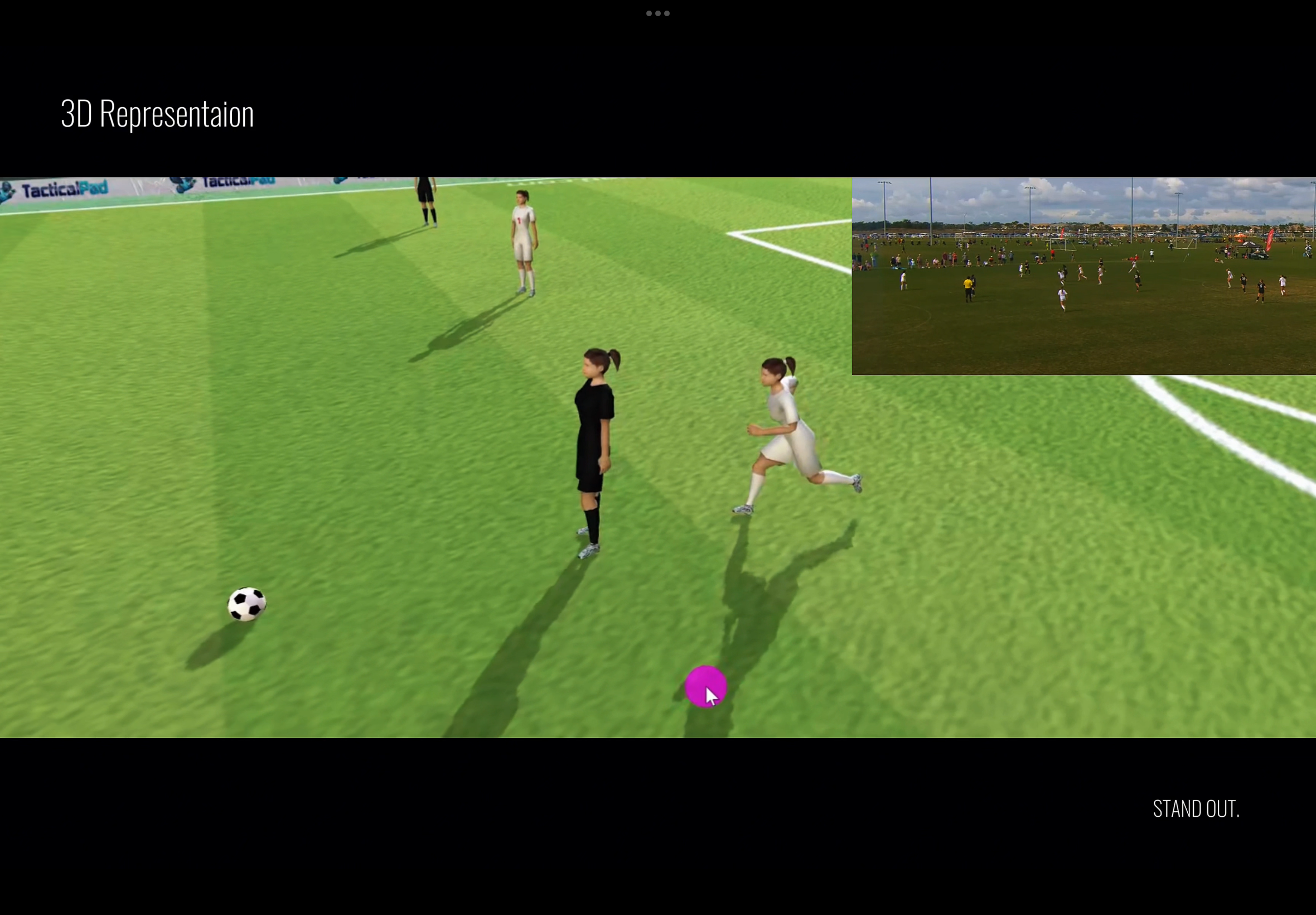
The moment the ball is played , the situation becomes predictable.
The ball destination is clear.
This gives the defender time to act early.
The earlier the defender steps toward the striker, the faster the rest of the back line recognizes the cue and forms the three behind.
Early recognition protects the structure.
Late recognition exposes it.
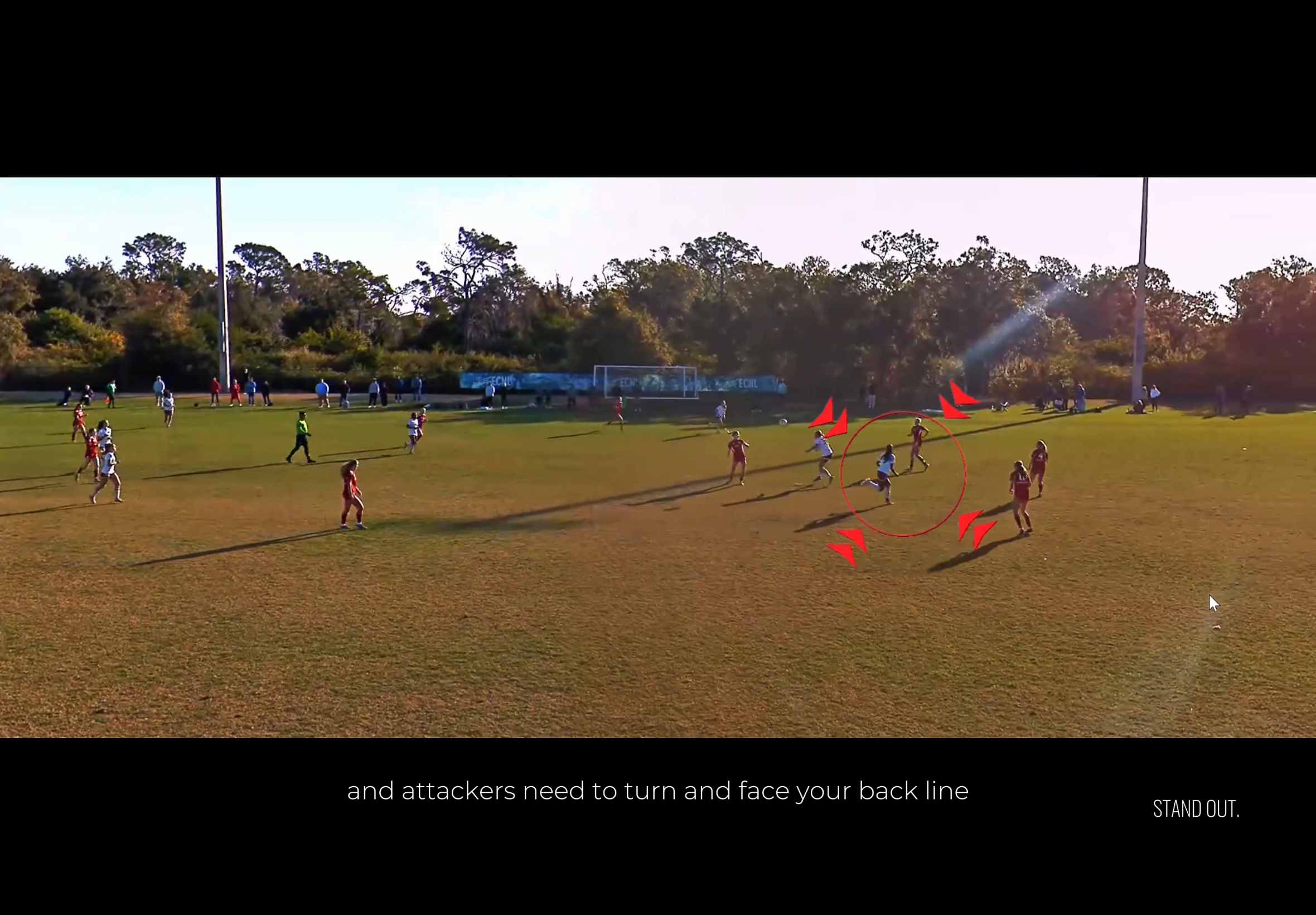
TURNING RADIUS.
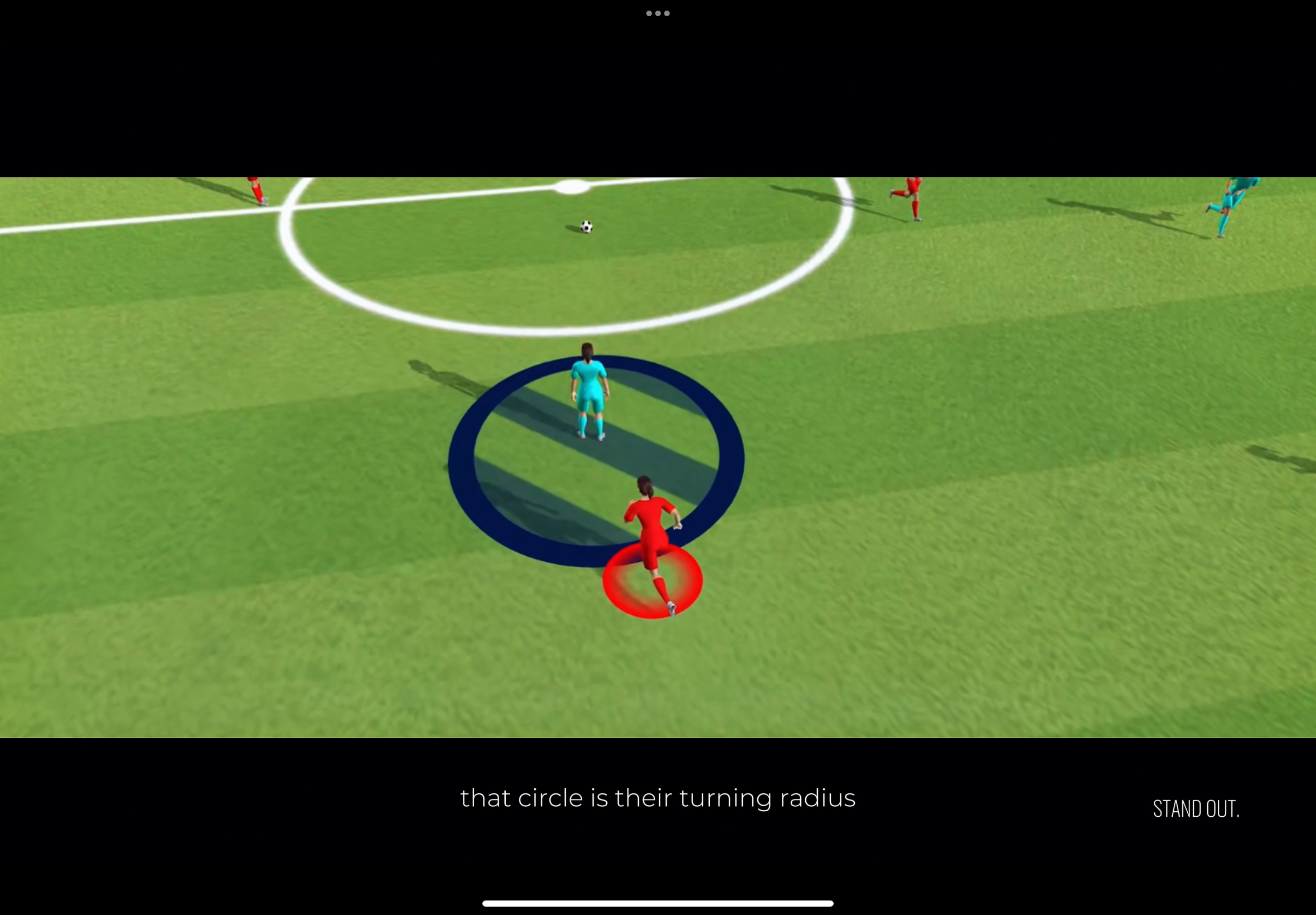
When the attacker receives the ball after the long pass, imagine a circle around them.
This circle represents their turning radius.
The defender’s job is to step inside that circle immediately.
And once inside, stay there.
The more of that radius the defender occupies, the fewer options the attacker has to turn.
Most exits become backwards.
Backward play slows the attack.
And every second the attack slows gives the three more time to organize behind the duel.
Key Principle
The defender who steps forward begins the duel.
But the defenders behind decide whether the team stays secure.
That is the role of the three.
Recognize the challenge early.
Form the structure early.
Protect the central space behind the duel.
That is how defensive lines turn chaotic long balls into controlled situations.
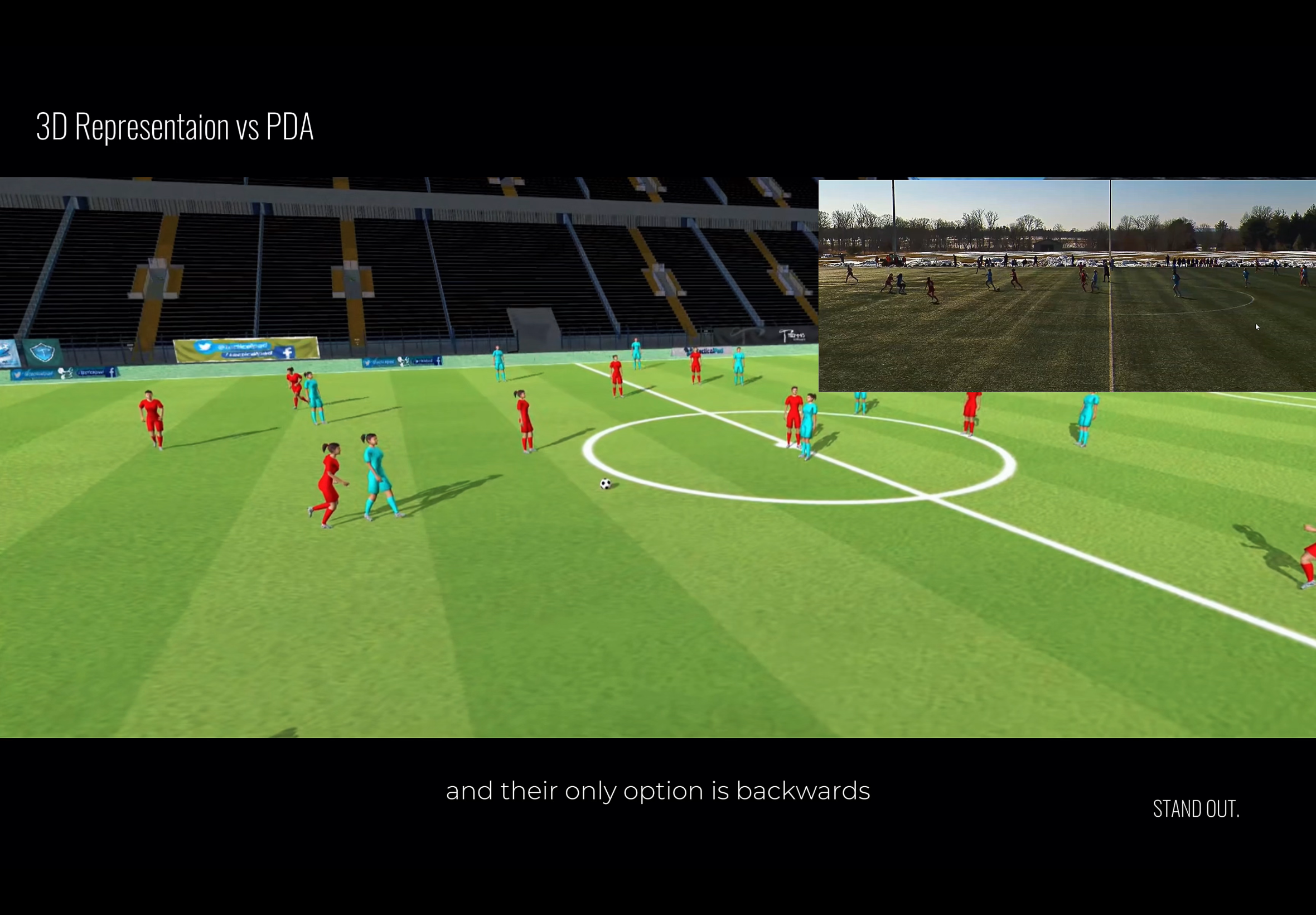
PREDICTABLE BALL = BE AGRESSIVE.
A predictable phase happens when the ball travels long enough for the defender to clearly read where it is going.
Once the trajectory is clear, the ball no longer needs your attention.
Long ball. Think player first.
When the ball travels high in the air it takes time to arrive.
That time is the key.
If you read the ball trajectory early, you no longer need to stare at the ball. You already know where it will land.
From that moment your attention shifts to the attacker you are responsible for.
Defenders who read the ball late are forced to split their focus.
Ball.
Player.
Ball again.
This constant switching removes clarity. The defender never fully tracks the attacker.
Reading the trajectory early solves that problem.
Once you understand where the ball is going, your job becomes simple.
Find your player and stay connected.
Long balls create time. Use it.
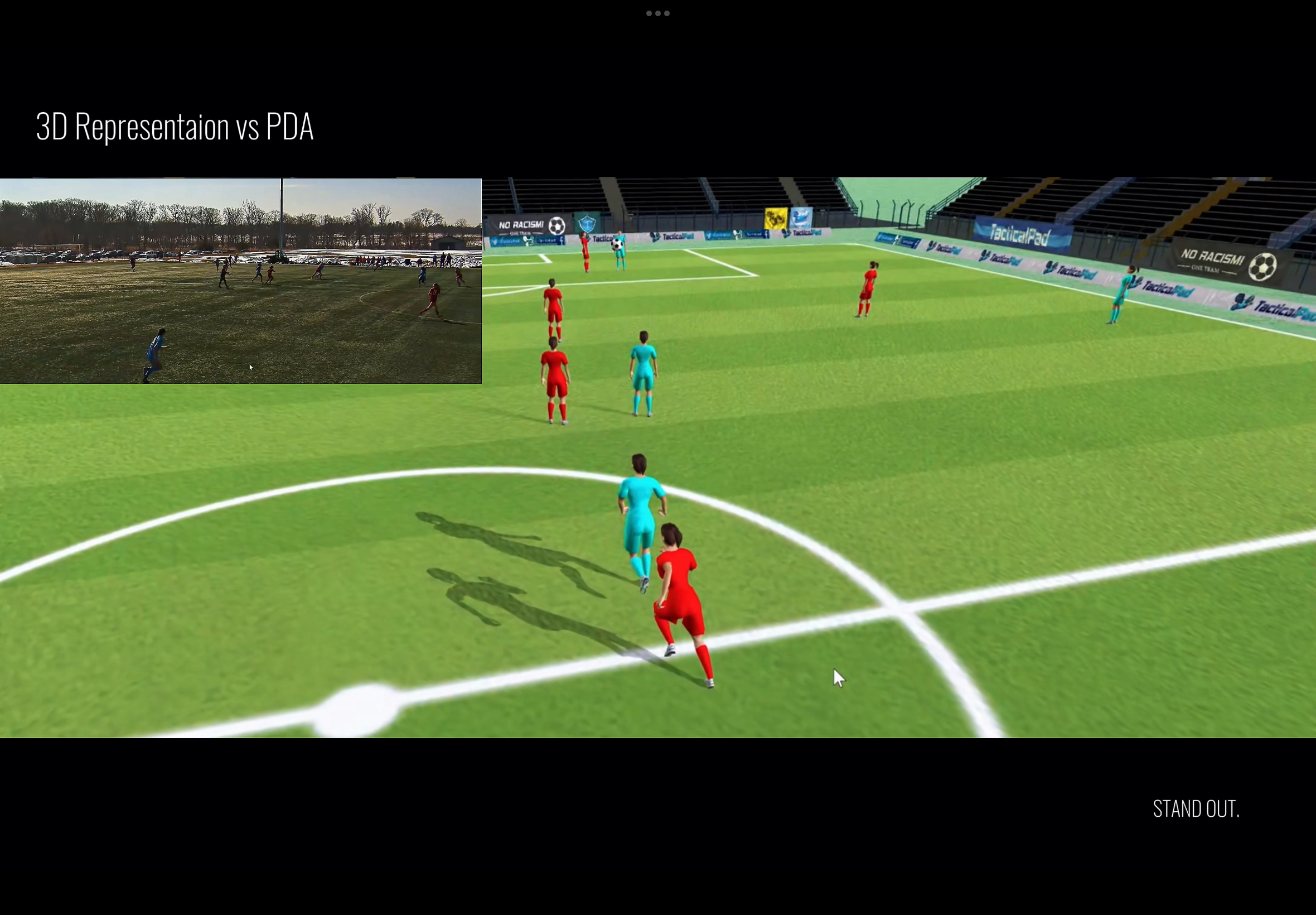
Long balls travel for several seconds.
That time allows defenders to close the distance to their marker before the ball arrives.
The goal is simple.
When the ball arrives, you should already be there.
If the attacker receives with space, they can turn.
But if they receive with pressure, their options disappear.
This moment decides the duel before the first touch even happens.
Predictable phases also happen on the ground.
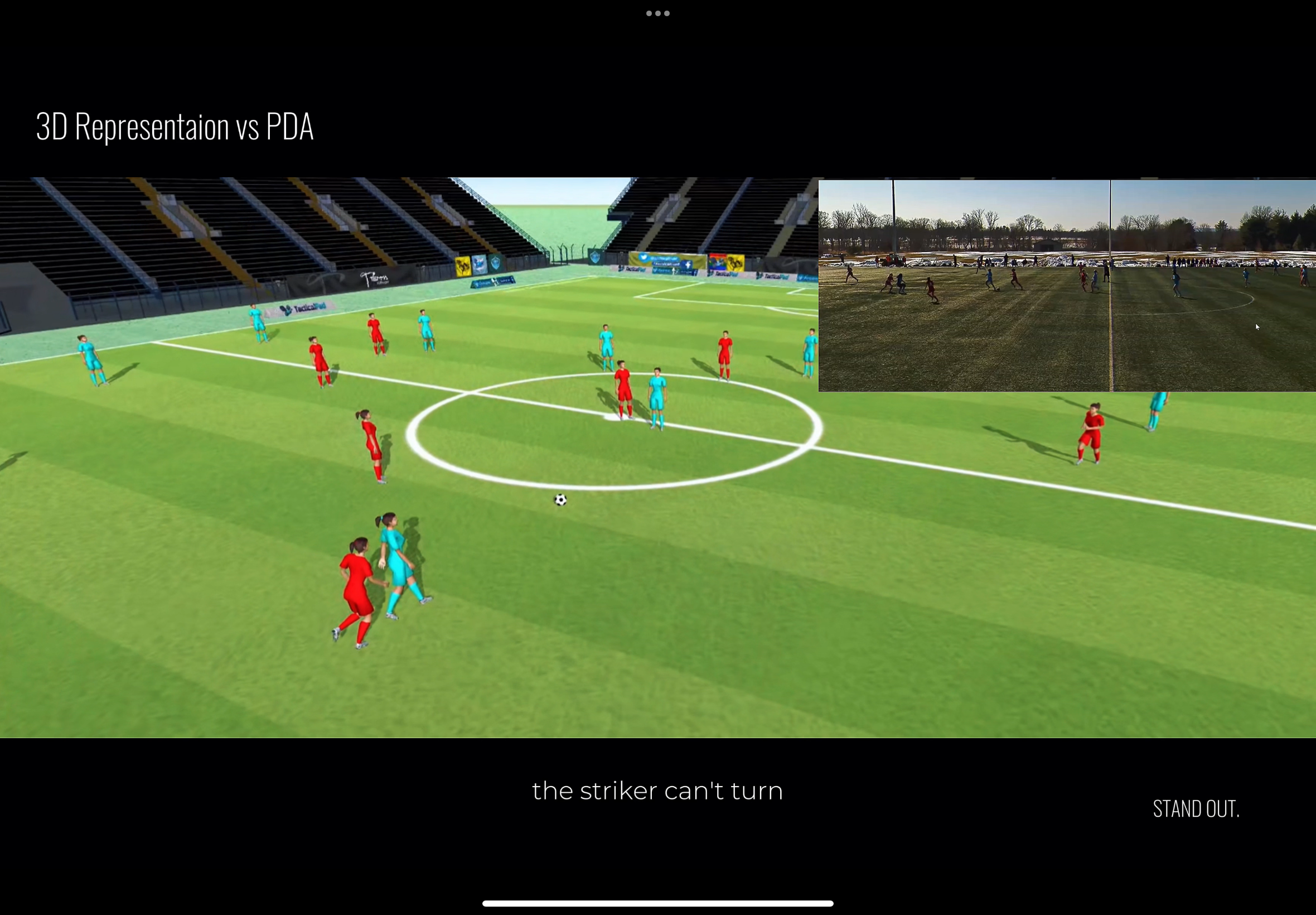
Predictable moments also appear when the ball travels on the ground and you can see both the player and the ball in the same frame.
In these situations the ball is still predictable.
You know where it is going.
Because of that, your focus should stay on the player.
The ball does not need your attention.
Your opponent does.
The turning radius.
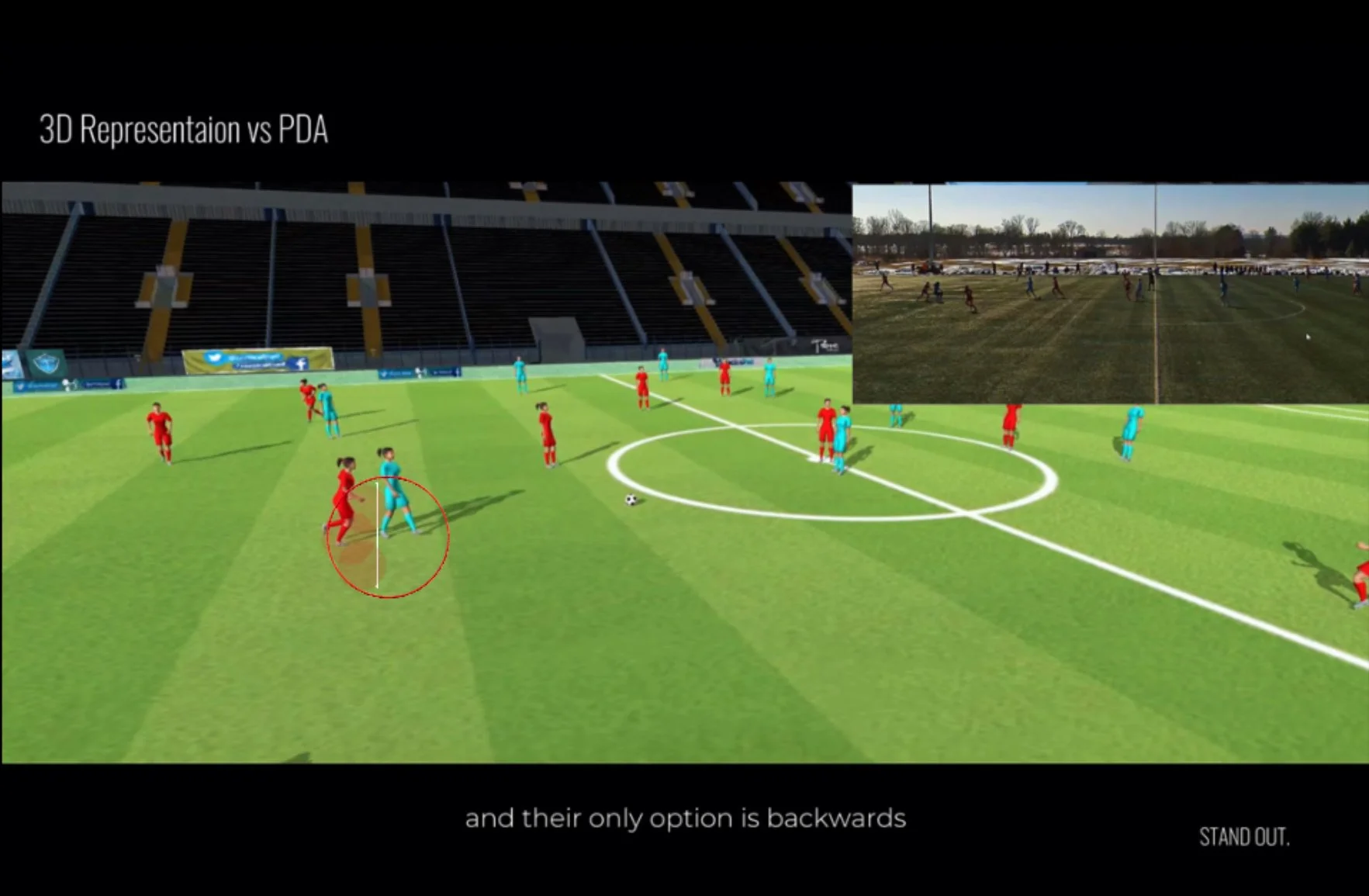
Imagine a circle around the attacker.
That circle represents the space they need to turn.
If you stay outside the circle, the attacker can receive and rotate forward.
If you step into that circle, the attacker loses the ability to turn.
Now their first touch is forced backwards.
And when the first touch goes backwards, the defender controls the duel.
The smaller the circle becomes, the fewer options the attacker has.
The second touch.
At the highest levels, centre backs rarely allow attackers a second touch.
Watch players like Gabriel.
Once the striker receives and the first touch goes backwards, the defender immediately steps through the player.
Sometimes they win the ball.
Sometimes they commit the foul.
But the attacker is never allowed to reset the play.
This creates a psychological effect.
Attackers begin to feel pressure before the ball even arrives.
They know that a second touch will not be comfortable.
And when attackers stop feeling comfortable receiving the ball, defenders gain control of the game.
The principle.
Predictable phases give defenders control.
When you can see both the ball and the player, the duel belongs to you.
Close the space early.
Enter the turning radius.
Do not allow the second touch.
That is how defenders turn small moments into dominance.