GABBY BONGIORNO
CAM/CM/cDM
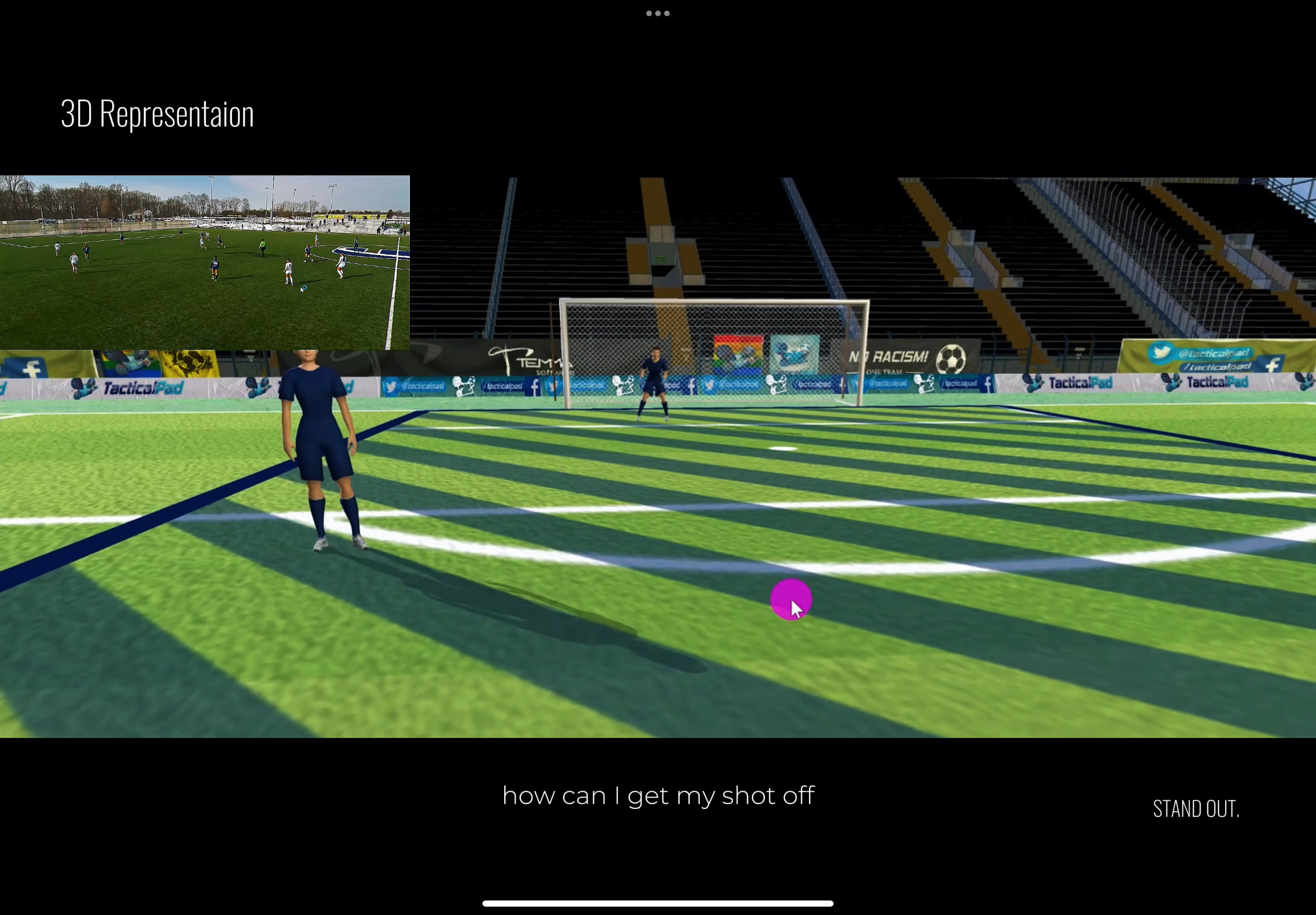

This video is about staying connected to the attack when you're not the player attacking the box.
A lot of midfielders think being deeper automatically puts them in a better defensive position. The reality is that counter-pressing is usually about proximity, not distance.
The players most likely to start the counterattack are the players that matter most. The closer you are to them, the quicker you can affect the next action if possession changes.
Being connected to the play doesn't always mean receiving the ball. Sometimes it means being close enough to immediately pressure the next receiver, prevent the turn, and stop the counterattack before it starts.
The best sixes don't watch attacks develop from distance. They stay connected to the players who could become dangerous next.
When they do, the whole team becomes more compact, the back line can step higher, and the team becomes harder to play through.
Stay connected.
Think player before space.
Who receives next?
Counter-press through proximity.
Defend the next action.

This video is about what happens when the ball breaks a line and you're connected to the attack.
A lot of midfielders stop and watch the play develop. They stay underneath the attack because they're already thinking about what happens if possession is lost.
The problem is that goals are scored closer to the box, not further away from it.
When the ball breaks a line, defenders become stretched, runners become harder to track, and spaces begin to appear around the top of the box. Those are the moments midfielders need to attack.
The best goalscoring midfielders don't wait for the ball before they move. They trust that the ball will find them when they occupy the right space.
Your first thought shouldn't be where the ball is.
Your first thought should be where the danger is.
Attack the space first.
Trust the ball second.
Ball breaks a line.
Crash the box.
Occupy the top of the box.
Trust the ball will find you.
Arrive where goals are scored.

This video is about recognizing when it's time to sprint.
A lot of players move at one pace off the ball. The problem is that transition moments are not normal moments.
When possession changes, the team that lost the ball is often stretched. Gaps appear across the pitch, but those gaps only exist for a few seconds before the structure recovers.
The players who benefit most from transitions are usually the ones who react first.
One of the biggest mistakes midfielders make is splitting their attention between the ball and the space. They wait to see if the pass is coming before committing to the run.
That hesitation costs time.
The best players identify the gap and attack it immediately. They trust the run before they know if they'll receive the ball.
Even when the ball doesn't arrive, the run still creates value. It stretches defenders, creates decisions, and opens space for teammates.
Transition football rewards conviction.
Find the gap.
Sprint, don't coast.
Trust the run.
Attack before they recover.

This video is about using your first touch to eliminate pressure.
A lot of players see open space and immediately drive into it.
The problem is that open space doesn't always eliminate the defender.
It often allows the defender to stay connected and recover.
The best players think differently.
They don't just attack space.
They attack angles.
When you can see both the ball and the pressure in the same frame, you already have the information you need.
That's your invitation to be brave and play forward.
Instead of taking the touch away from the defender, take the touch across her path.
Cut off the angle.
Now she has to follow you.
Now she's behind the play.
The same principle shows up constantly in wide areas, where the direction of the pressure makes it easier to use your body and first touch to eliminate the defender immediately.
Don't attack the space.
Attack the angle.
Cut off the path.
Leave the pressure behind.

This video is about recognizing the moments when you should play forward as a deeper midfielder.
The key trigger is simple:
Forward body shape + space + time.
When you receive facing forward with time, defenders hesitate because your body posture is threatening.
You can play left.
Right.
Or break through the middle.
That hesitation is your invitation to attack the next line.
Right now there are moments where the safer pass is chosen even when there is an opportunity to break lines and hurt the structure immediately.
And especially in the final third, that difference matters.
Because in deeper areas, circulation can be enough.
But in advanced areas, the goal is to threaten the next line before the defense can reset.
The best midfielders recognize these moments early.
They understand when the game belongs to them.
Space.
Time.
Forward body shape.
That is the trigger to play forward and create danger.

This video is about one simple question:
Can we do it in one?
Whenever there is a transition moment and possession changes hands, the opposition is usually stretched.
There are gaps throughout the structure.
But those gaps do not stay open for long.
Every extra touch gives the defense time to recover.
That is why the best transition attacks happen quickly.
The same principle applies around the top of the box.
Defenders become more aggressive because they know a shot is possible.
When center backs step forward from distance, they expose space behind them and become vulnerable to one-touch combinations.
The opportunity often exists before the second touch.
Whether it is a transition moment or a combination around the box, the question stays the same:
Can we do it in one?
The fewer touches you take, the less time defenders have to recover and the easier it becomes to attack the gaps before they close.

This video is about timing your movement in midfield and understanding when to show for the ball.
The biggest detail is patience.
If the center back has time on the ball there is no emergency to move early.
Showing too soon only compresses your own space and makes it easier for the midfielder to follow you.
The trigger is immediate pressure.
That’s when the movement should happen.
And it cannot be casual movement.
It needs to be a sharp burst to create separation at the exact moment the pass is needed.
The best midfielders preserve space first and attack it late.
That timing creates the space and time needed to turn, scan, and play forward.

This video is about recognizing when to be aggressive in midfield, and understanding the triggers that allow you to step up and stop the play early.
When the ball breaks a line and a player receives between the lines, the danger is not the reception…
it’s the turn.
Because once she turns, she can attack the next line vertically.
The key is identifying the moment before that happens.
The trigger is clear:
ball traveling + player receiving with back to goal.
That’s your window.
That’s when you step.
Right now, there is too much distance and too much hesitation, which allows the player to turn and play forward.
Instead, you need to step inside the two-meter circle before the ball arrives.
Use the time the ball is traveling to close the space early.
See the trigger.
Step early.
Don’t let her turn.
That’s how you control the game in midfield instead of reacting to it.

This video breaks down a small detail that completely changes how you play forward…
what you see before you receive.
The reason you’re effective in these clips is simple.
You see the ball and the press in the same frame.
That gives you full information.
You know where your first touch goes.
You know when to move it.
So your actions become forward and positive instead of reactive.
The key is your positioning.
If you stand on the same line as the defender, the pressure comes straight and fast.
If you position just beyond that line, the pressure becomes diagonal.
And diagonal pressure is slower.
That gives you time to scan and play forward.
But there’s another layer.
It’s not just what you see…
it’s what the defender sees.
When the defender starts ball-watching, they lose you.
That’s your cue.
Instead of always coming to the ball, you attack the space behind them.
Now you receive facing forward.
Now the line is already broken.
See both.
Position beyond the line.
Use the hesitation.
Attack when they lose you.
That’s how you turn good touches…
into real impact.
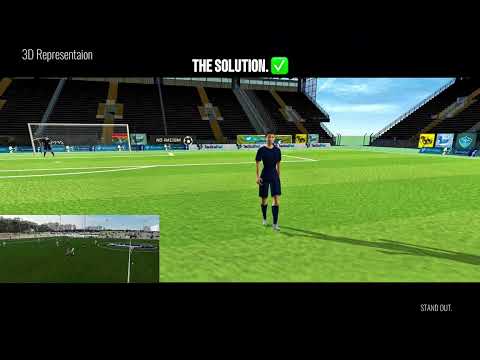
This video breaks down how to control transition moments as a number 10 when you’re driving at the back line.
A lot of players rush these situations. They feel pressure and try to release the ball too early.
But as long as you’re driving centrally with your hips facing goal, you’re the one in control.
The back line’s natural reaction is to drop and delay, because there’s no clear trigger for them to step.
That means they’re giving you time and space.
The key is to use it.
Instead of rushing, you keep driving, get closer to goal, and stay patient.
Because at some point, the back line can’t keep dropping. One defender has to step.
And when that happens, the line breaks and gaps appear.
That’s the moment you’re waiting for.
The remaining defender now has to deal with multiple passing lanes, and he can’t cover everything.
That’s when the through ball opens.
A simple reference to make this clearer:
Pick one center back and drive at them.
Force them to make a decision.
When they step, the space opens behind them.
No rush.
Drive central.
Wait for the step.
Play the pass.
That’s how you turn transition moments into real chances.