NINA STANISLAUS
-
 | 9/14/26
SPACE AND TIME = BEHIND THE LINE.
This video is about positioning yourself to stay behind the line when you're in the middle of the field. Every team that presses does it in lines. The forward line presses, the midfield line sits behind them, and the back line sits behind that. When the player on the ball has space and time, you want to be behind the midfield line, not in front of it.
Most midfielders gravitate towards the ball during build up. You move towards it and ask for it to your feet with your back to goal. This makes you a pressing trigger. The defender can see you and the ball in the same frame, so she doesn't have to split her attention. She's already facing the direction the ball is traveling and can press you at full speed. You're also facing your own goal, which makes it harder for you to turn forward. But when your center back has space and time, this is the cue to stay behind the line and receive the ball between the lines instead.
Staying behind the line does several things. If the midfielder marking you follows you back, that creates space for your center back to dribble into and find other options. Or you might not receive the ball directly, but you can become the third option. The ball goes through your striker, then back to you, and now you've eliminated the midfield line. This is the positioning that makes you impactful in the game.
-
 | 8/15/26
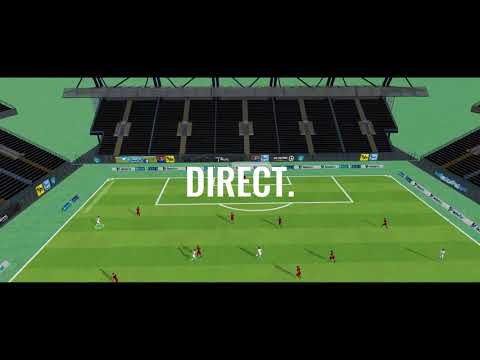
DIRECT.
This video comes in two parts.
Part 1: What changes when the ball breaks the line and you're starting from a wide position. The focus is shifting from creating width to finding the shortest path to goal, attacking the inside shoulder of the fullback, and improving your angle before you even receive the ball.
Part 2: Why staying within box width makes you more dangerous. We look at how your position changes the defender's behavior, why moving too wide can actually give the defender more freedom, and how staying closer to goal creates more options once you receive.
Key: When the ball breaks the line, don't automatically think width. Think goal.
-
 | 8/8/26
BALL BREAKS LINE.
This video is about recognizing the moment a ball breaks a line and using it to receive behind the next line.
Whenever a line is broken, the defending team enters what I call an artificial transition. Instead of pressing immediately, defenders instinctively become ball-watching as they try to recover their shape. That small moment is your opportunity.
The best attacking midfielders don't wait for the ball in front of the next line. They use the time defenders are watching the ball to move beyond them, so they receive behind the next line and attack the back line facing forward.
This video breaks down why defenders naturally behave this way, how to recognize these moments, and how a small movement before the pass can completely change the attack.
The ball breaks a line.
Defenders become ball-watching.
Use that moment to get beyond the next line.
Receive facing forward.
Drive at the back line.
-
 | 7/31/26
KILLER.
This video is about becoming more direct in the box.
One of the biggest strengths in your game is your ability to manipulate defenders. You make them move, you create uncertainty, and you make the game enjoyable to watch. But the box demands a different mentality.
The best attackers don't waste time once they enter the penalty area. They recognize that they only need a small amount of separation to get a shot away, and they trust that opportunity instead of trying to create a perfect one.
This video breaks down four different finishing tools that help you become more direct, create quicker shots, and recognize when the near post or far post is available. The goal isn't to stop being creative. It's knowing when to stop creating and start finishing.
Dance outside the box.
Kill inside the box.
Box equals shoot.
A small shift is enough.
Finish the play.
-
 | 6/30/26
KEEP DRIVING.
This video is about understanding what happens when you drive at a back line.
A lot of attacking midfielders rush the final pass because they don't immediately see a clear option. The problem is that the best opportunities often appear after the back line is forced to make a decision.
As long as you're driving forward with your hips facing goal, defenders are under pressure. Most back lines will continue to drop because they don't want to expose the space behind them.
The important thing is understanding that they can't drop forever.
Eventually someone has to step.
And when a defender steps, the back line breaks vertically. That's when gaps appear. That's when runners become available. That's when the final pass becomes easier.
Patience creates the opportunity.
Instead of forcing the action early, continue driving and let the defenders reveal the solution.
The best playmakers don't just see the pass.
They create the pass.
Keep driving.
Force a decision.
They can't drop forever.
Wait for the line to break.
Create the pass before you play it.
-
 | 6/23/26
TURNING TAKES TIME.
This video is about understanding that turning takes time.
A lot of players think playing faster is about making quicker decisions. Often the biggest delay happens before the decision is ever made.
It happens in the turn.
Every extra movement costs time. Every extra degree you need to rotate delays your acceleration. Those small fractions of a second are often the difference between arriving before the defender or arriving after her.
Body orientation determines how quickly you can move. The more you can see the goal in attacking situations and the more you can see the center circle when receiving between lines, the shorter your turning path becomes.
The best players don't receive and then turn.
They receive while turning.
That's how they play faster.
Turning steals time.
See the goal.
See the center circle.
Receive while turning.
Shorten the turning radius.
-
 | 6/21/26
INFROMATION.
This video is about understanding that every pass carries information.
The weight, speed, and trajectory of a pass tells your teammate what you want them to do next.
But that information changes depending on the situation.
When you play into a teammate inside the box, the goal is usually to finish the action. The weight of the pass should help them shoot first time and attack the goal immediately.
When you play a runner behind a high line, the goal is different. Now the priority is speed. Get the ball to the runner before the defender can recover. If the pass doesn't need to go over the defender, keep it on the ground and let it arrive as quickly as possible.
The same principle applies in transition moments. Defenses are unorganized and gaps are temporary. Every extra second gives defenders time to recover, so the ball needs to travel quickly from point A to point B.
Different situations.
Different information.
Same objective.
Help your teammate perform the next action.
Passes carry information.
Into the box: finish the action.
Behind the line: arrive quickly.
Transition: attack before they recover.
-
 | 6/7/26
BETWEEN TOUCHES.
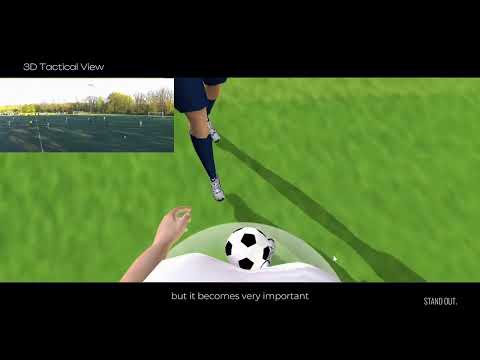
This video is about one of the most important habits for attacking players:
Scanning between the touches.
When you're driving at the back line, the goal is not just to beat defenders.
It's to arrive at the final action already knowing your options.
The mistake many players make is waiting until the defender steps before looking up.
By then, it's often too late.
The solution is to use the time when the ball is traveling between touches.
The ball is already moving.
You can't touch it again yet.
So use that moment to gather information.
But don't scan for everything.
Scan for one thing at a time.
Build the picture as you drive.
The same principle applies in wide situations.
The biggest touch is often the most important scan.
When you take the touch beyond the final defender, look up immediately.
That gives you time to identify the most dangerous option before the next action.
Scan between the touches.
Build the picture early.
Know the pass before it's time to play it. -
 | 5/27/26
CUT HER OFF.
This video is about understanding that dribbling in midfield is often more about angles than pure speed.
Right now there are moments where pressure is escaped by dribbling backwards or away from the defender.
But that can leave you facing your own goal and disconnected from the next action.
The key is recognizing when the defender is arriving with momentum.
Because when a player is charging toward you, there is an opportunity to cut directly across her path and use that momentum against her.
Once you cut in front, the defender is behind the play.
Now she has to foul, stop, or completely reset.
This becomes even more effective in the final third, where defenders are more cautious because fouls become dangerous.
The cheat code is simple:
Use the closest foot to cut across the defender’s path first.
That is what opens the field and keeps you facing forward.
Do not just escape pressure.
Cut across it. -
 | 5/19/26
SECOND BALL.
This video is about understanding why the best midfielders move early when the ball travels long.
When the ball is in the air, it is in a predictable state.
That means you already have time to react before it lands.
The key is using that time to move toward the middle of the pitch and get ahead early before the second ball arrives.
Because the center of the field is the most important area for knockdowns.
If you win the second ball there, you have access to the most options around you and your team becomes much harder to press immediately.
The best attacking midfielders and wide players recognize this early.
They move inside, get in front of their player, and help control the next phase before the ball even lands.
This is something you already do really well in moments.
Now it’s about recognizing it consistently and using the long ball as a trigger to move early and help your team control the next phase.