OLIVIA
CB
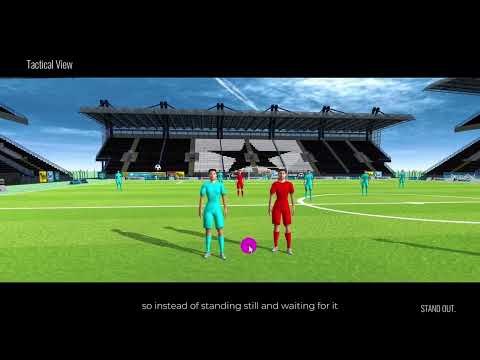
This video is about how center backs settle the game.
Not every ball needs to be cleared. Some of the biggest moments in a game come from controlling the first action after a loose or bouncing ball.
When center backs settle these situations, the whole team benefits. Teammates have time to recover their positions, expand the field, and build the next attack from a position of control instead of reacting to another transition.
A big part of that comes from creating time. As the ball travels, small adjustments in your positioning can increase the distance to the presser, giving you more time to control the ball, scan, and make the next decision.
The best center backs don’t rush these moments.
They slow the game down.
Settle the play.
Create time.
Use the space behind you.
Control the first action.
Turn transitions into possession.

This video is about recognizing the danger before the ball arrives.
A lot of defenders become focused on the ball when it travels into the final third. The problem is that the most dangerous threat is often not the player on the ball, but the player receiving it in a central area.
The earlier you identify that player, the earlier you can close the distance.
Time is everything at the top of the box. If an attacker receives with time to turn, pass, or face goal, the danger increases immediately. That's why the job starts before the first touch.
The goal is to arrive as the ball arrives.
Close enough to influence the turn.
Close enough to influence the decision.
Close enough to force the play away from goal.
The best defenders don't react after the receiver controls the ball. They recognize the threat early and arrive before the action begins.
Find the player.
Close the distance.
Arrive within arm's length.
Get goal side.
Win the battle before the first touch.

This video is about what happens immediately after losing the ball.
Mistakes happen.
Especially for players who want to play forward and take responsibility in possession.
The important part is not the mistake itself.
It's the reaction.
When possession changes, the defensive shape is often stretched because the team was attacking. That makes the first few seconds after losing the ball the most dangerous moments in football.
The players who react fastest usually prevent the biggest problems.
Instead of watching the ball or processing what just happened, shift your attention to the nearest threat.
In most cases, that's the player who just pressed you.
Get goal side.
Stay connected.
Now you can see both the player and the ball in the same frame.
The best defenders don't waste time reacting to mistakes.
They react to the danger created by the mistake.
Lose the ball.
Find the threat.
Get goal side.
Stay connected.

This video is about tracking the threat.
When center backs play as a partnership, one defender is often in a stronger position to see the danger than the other.
The key is recognizing when your partner cannot see the runner.
Because when a runner appears on your partner's blind side, she becomes vulnerable.
To recover, she would need to completely rotate her body.
And in football, turning takes longer than running.
That's why the responsibility shifts.
The threat your partner cannot see becomes your threat to track.
The best defenders constantly ask themselves:
Who can hurt us?
Where is the runner?
What can my partner not see?
The ideal picture is simple:
See the ball and the runner in the same frame.
Now you can stay connected.
Slide goal side.
And keep the play away from goal.
Threat first.
Ball second.
Track what your partner cannot see.

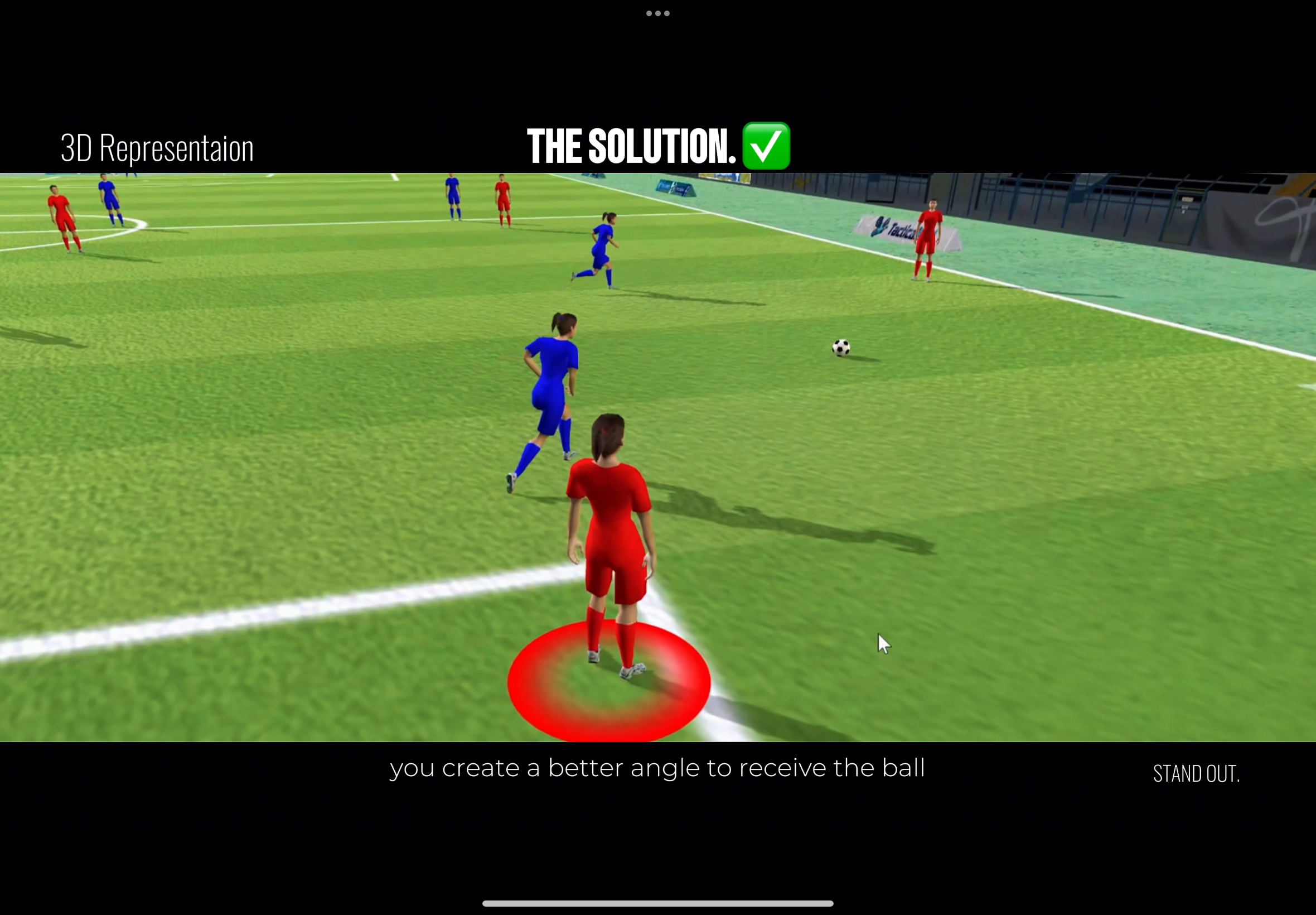
This video is about how your body orientation affects the amount of time and space your teammates receive.
The issue is not the pass itself.
It is how long you hold the ball before making it.
When you receive as a center back and turn your hips toward the sideline early, you tell the entire press where the ball is going.
That becomes a trigger.
Now the opposition can compress the space around the fullback before she even receives the pass.
The longer you take, the smaller that space becomes.
The solution is simple:
Play on fewer touches.
But more importantly:
Keep your hips facing the center circle on your first touch.
When your hips stay central, you keep the whole field available.
Now the press hesitates.
Now they cannot fully commit.
Now your teammate receives with more space and more time.
The best build-up players do not only move the ball quickly.
They keep their options open for as long as possible.
Hips to the center circle.
Play fast.
Keep the field open.

This video is about the small defensive details that become more important the higher level you play — especially in emergency defending situations inside the box.
When blocking shots, the goal is not just to make yourself big.
It is to become a compact block.
Right now there are moments where turning away from the shot or spreading the body creates gaps for the ball to travel through.
The best defenders stay square to the ball, keep the body compact, and remove space instead of opening it.
Another key detail is the hands.
Loose arms create unnecessary risk for penalties and handballs, which is why many top defenders keep their hands behind their back while blocking.
The uncomfortable part of defending is also what creates value at higher levels.
Shot blocking.
Emergency defending.
Protecting the goal in chaotic moments.
That is where trust is built as a center back.
Face the ball.
Stay compact.
Block the space.
That’s the detail.