OLIVIA
CB

DEFENDING CHANGES IN THE FINAL THIRD
Olivia, this video is about one adjustment that separates solid center-backs from well-rounded ones: what you prioritize when the ball enters the final third.
In the midfield third, you do a lot of things right. Your defending there is space-oriented. You hold shape, you shift across, and you protect the space in behind. Your positioning naturally covers danger, and your line does the work for you.
But once the ball enters this area — the final third, the box — the rules change.
In the final third, space doesn’t score goals. Players do.
That’s where defending becomes player-oriented, not shape-oriented.
A key moment this video highlights is what happens when the ball breaks a line near your box. In those moments, it’s natural to follow the ball. But when you ball-watch, two things happen at the same time:
you lose track of the most dangerous player, and you become flat-footed and late.
That’s when you’re exposed — not because you defended poorly, but because your priority stayed on the ball instead of shifting to the threat.
This video isn’t telling you to abandon structure everywhere.
It’s showing you where structure stops being the main answer.
Inside the box, attackers don’t need space.
They need one touch, one angle, one moment.
That’s why the most important question in these situations is simple:
Who is most likely to score right now?
When you identify that player early and pick them up, everything slows down. The ball becomes secondary. You’re no longer reacting to passes — you’re controlling the threat.
A big takeaway here is positioning relative to that player. When you get close enough to see both the ball and the attacker in the same frame, you give yourself control. From there, adjusting goal-side, intercepting, or stepping in early becomes natural.
This is the cheat code.
When you stay ball-focused, you’re vulnerable to late runs and quick finishes.
When you stay player-focused, the danger disappears before it turns into a chance.
This shift — from space to player, from zone to threat — is what makes defending in the final third clean instead of chaotic.
The goal of this video isn’t to give you more to think about.
It’s to give you one clear priority when it matters most.
Find the most dangerous player.
Pick them up early.
See the ball and the player together.

This video focuses on a small moment that separates good defenders from dominant ones.
When the ball is in a predictable state, meaning it is traveling and you know where it will arrive, your focus shifts from the ball to the player. The ball is not going anywhere. The attacker is.
Stay tight while the ball travels so the attacker has no space to turn.
The key moment comes on the first touch.
If the striker’s first touch goes backwards, that is your moment. They are not facing your goal and cannot threaten the space behind you.
Do not allow the second touch.
Go straight through the player and attack the ball.
At higher levels defenders are aggressive in this moment because allowing a second touch gives the attacker time to turn and face your back line.
Either you win the ball or you reset the play with a foul.
The key is recognizing when the ball is in a predictable state. That is when you control the duel.
Stay tight. Recognize the backward touch. Attack immediately.

This video explains one of the most important defensive patterns in football.
When the ball is played long or in centrally, one centre back must step forward to challenge. The moment that happens, the back line breaks vertically and the remaining defenders must immediately reorganize to form the three behind the duel.
The purpose of the three is to protect the central space behind the challenge and collect any flick-ons or second balls that drop from the duel.
The key detail is recognition speed. The earlier the long ball is recognized, the earlier the defender steps and the faster the back line can build the three behind the challenge.
Small moments like this decide whether a passbecomes a dangerous attack or simply dies before it begins.

This video focuses on a key detail for centre-backs.
What you look at when building the three.
When the back line breaks and you are part of the three behind the challenge, your instinct might be to follow the ball.
But that makes you reactive.
The priority is the player.
By locking onto the most dangerous player first, you can position yourself correctly, stay goal side, and deal with the next action.
Once the situation is under control, you return your focus to the ball.
That order is what separates reacting from controlling.

Most defenders are taught positioning.
Where to stand.
How to hold the line.
But at higher levels, that is not what decides these moments.
Body shape is.
This video breaks down why square body positioning creates delays, why it makes you vulnerable to balls in behind, and how attackers recognize and punish it instantly.
The key shift is simple.
Go side on early so you can see both the ball and the player and react without delay.
That is the difference between reacting late…
and controlling the situation from the start.

This video is about settling the play in chaotic moments and understanding how center backs bring control back into the game.
Especially in college football where the game becomes very vertical and transitional, unstable moments happen constantly.
Loose balls.
Bouncing balls.
Second phases.
The key is using the time while the ball travels to scan early and identify the safest option before the ball arrives.
Right now there are moments where difficult passes keep the play unstable instead of settling it.
But there are also really good examples where you stay calm, recognize there is no immediate pressure, and bring control back into the situation instead of panicking.
The best center backs do not rush chaos.
They settle the play.

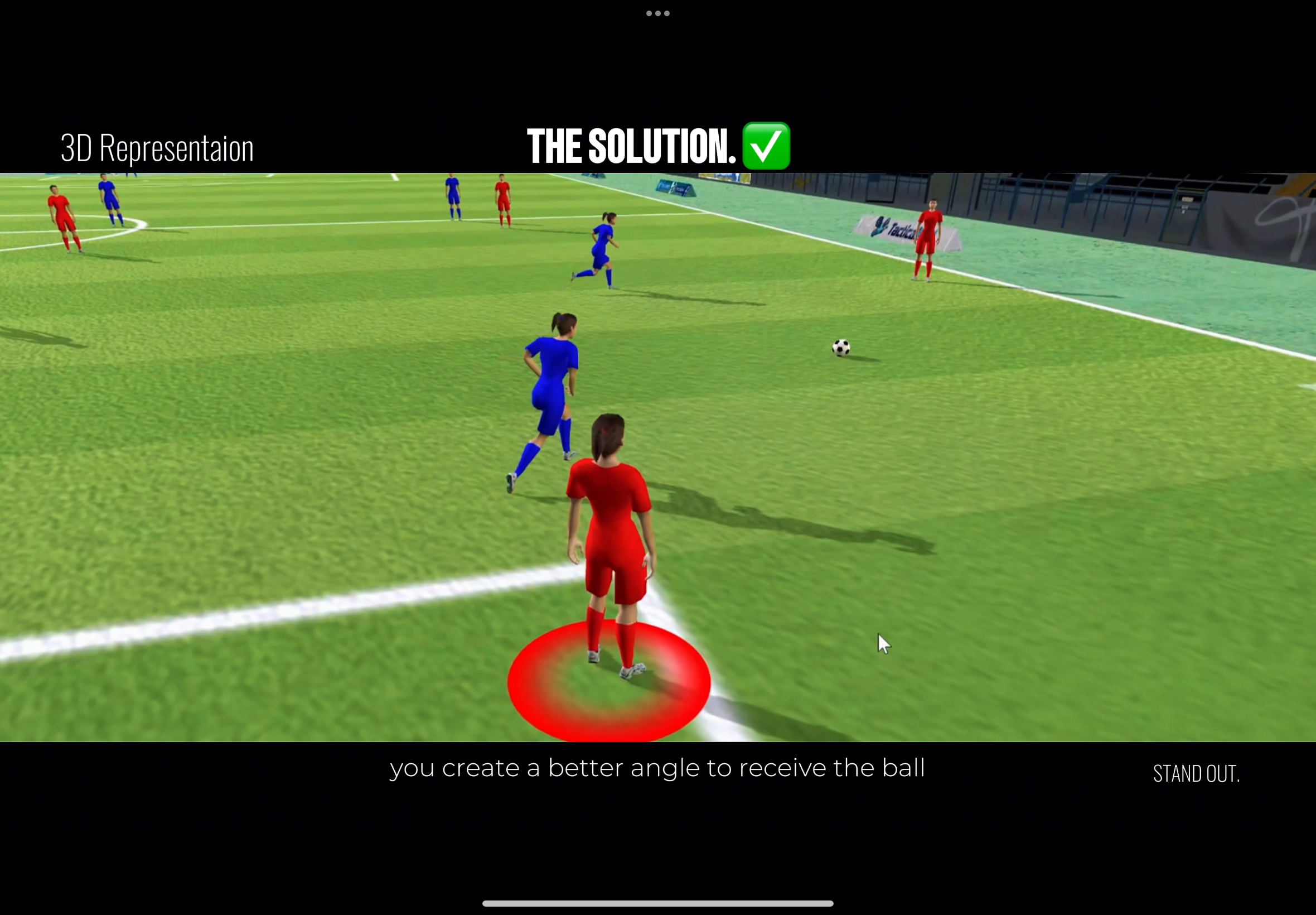
his video builds on a key improvement…
building the three early and covering the space behind the challenge.
That part is already there and done correctly.
The next step is what happens after you play the fullback.
Right now, there is a habit of following the pass and ending up in the shadow, which limits your availability and forces you to react late.
Instead, the action continues.
When the ball goes to the fullback, you move backwards away from the play.
That creates:
more space
a better angle to receive
more distance from the pressing forward
And that distance gives you time to scan and switch play cleanly.
The job is not done after the pass.
Create space.
Create angle.
Control the next action.

This video breaks down how to break lines with the dribble, not just with passing.
The key moment is when the ball and the press come from the same side.
That gives you the angle to go forward.
Most players move away from pressure.
The best players move through it.
It’s not about speed.
It’s about momentum and angles.
By taking your first touch across the defender’s path, you cut their angle and force them to stop or turn.
That single action eliminates a full line of pressure.
Now the next line has to step…
and that creates even more space.
See the press.
Cut the angle.
Drive forward.
Break the line.
That’s how you go from moving the ball…
to controlling the game.

This video breaks down a simple but important detail when you receive the ball from outside in.
In these moments, there is almost always an opportunity to switch the play.
When the ball comes inside, defenders naturally shift toward it and become ball-watching, which means the far side is left with less numbers and more space.
That’s your cue.
The key is your first scan.
If you see the far side early, before your first touch, the action becomes simple.
If you see it late, you take extra touches, the game slows down, and the defense has time to recover.
The difference is timing.
Outside in → look far side first.
Play it in one or two touches, before the defense can shift.
That’s how you turn possession…
into a real attacking advantage.